
Hydrogen Hair Treatment for Thinning Hair: Effects & Cost
What hydrogen scalp treatments do, what the research does and doesn't show for hair loss, and JH Beauty's 75-minute, $258 Hydroimpact session in Sunnyvale.
Short answer: a hydrogen hair treatment is a salon scalp session that uses water with dissolved hydrogen gas (H₂), an antioxidant that researchers have studied in cells, animals and a small skin pilot. It hasn't been shown to regrow or thicken hair: we found no clinical trial of a hydrogen scalp treatment for hair loss. Treat it as scalp care, and see a dermatologist for thinning hair.
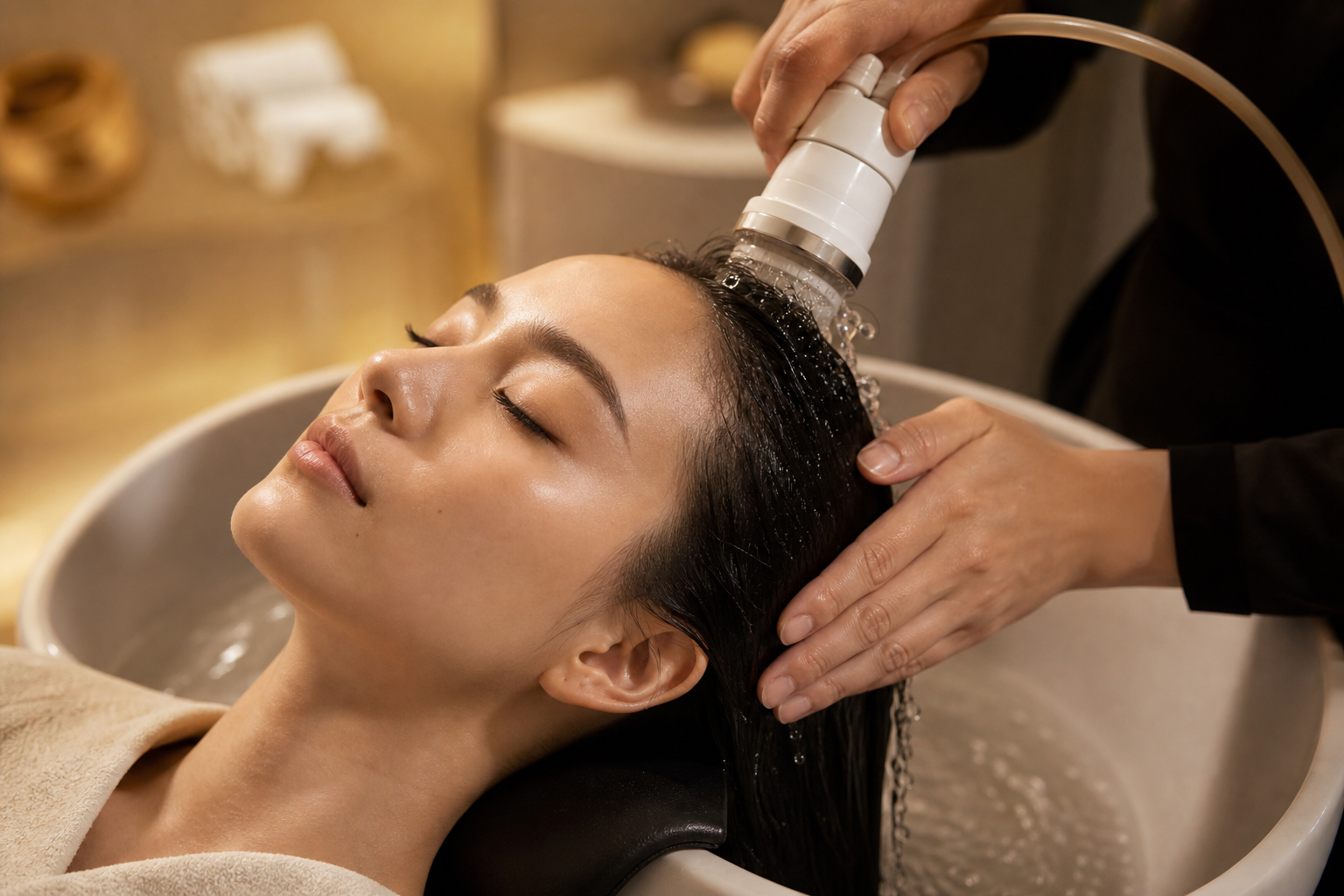
A hydrogen hair treatment is a salon scalp treatment built around water with dissolved hydrogen gas (H₂). Hydrogen is a studied antioxidant, but we found no clinical trial showing that hydrogen scalp treatments regrow or thicken hair. Treat it as scalp care, not a hair-loss treatment; for thinning hair, see a dermatologist first. At JH Beauty in Sunnyvale it's $258 for 75 minutes.
Below: what hydrogen does according to the research, what's missing from that research, who a hydrogen scalp treatment suits, the medical options dermatologists use for thinning hair, and what JH Beauty's Hydroimpact session costs.
What Molecular Hydrogen Does, According to Research
The interest in hydrogen goes back to a 2007 paper in Nature Medicine. Researchers found that H₂ selectively reduced the hydroxyl radical, the most damaging of the reactive oxygen species, in cultured cells, while leaving other oxygen species with normal biological roles alone. In rats, inhaled hydrogen reduced brain injury from oxidative stress. The authors attributed this partly to hydrogen's ability to diffuse rapidly across cell membranes.
Skin research has followed, but it's young. A 2025 review in Clinical, Cosmetic and Investigational Dermatology describes hydrogen's antioxidant and anti-inflammatory effects in skin, and concludes that research in skin cosmetology "remains in its early stages," with open questions about how it works, the right dose and long-term safety. The one human skin study we found that applied hydrogen-rich water topically was a 2025 pilot in Antioxidants: 15 healthy adults, four weeks of treatments, a statistically significant reduction in visible pores, and no adverse effects, but no control group and a short follow-up.
What the research doesn't show
We searched the medical literature for human trials of hydrogen scalp treatments for hair loss and didn't find one. Earlier versions of this article and a related one on our blog described a hydrogen-water hair-regrowth study and quoted density and thickness results; we couldn't locate that study, so we've removed those claims. Until controlled trials exist, any promise that hydrogen regrows hair is marketing, not evidence.
Thinning Hair: Start With the Cause
The American Academy of Dermatology (AAD) is clear that effective hair-loss treatment "begins with finding the cause," which can take a blood test or a scalp biopsy from a board-certified dermatologist. Two very different situations can look similar in the shower drain:
- Shedding (telogen effluvium). Losing 50 to 100 hairs a day is normal. Heavier shedding often follows a stressor such as childbirth, major life stress, a high fever, surgery, significant weight loss or stopping birth control pills, and shows up several months after it. After childbirth, the AAD says shedding usually peaks about four months after giving birth, and most women see their hair return to normal fullness by their child's first birthday.
- Hair loss. Hereditary thinning, alopecia areata and other causes stop or slow growth and need a diagnosis.
Dermatologists' options for hair loss, per the AAD:
- Minoxidil: can help early hair loss but can't regrow a full head of hair; results usually take 6 to 12 months, and stopping it means losing the benefit.
- Finasteride: can slow hair loss and stimulate growth; usually about 4 months to see improvement, and works best started early.
- Laser devices: studies suggest they may help hereditary hair loss, alopecia areata and chemotherapy-related loss, over many sessions and months.
- Platelet-rich plasma (PRP): studies show it can be a safe and effective treatment; it involves a blood draw and injections.
JH Beauty doesn't offer medical hair-loss treatments, lasers or injections. A scalp treatment can sit alongside a dermatologist's plan as scalp care, not as a replacement for it.
Who a Hydrogen Scalp Treatment Suits
JH Beauty's menu lists its hydrogen session as [Healthy Scalp] Hydrogen Water Fusion for seborrheic dermatitis and dandruff-prone scalps. That's the right frame: it's a scalp-care treatment. It suits you if:
- Your scalp feels oily, flaky or coated and you want professional scalp care.
- You'd like a scalp treatment that doesn't use carbonated water.
- You're already under a dermatologist's care for hair loss and want scalp care alongside it.
See a dermatologist before booking, or instead, if:
- Your dandruff is severe or doesn't clear. The AAD recommends shampoos with zinc pyrithione, salicylic acid, sulfur, selenium sulfide, ketoconazole or coal tar, and a dermatologist if they don't work, because flaking can be seborrheic dermatitis, psoriasis, a fungal infection or eczema.
- Your scalp is inflamed or broken. The AAD notes that skin with seborrheic dermatitis is easily irritated.
- You're losing hair in patches or quickly. That needs a diagnosis first.
JH Beauty's Hydroimpact Session: Cost and What to Expect
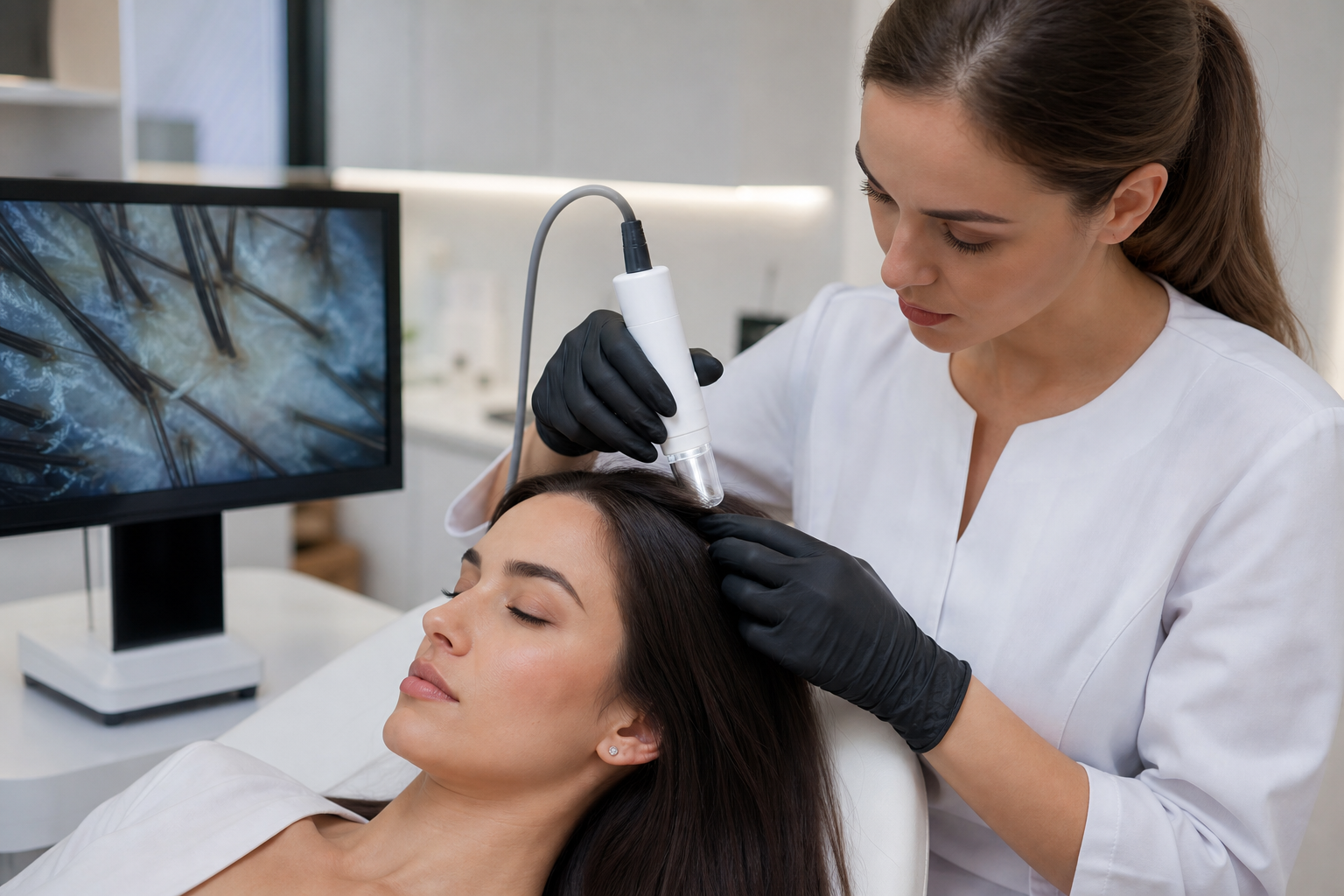
The [Healthy Scalp] Hydrogen Water Fusion treatment is 75 minutes for $258. The menu describes it as a Hydroimpact hydrogen water fusion scalp treatment, and its Chinese name describes it as a Japanese hydrogen-oxygen healthy-scalp treatment.
The menu doesn't list each step, so ask when you book what the session includes. Before the session, tell your esthetician about any scalp condition, medicated shampoo, minoxidil or other treatment you use, recent color or chemical services, and any fragrance sensitivity, so products can be chosen accordingly.
Other scalp options on the same menu:
- CO2 Spring Water + Organic Essential Oil Purifying Scalp Treatment — 75 minutes, $218.
- [Oway Botanical Balance] CO2-Spring Botanical — 75 minutes, $218, for oily scalp and dandruff.
- [Hair Growth] Premium Customized Botanical — 90 minutes, $298, a customized CO2 session the menu positions for hair loss and density concerns.
- [Relax & Balance] NanoWater + Essential Oil — 60 minutes, $168, for relaxation and stress relief.
Our CO2 scalp treatment guide covers the carbonated-water research, and the head spa in Sunnyvale page compares every scalp option on the menu.
JH Beauty is at 525 W Remington Dr, Suite 102, Sunnyvale, CA 94087, open Tuesday through Sunday, 10:45 AM to 8 PM. Call +1-650-784-6076 or book the hydrogen scalp treatment online.
FAQ: Hydrogen Hair Treatment
Does hydrogen hair treatment regrow hair?
We searched the medical literature and found no clinical trial showing it does. Hydrogen is a studied antioxidant, and one small pilot study found topical hydrogen-rich water reduced visible pores on the face, but hair regrowth hasn't been shown. For thinning hair, the AAD recommends seeing a dermatologist to find the cause.
How much is a hydrogen scalp treatment in Sunnyvale?
At JH Beauty, the [Healthy Scalp] Hydrogen Water Fusion treatment is $258 for 75 minutes.
Is hydrogen scalp treatment good for dandruff?
JH Beauty's menu lists it for seborrheic-dermatitis and dandruff-prone scalps. We found no study testing hydrogen scalp treatments for dandruff. For persistent dandruff, the AAD recommends medicated shampoos and a dermatologist if they don't work.
What does molecular hydrogen do?
In a 2007 Nature Medicine study, hydrogen selectively neutralized the hydroxyl radical, the most damaging reactive oxygen species, in cultured cells and reduced oxidative injury in rats. A 2025 review says skin research on hydrogen is still at an early stage.
Does a higher concentration of hydrogen make a hair treatment more effective?
We found no evidence that it does. The 2025 skin review says the right dose of hydrogen is still an open question, and we found no trial comparing hydrogen concentrations on the scalp or hair. A "high concentration" label is a product claim, not a proven advantage, so ask what the claim is based on.
Which treatments actually slow down hair thinning?
Per the AAD, the options with evidence are minoxidil (can help early hair loss, with results usually after 6 to 12 months), finasteride (can slow hair loss, with improvement usually after about 4 months), laser devices (studies suggest they may help hereditary hair loss) and platelet-rich plasma (studies show it can be safe and effective). All of these start with a dermatologist finding the cause. A hydrogen scalp treatment isn't on that list.
Can a hydrogen treatment help hair that is both fine and thinning?
We found no study testing hydrogen scalp treatments on fine or thinning hair, so we can't say it will. Fine hair that's also thinning needs a cause identified first, since shedding after a stressor and hereditary thinning are managed differently. A scalp session can keep the scalp clean and comfortable alongside a dermatologist's plan, but it isn't a thickening treatment.
Can hydrogen scalp treatment stop scalp inflammation?
Not on the evidence we found. The 2025 review describes hydrogen's anti-inflammatory effects in skin, but it calls the field early-stage, and we found no trial on scalp inflammation. JH Beauty's menu lists the session for seborrheic-dermatitis and dandruff-prone scalps, which is scalp care. If your scalp is red, painful or broken, the AAD notes that skin with seborrheic dermatitis is easily irritated, so see a dermatologist first.
What is a hydrogen shower, and does it benefit my hair or scalp?
A hydrogen shower generally means showering with water that contains dissolved hydrogen gas, the same idea as the salon treatment but at home. We found no study showing that it benefits hair or scalp, and JH Beauty's scalp menu doesn't include one. The hydrogen session we offer is the 75-minute, $258 Hydroimpact treatment in the salon.
Which shampoo is best for thinning hair?
We found no shampoo shown to reverse thinning hair; the AAD's thinning-hair options are minoxidil, finasteride, lasers and PRP. For a flaky or oily scalp, the AAD recommends shampoos containing zinc pyrithione, salicylic acid, sulfur, selenium sulfide, ketoconazole or coal tar. Pick a gentle, scalp-appropriate shampoo and tell a dermatologist if hair keeps thinning.
Can I use it with minoxidil or finasteride?
Tell your dermatologist and your esthetician about any hair-loss treatment you use. The AAD notes that stopping minoxidil means losing its benefits, so don't pause a prescribed treatment for a scalp session without asking your doctor.
Hydrogen or CO2: which scalp treatment should I choose?
The menu lists the hydrogen treatment ($258, 75 minutes) for dandruff-prone or seborrheic-type scalps. The CO2 treatments ($218 for 75 minutes, or $298 for the 90-minute customized session) use carbonated spring water. In one small study, immersing the lower legs and feet in CO2-rich water for 20 minutes raised skin blood flow; that study didn't test the scalp or hair.
Is postpartum shedding a reason to book?
The AAD says postpartum shedding usually peaks about four months after giving birth, and most women see their hair return to its normal fullness by their child's first birthday. A scalp treatment can be a pleasant break, but it isn't needed for the hair to recover; see a dermatologist if shedding continues.
About the author
Ruby
Owner and Lead Esthetician, J.H Beauty
Owner of JH BEAUTY, a skincare studio in Sunnyvale, CA offering advanced facial treatments, scalp care, and body management using technologies from Japan, Korea, Switzerland, and Italy.