
Cavi-Lipo in Sunnyvale: Cost, Risks & What to Expect
How ultrasonic cavitation works according to the FDA, what it can't do, possible side effects, and JH Beauty's $98 and $178 per-session prices.
Cavi-lipo (ultrasonic cavitation) is a non-invasive body contouring treatment that applies ultrasound energy to areas of fat under the skin. At JH Beauty in Sunnyvale it is listed as Japanese/Italian-style body sculpting: $98 for a small area (30 minutes) or $178 for a large area (60 minutes), priced per session. The FDA says ultrasound contouring "may reduce the circumference of the body," but it is not weight loss, results vary, and more than one treatment may be needed. This guide covers how it works, what it costs, its risks and who should skip it.
How Ultrasonic Cavitation Works
The FDA's overview of non-invasive body contouring describes the ultrasound approach simply: "A sound wave (energy) is applied to the skin surface. When the energy enters the fat layer beneath the skin, it can cause fat cells to rupture, which may reduce the circumference of the body."
Healthline's medically reviewed explainer adds that the ultrasound causes a disruptive vibration that breaks fat cells apart, and that the body then clears the broken-down cells. Devices differ, and the exact settings, session length and number of sessions depend on the device and the provider.
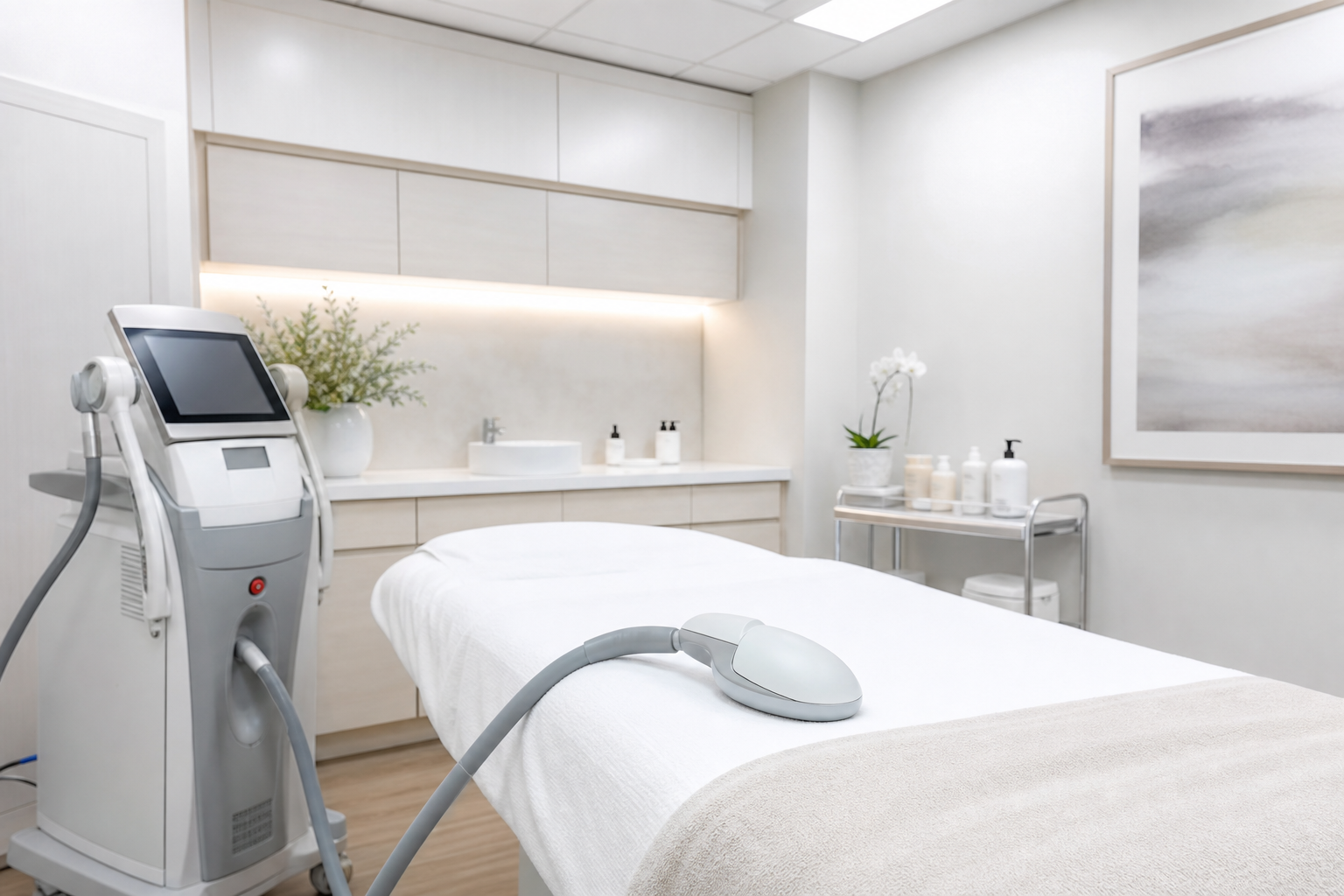
JH Beauty's menu describes its body sculpting as a treatment "featuring Japanese high-efficiency technology for sculpting and fat reduction." The menu does not name the device model or its settings, so this page does not quote frequencies, depths or timings for the equipment used in the studio. If those details matter to you, ask at your appointment.
Two things to keep in mind from the start. First, body contouring is about shape, not weight. The FDA is explicit: "Non-invasive body contouring does not treat obesity or improve your health. It will not result in weight loss or contribute to the health benefits associated with weight loss." Second, outcomes are not guaranteed. In the FDA's words, "not everyone responds to body contouring procedures or achieves their desired effect, results may be temporary, and you may need more than one treatment."
What It Can and Can't Do
Based on the FDA's description, a realistic way to think about cavitation is as an option for people who want to change the shape of a specific area, who understand that any change may be modest or temporary, and who are not looking for weight loss.
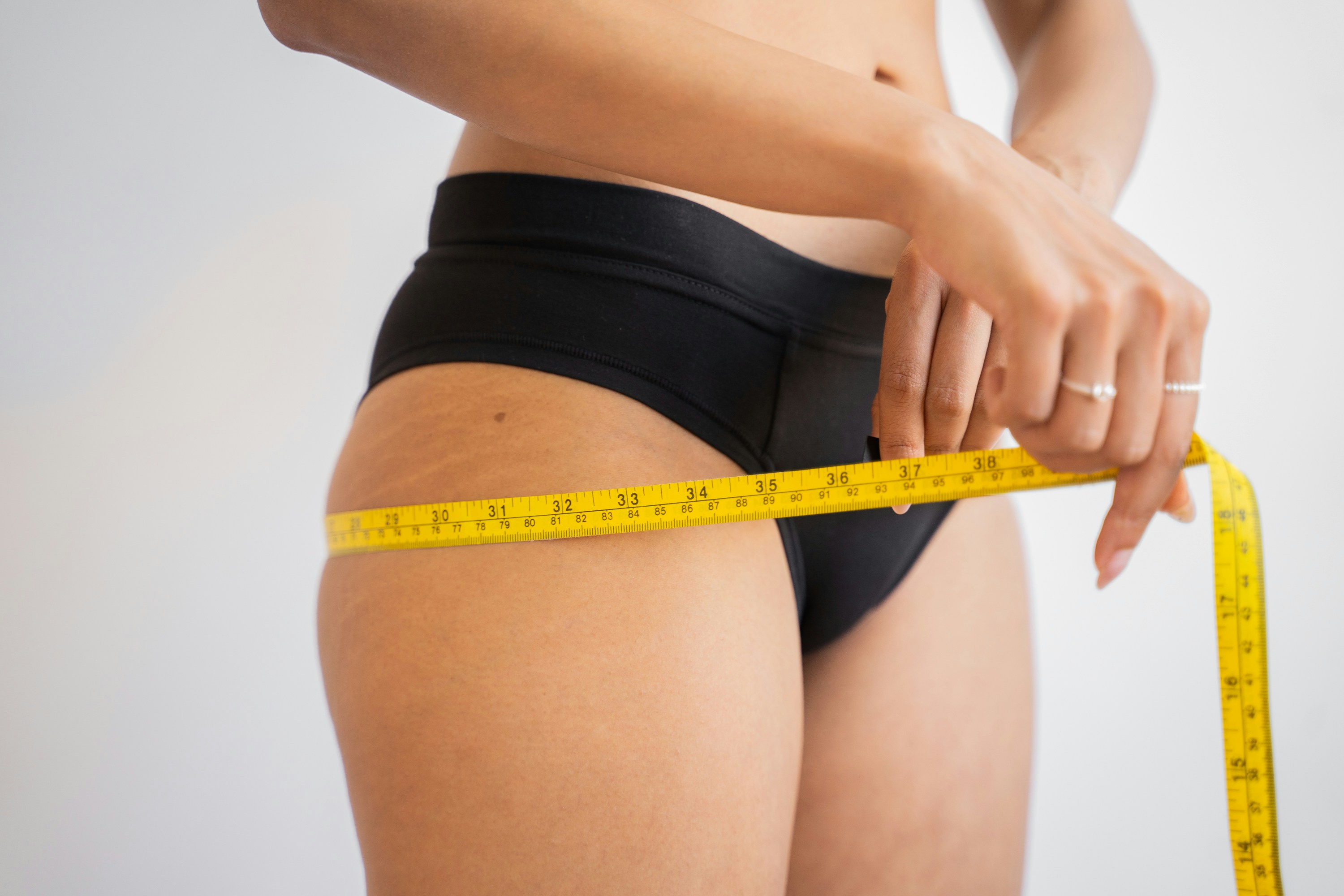
What it may do: reduce the circumference of a treated area, according to the FDA's description of ultrasound contouring. How much, and for how long, varies from person to person.
What it doesn't do:
- Weight loss. The FDA says non-invasive contouring "will not result in weight loss."
- Treat obesity or improve health. Also from the FDA: it "does not treat obesity or improve your health."
- Guarantee a lasting result. Results "may be temporary," and you "may need more than one treatment."
- Treat cellulite reliably. The FDA explains that cellulite's dimples "are caused by short strands of connective tissue (fibrous septae)," with soft, fatty mounds thought to come from "extra fluid between the fat cells." It describes radiofrequency, not ultrasound, as the technology that "may temporarily improve" cellulite. This page makes no cellulite claim for cavitation.
JH Beauty's RF Anti-aging V-Lifting Therapy is a facial treatment, not a body one; for facial options, see anti-aging facials in Sunnyvale.
Possible Side Effects and Risks
A non-invasive treatment is not risk-free. The FDA lists these common adverse effects across body contouring procedures: "pain or discomfort, redness, swelling, bruising, nodules (lumpiness you can feel but not see)." For ultrasound specifically, it warns that "ultrasound can cause burns in tissue" and lists potential "nerve damage." Healthline lists redness, bruising and headache as temporary reactions, and notes that uneven results, such as lumps or dimples, can happen and may need further treatment.
How a session feels differs between people. If you feel pain, strong heat or anything that worries you during a session, say so straight away. If you notice burns, lasting pain, numbness or lumps afterwards, contact the studio and see a doctor.
The FDA also suggests asking whoever performs the procedure "how they clean devices between patients and whether there are any disposable parts." That is a fair question at any studio.
Cavi-Lipo Cost in Sunnyvale
JH Beauty prices body sculpting per session, with no packages on its menu:
- Small Parts Body Care: $98 for 30 minutes.
- Big Parts Body Care: $178 for 60 minutes.
The menu doesn't define which body areas count as small or large, so ask which option fits the area you have in mind when you book.
For context, Healthline reports an average of $250 to $350 per ultrasonic cavitation treatment, and an average of $1,300 for nonsurgical fat reduction in general. Prices vary by provider and area treated.
Working out the cost of a series
Because the FDA notes you "may need more than one treatment," it helps to think about the cost of several visits, not just one. Multiply the per-session price by the number of sessions you and your provider agree on: for example, six small-area sessions at $98 come to $588, and six large-area sessions at $178 come to $1,068. These are illustrations of the arithmetic, not a recommended number of sessions.
When you compare studios, compare like with like: which area is treated, how many minutes of treatment you get, and whether a price is per session or part of a package. The FDA's suggested questions help here too: ask "how many treatments will be needed, how long the effects are expected to last, and whether additional procedures will be needed to maintain the effect."
Cavitation Compared With Other Options
Cavitation vs. cryolipolysis (fat freezing)
The FDA describes cryolipolysis as a treatment that targets pinched fat with cold, and says "the fat released from damaged fat cells is slowly cleared by the body's immune system, usually within two to three months." It also names a specific complication, paradoxical adipose hyperplasia, in which "fatty tissue grows instead of shrinking in the treated area." Cryolipolysis devices, pricing and the number of treatments vary by provider, so ask any clinic for the device's cleared uses and its own pricing. JH Beauty does not offer cryolipolysis.
Cavitation vs. liposuction
Liposuction is surgery, with anesthesia and recovery time. The American Society of Plastic Surgeons (ASPS) reported on a study in which "the overall complication rate was 1.5 percent," and in which patients having "'large-volume' liposuction of more than five liters had a higher overall complication rate: 3.7 versus 1.1 percent." Cavitation involves no incisions or anesthesia, and the trade-off is in the results: Healthline reports that most people need 1 to 3 visits for visible results, with final results showing in 6 to 12 weeks, and the FDA notes that many non-invasive contouring procedures give only a temporary improvement in the appearance of a bulge. Cavitation is a way to refine an area, not to change it dramatically, and it is not a substitute for surgery; if you are considering liposuction, talk to a board-certified plastic surgeon.
Cavitation vs. radiofrequency body treatments
The FDA describes radiofrequency body devices as heating fat cells and connective tissue, which may "temporarily improve" the appearance of cellulite or reduce circumference. JH Beauty's menu lists body sculpting sessions on their own; its RF treatment is for the face.
Who Should Skip It or Ask a Doctor First
The FDA's core advice is to "talk with your health care provider about the benefits and risks associated with body contouring devices and procedures." That matters most if any of these apply to you:
- You are pregnant or breastfeeding.
- You have a pacemaker, another implanted device or metal implants near the area to be treated.
- You have a medical condition, or take medication, and are unsure whether the treatment is suitable.
- You have broken skin, a rash or an infection in the area.
- Your goal is weight loss or better health, which the FDA says body contouring does not provide.
Healthline describes typical candidates as people who are already within about 15 pounds of their goal weight, in good overall health and not smoking, who want to address a localized area of fat. If loose skin, rather than fat, is your main concern, ask about skin-tightening options instead.
Mention any health conditions when you book, and ask the studio whether a small-area or large-area session fits what you want to treat.
What to Ask Before You Book
Whether you book at JH Beauty or elsewhere, these questions, several of them drawn from the FDA's guidance, help you know what you're getting:
- Which device do you use, and which area can it treat?
- How many sessions do you expect I'll need, and how long are the effects expected to last?
- What side effects should I watch for, and who do I contact if I have one?
- How do you clean the device between clients, and are any parts disposable? If so, is a new one used for each session?
- Is there anything I should do before the session, or avoid afterward?
- What will the treated area look and feel like right after the session?
- Is there anything about my health, pregnancy or implants that rules it out?
Before and After a Session
Follow the instructions the studio gives you for your session. Wear clothing that is easy to remove from the area being treated, and tell your provider about any medical conditions, medications, implants or pregnancy before you start. Afterwards, watch the treated area for any of the adverse effects the FDA lists, such as redness, swelling, bruising, pain or lumpiness, and contact the studio and a doctor if anything concerns you or doesn't settle. Keeping a record of measurements and photos over the following weeks can help you judge whether the treatment made a difference for you, since results appear gradually and vary.
JH Beauty is at 525 W Remington Dr, Suite 102, Sunnyvale, open Tuesday through Sunday, 10:45 am to 8 pm. You can book a body sculpting session online or call (650) 784-6076 with questions first.
FAQ: Cavi-Lipo in Sunnyvale
How much does cavi-lipo cost at JH Beauty?
$98 for a small area (30 minutes) or $178 for a large area (60 minutes), priced per session. The menu lists no packages.
Does cavi-lipo hurt?
Experiences vary. The FDA lists "pain or discomfort" among the common adverse effects of body contouring and warns that ultrasound can cause burns, so tell your provider straight away if anything feels painful or too hot.
Is there downtime?
It is non-invasive, but the FDA notes possible redness, swelling, bruising and lumpiness afterwards. How you feel after a session varies from person to person.
Will I lose weight?
No. The FDA says non-invasive body contouring "will not result in weight loss or contribute to the health benefits associated with weight loss." It is about shape, not the number on the scale.
How many sessions will I need, and how long do results last?
There is no fixed answer. The FDA says results "may be temporary" and "you may need more than one treatment." Healthline reports that most people need 1 to 3 visits for visible results, with final results showing in 6 to 12 weeks. Ask your provider how many treatments they suggest and how long they expect the effect to last.
Can cavi-lipo get rid of cellulite?
This page makes no cellulite claim for cavitation. The FDA links cellulite's dimples to connective-tissue strands and describes radiofrequency, not ultrasound, as the technology that may temporarily improve its appearance.
About the author
Ruby
Owner and Lead Esthetician, J.H Beauty
Owner of JH BEAUTY, a skincare studio in Sunnyvale, CA offering advanced facial treatments, scalp care, and body management using technologies from Japan, Korea, Switzerland, and Italy.