
Organic Essential Oil Facials: What's In the Oils
What "organic" and "essential oil" mean on a facial menu, what research says about plant oils and skin allergy, and what to ask before booking.
What JH Beauty's Organic Essential-Oil Facial Is
JH Beauty's Organic Essential-Oil Advanced Facial (疗愈系有机香氛面部精油护理) is a 90-minute facial priced at $238. Beyond the name, price and length, the menu does not publish a description: it does not list which oils are used, whether they are certified organic, or the steps of the session. So this guide does not guess at those. It explains what the words on the menu mean, what the evidence says about oils on skin, and what to ask the studio before you book.
If you want to know exactly what goes on your face, ask when you book: which essential oils and which carrier oil are in the blend, whether they carry an organic certification and from which certifier, and what the session involves. That is a reasonable question for any spa that uses the word "organic".
Essential Oils and Carrier Oils Are Different Things
"Oil facial" can mean two quite different ingredients, and it helps to separate them.
- Essential oils are, in DermNet's definition, volatile aromatic substances obtained from plant material through methods including distillation and extraction. They are what gives an oil blend its scent. DermNet notes that each essential oil can have over 100 constituents, and that essential oils are used in aromatherapy, where they are often applied to the skin or inhaled.
- Carrier oils are the fatty plant oils — safflower, sunflower, jojoba, olive and others — that make up most of a facial oil. They are not aromatic in the same way; they are made mostly of fatty acids and related lipids.
The distinction matters because the two do different jobs and carry different risks. The research on skin-barrier effects that people often quote for "facial oils" is mostly about carrier oils. The main skin-safety concern that dermatology sources raise about essential oils is allergy, covered below.
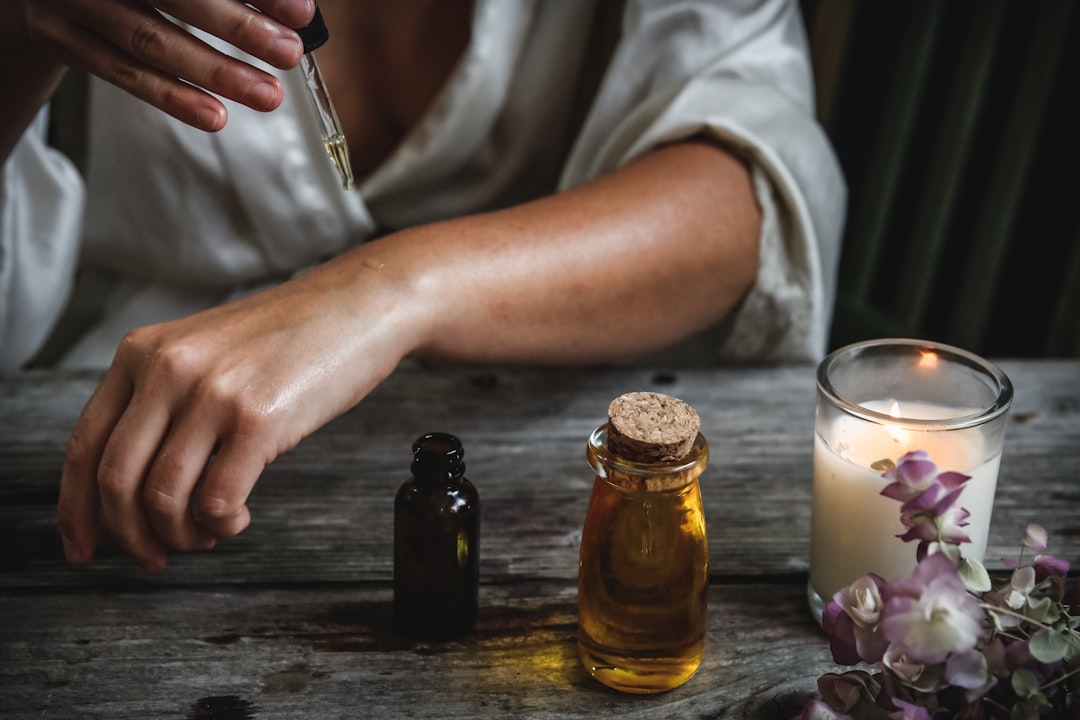
Photo: Chelsea Shapouri / Unsplash
What "Organic" Means on a Skincare Label
In the US, the FDA does not define the term "organic" for cosmetics. According to the FDA, the USDA's National Organic Program (NOP) defines "organic" and provides for certification that agricultural ingredients were produced under conditions that meet that definition, with labeling standards based on the percentage of organic ingredients in a product.
For crops, the USDA's organic standards require, among other things, that the land has had no prohibited substances applied to it for at least three years before harvest, and that products are verified by a USDA-accredited certifying agent before they can be labeled USDA organic. "Organic" is not the same as "no synthetics": under the USDA's National List, synthetic substances are prohibited in organic crop production unless specifically allowed, and some are allowed. Other countries and private schemes have their own standards, so if a product is labeled organic, the useful question is which standard and which certifier stand behind it.
Organic is also not a safety claim. The FDA says plainly that an ingredient's source does not determine its safety, and that many plants, whether or not they are organically grown, contain substances that may be toxic or allergenic. The AAD makes the same point about skin care in general: "all natural" in no way means hypoallergenic.
Essential Oils and Skin Reactions
The best-documented skin risk from essential oils is allergic contact dermatitis. DermNet describes it as a delayed reaction that generally occurs 24–72 hours after exposure, with itching, redness and scaling as the most common symptoms. It lists tea tree, ylang-ylang, lemongrass, sandalwood, clove, jasmine absolute and narcissus absolute among the essential oils that commonly cause it, and notes that people with atopic dermatitis are among those at higher risk. People allergic to one essential oil often react to several, presumably because the oils share constituents.
Geranium oil, a common ingredient in aromatic blends, is no exception: DermNet reports allergic contact dermatitis to geranium oil and names geraniol as the probable allergen. We found no human studies showing that geranium oil in a facial reduces redness or regulates oil production, so treat claims like that as marketing.
What this means in practice: if you have eczema, rosacea, a history of fragrance allergy or a reaction to a "natural" product, tell the esthetician before the facial starts and ask whether the blend can be changed or left out. Because the reaction is delayed, a problem may not show until a day or more afterward. A quick home test cannot rule out allergy; formal patch testing is done by a dermatologist, and DermNet describes patches left on for 48 hours and the site checked again 48–96 hours later.
Plant Oils and the Skin Barrier: What the Research Says
A 2017 review in the International Journal of Molecular Sciences looked at topical use of many plant oils, including safflower seed, sunflower seed, olive, coconut and jojoba oil. Some of its points are useful for anyone choosing a facial oil:
- Linoleic acid, an omega-6 fatty acid, is the most abundant polyunsaturated fatty acid in the skin's outer layer, and the skin cannot make it itself. The review describes linoleic acid as supporting processes involved in skin-barrier repair, and notes that oils such as sunflower, sesame or safflower seed oil have been suggested as good options for skin-barrier homeostasis.
- Not every oil behaves the same way. The review reports that oils made mostly of oleic acid increased skin permeability more than oils with a more even mix of fatty acids, which is one reason olive oil is not an automatic choice for a barrier-focused product.
- The evidence is uneven. In one pilot study the review cites, sunflower and olive oil on newborn skin showed no difference in barrier measurements, and for safflower seed oil specifically the review's summary table leaves most effects unconfirmed.
So a carrier oil high in linoleic acid is a reasonable ingredient to look for, but a single facial is not a proven barrier treatment. How a particular blend performs on your skin depends on the oils in it and on your skin.
Photo: Towfiqu Barbhuiya / Unsplash
Who Might Choose It, and When Something Else Fits Better
An aroma-focused oil facial is a choice people make as much for the experience as for the skin. If you enjoy scented treatments and have no history of fragrance or essential-oil allergy, it may suit you. If you do have that history, or reactive skin, ask whether the blend can be adjusted, or choose a different facial. For hydration, dullness or sensitive skin, JH Beauty's own guidance suggests the Korean facial ($238, 90 minutes) as the place to start.
An oil facial is also not the tool for every concern. For congestion and blackheads, the studio points people to its European deep cleaning facial ($168, 75 minutes); for firmness and contour, to RF Anti-aging V-Lifting Therapy ($278, 90 minutes). The Chemical Peeling Series ($278, 90 minutes) is listed on the menu for acne, anti-aging and lightening. Deep, painful or persistent acne is a job for a board-certified dermatologist first.
If you are pregnant or breastfeeding, check with your doctor before booking and tell the studio: our guide to pregnancy-safe facials lists essential oils among the ingredients it says to avoid during pregnancy.
Before You Book: Questions and Practical Details
Because the menu doesn't describe the session, ask these when you book:
- Which essential oils and which carrier oil are in the blend, and can it be made fragrance-light or oil-specific for sensitive skin?
- Are the oils certified organic, and by whom?
- What does the 90 minutes include, and is there anything to avoid afterward?
JH Beauty's general guidance also applies: tell the studio what you use at home, don't book a facial while on isotretinoin (Accutane) or within six months of finishing, and stop prescription retinoids about five days beforehand. The studio at 525 W Remington Dr, Suite 102, Sunnyvale, is open Tuesday through Sunday, 10:45 am to 8 pm; book through the online menu or call (650) 784-6076. The booking page states that cancelling or rescheduling at least 24 hours ahead gets a full refund, and a $50 fee applies within 24 hours. Between visits, our Korean skincare routine guide covers a simple home routine.
FAQ: Organic Essential Oil Facials
Is an essential oil facial safe for sensitive or rosacea-prone skin?
Not automatically. Essential oils are a known cause of allergic contact dermatitis, and the reaction can appear 24–72 hours later. Tell the esthetician about rosacea, eczema or any fragrance or plant allergy before the session and ask whether the blend can be changed.
What's the difference between essential oils and the oil in a facial oil?
Essential oils are volatile aromatic plant extracts used mainly for scent. Most of a facial oil is a fatty carrier oil such as safflower or sunflower, and that is the part research links to the skin barrier.
Does "organic" mean safer?
No. The FDA says an ingredient's source does not determine its safety, and plants, organic or not, can contain allergenic substances. "Organic" describes how the ingredient was produced and, in the US, is certified under the USDA's National Organic Program.
Can I get an essential oil facial if I'm pregnant?
Check with your doctor first and tell the studio you're pregnant or breastfeeding when you book. Our guide to pregnancy-safe facials lists essential oils among the ingredients it says to avoid during pregnancy.
Will this facial help with acne?
We found no evidence that an essential-oil facial treats acne. For breakouts, ask the studio about its deep cleaning facial or chemical peel, and see a board-certified dermatologist for deep, painful or persistent acne.
About the author
Ruby
Owner and Lead Esthetician, J.H Beauty
Owner of JH BEAUTY, a skincare studio in Sunnyvale, CA offering advanced facial treatments, scalp care, and body management using technologies from Japan, Korea, Switzerland, and Italy.