Melasma Treatment: Vitamin C, Peels & What Works
Evidence-based melasma treatments from vitamin C therapy to chemical peels. Learn what works for stubborn pigmentation and what to avoid.
What Is Melasma and Why Is It So Stubborn?
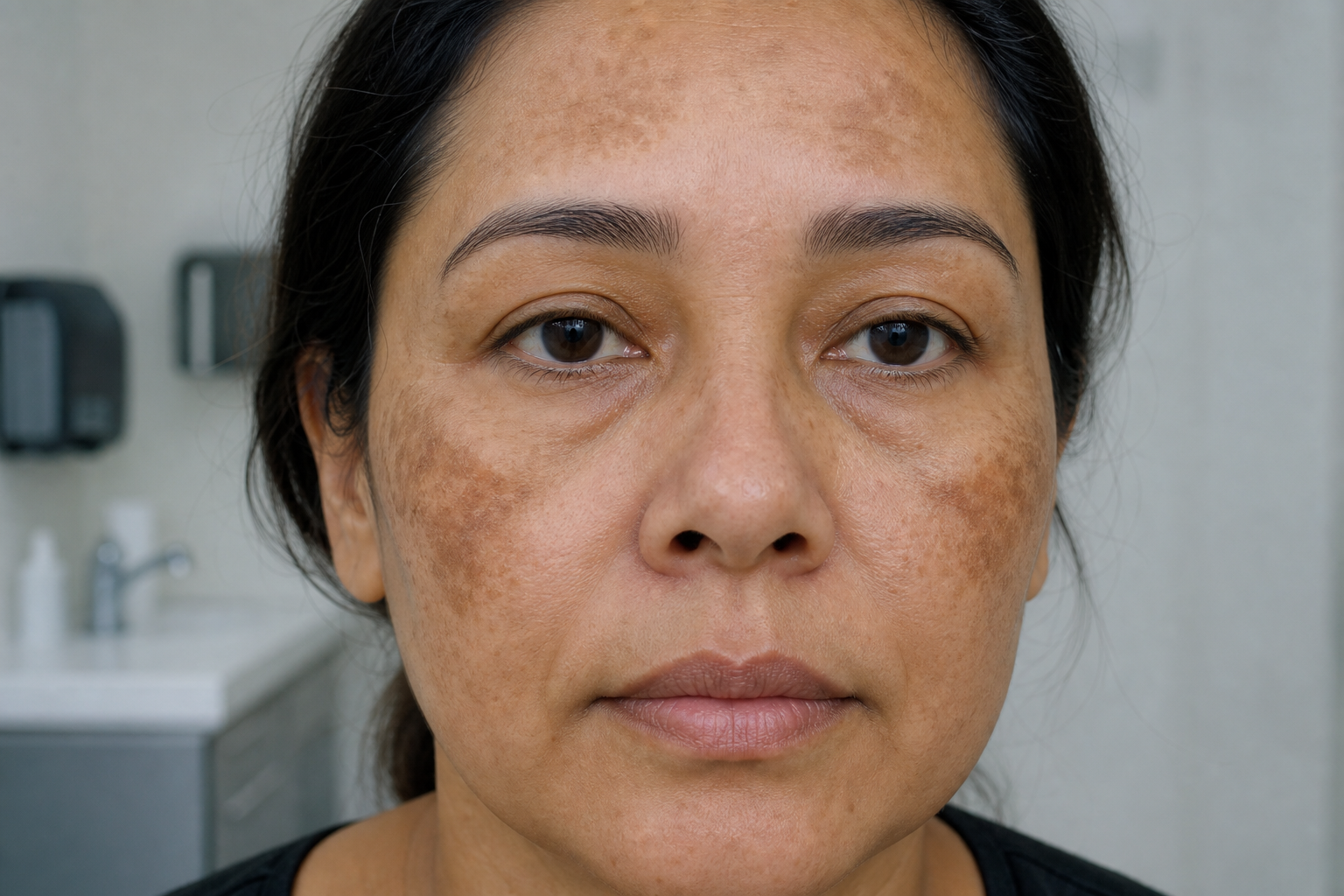
Melasma is a chronic pigmentation disorder that shows up as brown or gray-brown patches on your face—typically on the cheeks, forehead, upper lip, nose bridge, and chin. It's not a rash, not acne scarring, and not "regular" dark spots. Melasma sits deeper in the skin than surface hyperpigmentation, which is why it's notoriously difficult to treat and frustratingly prone to coming back even after you've cleared it.
Here's what makes melasma different: while most dark spots (like sun damage or post-inflammatory hyperpigmentation) live in the epidermis (the top layer of skin), melasma often affects both the epidermis and the dermis (the deeper structural layer). When pigment is lodged in the dermis, topical treatments have a harder time reaching it. That's why a product that fades regular dark spots might barely touch melasma.
The root cause of melasma is melanocyte hyperactivity—the pigment-producing cells in your skin go into overdrive and dump excess melanin into surrounding tissue. What triggers this? The three biggest culprits are hormones (pregnancy, birth control, hormone therapy), UV exposure (even indirect sun through a car window), and heat (including from hot yoga, saunas, or cooking over a stove). Genetics also play a role—melasma is more common in women with medium to dark skin tones (Fitzpatrick types III-VI) and runs in families.
Once melasma is triggered, it becomes a feedback loop. UV light and heat stimulate melanocytes to produce more pigment. That pigment darkens with more UV exposure. Meanwhile, inflammation from harsh treatments or picking at your skin can make melanocytes even more reactive, deepening the patches. Breaking this cycle requires a multi-pronged approach: blocking melanin production, accelerating cell turnover to shed pigmented cells, and religiously protecting your skin from triggers.
Vitamin C Therapy: How It Targets Melasma at the Source
Vitamin C (L-ascorbic acid) is one of the most evidence-backed ingredients for melasma because it works on multiple fronts. First, it's a tyrosinase inhibitor—it blocks the enzyme that melanocytes need to produce melanin. Less tyrosinase activity means less pigment gets made in the first place. Second, vitamin C is a potent antioxidant that neutralizes free radicals from UV exposure, reducing the oxidative stress that triggers melanocyte activation. Third, it brightens existing pigmentation by interfering with melanin transfer from melanocytes to surrounding skin cells.
Not all vitamin C is created equal. For melasma, you need a high-concentration, stabilized formula—ideally 15-20% L-ascorbic acid at a pH of 3.5 or lower. Why? L-ascorbic acid is notoriously unstable; it oxidizes (turns brown) when exposed to light and air, losing its efficacy. Professional-grade vitamin C serums use airless pumps, opaque bottles, and stabilizing agents like ferulic acid and vitamin E to keep the L-ascorbic acid active. Drugstore vitamin C products often use vitamin C derivatives (like magnesium ascorbyl phosphate) that are more stable but less potent—they work for general brightening but don't have the punch needed for stubborn melasma.
At JH Beauty, our melasma treatment protocol includes medical-grade vitamin C serums applied during facials and recommended for daily at-home use. During the facial, we use a 20% L-ascorbic acid serum layered with niacinamide (which also inhibits melanin transfer) and hyaluronic acid to drive the actives deeper into the skin. The combination is more effective than vitamin C alone because niacinamide and vitamin C attack melasma through different pathways—one blocks production, the other blocks transfer.
Results from vitamin C therapy are gradual but real. Most clients see visible lightening of melasma patches after 8-12 weeks of consistent use (daily at home plus monthly facials). The key word is consistent—skipping days or using vitamin C sporadically won't give you the cumulative effect needed to suppress melanocyte activity long-term. You're essentially re-training your skin to produce less pigment, and that takes time and repetition.
Chemical Peels for Melasma: Which Types Work and Which Make It Worse
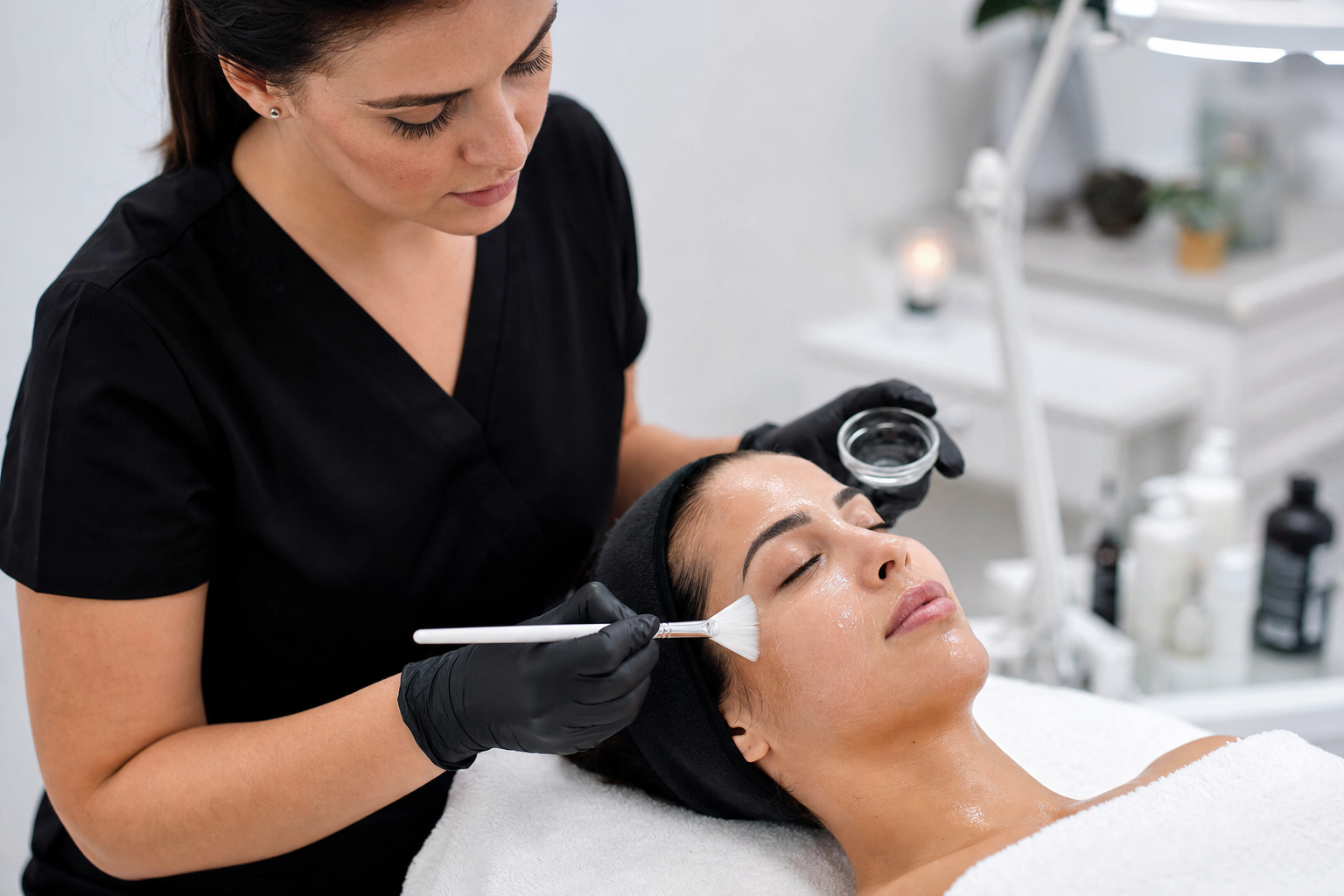
Chemical peels can be highly effective for melasma, but they're also risky if done wrong. The right peel accelerates cell turnover, shedding pigmented cells faster than they can accumulate. The wrong peel (too aggressive, wrong acid, or done on inflamed skin) can trigger post-inflammatory hyperpigmentation (PIH) that makes your melasma look even worse. So which peels work?
Glycolic Acid Peels (30-50%)
Glycolic acid is an alpha hydroxy acid (AHA) that exfoliates the epidermis by dissolving the bonds holding dead skin cells together. For melasma, glycolic peels work best at concentrations of 30-50% applied in a series of 4-6 treatments spaced 2-4 weeks apart. Glycolic acid is small enough to penetrate deeply, making it effective for epidermal melasma (pigment in the top layer). However, it's less effective for dermal melasma (pigment in the deeper layer) and can cause irritation in sensitive skin, which may worsen pigmentation. Glycolic peels are best for lighter skin tones (Fitzpatrick I-III) with mild to moderate melasma.
Mandelic Acid Peels (30-40%)
Mandelic acid is a gentler AHA with a larger molecular structure, so it penetrates more slowly and causes less irritation than glycolic acid. This makes it a safer choice for darker skin tones (Fitzpatrick IV-VI) where the risk of PIH is higher. Mandelic acid also has mild antibacterial properties, so it's a good option if you have melasma plus acne. Results are slower than glycolic peels—you'll need 6-8 treatments to see significant lightening—but the reduced risk of rebound pigmentation makes it worth the patience.
Jessner's Peel
Jessner's peel is a combination of salicylic acid, lactic acid, and resorcinol. It's a medium-depth peel that targets both the epidermis and upper dermis, making it more effective for mixed-depth melasma. The downside? It causes visible peeling (you'll shed skin for 5-7 days), so it's not ideal if you can't take downtime. Jessner's is typically reserved for stubborn melasma that hasn't responded to milder peels, and it should only be done by an experienced esthetician or dermatologist who can control the depth of penetration.
Tranexamic Acid Peels
Tranexamic acid is a newer melasma treatment that inhibits melanin production through a different mechanism than vitamin C—it blocks plasminogen, a molecule that activates melanocytes. Tranexamic acid peels (or serums applied during facials) have shown impressive results in clinical studies, with 50-60% improvement in melasma severity after 12 weeks. The advantage is that tranexamic acid doesn't cause the irritation and peeling that traditional chemical exfoliants do, so it's safer for sensitive skin and darker tones. At JH Beauty, we offer tranexamic acid as part of our melasma protocol for clients who've had bad reactions to glycolic or mandelic peels.
What to avoid: High-strength TCA peels, phenol peels, or laser treatments. These go too deep and carry a high risk of causing rebound hyperpigmentation in melasma-prone skin. If someone suggests a TCA peel stronger than 15% or any laser that creates heat (like IPL or ablative CO2), get a second opinion. Heat is melasma's worst enemy.
The Melasma Treatment Protocol at JH Beauty
Treating melasma requires a customized, multi-step approach—there's no single "magic bullet" treatment. At JH Beauty, we start with a thorough skin analysis to determine your melasma type (epidermal, dermal, or mixed), your Fitzpatrick skin type (which determines what treatments are safe), and your trigger profile (hormonal, UV, heat, or a combination). Based on that assessment, we design a protocol that typically includes the following phases:
Phase 1: Prep & Barrier Repair (Weeks 1-2)
Before we do any active treatments, we need to ensure your skin barrier is healthy. Melasma-prone skin is often sensitized from over-exfoliation, harsh products, or sun damage. We start with gentle hydrating facials using niacinamide, ceramides, and hyaluronic acid to repair your barrier and reduce inflammation. Why? Because inflamed skin produces more melanin—treating melasma on irritated skin is like trying to put out a fire while pouring gasoline on it. Once your skin is calm and hydrated, it'll respond better to active treatments without triggering rebound pigmentation.
Phase 2: Active Treatment (Weeks 3-12)
This is where we introduce the heavy hitters: vitamin C serums, chemical peels (glycolic, mandelic, or tranexamic acid depending on your skin type), and at-home prescription products if you're working with a dermatologist (hydroquinone, tretinoin, or azelaic acid). We recommend one facial every 2-3 weeks during this phase, with daily at-home care between sessions. Each facial includes a chemical peel or high-strength vitamin C treatment, lymphatic drainage massage to reduce inflammation, and LED light therapy (red and near-infrared wavelengths) to accelerate healing and reduce melanocyte activity.
Phase 3: Maintenance & Protection (Month 3+)
Once you've achieved 50-70% lightening (which most clients reach after 8-12 weeks of consistent treatment), you shift to maintenance mode. This means monthly facials, continued at-home vitamin C and niacinamide use, and non-negotiable sun protection. Melasma is chronic—even if it fades completely, it can come roaring back with hormone changes, sun exposure, or heat. Maintenance isn't optional; it's the price of keeping your results.
Throughout all phases, we emphasize sunscreen and sun avoidance. You need broad-spectrum SPF 50+ applied every morning and reapplied every 2 hours if you're outdoors. We also recommend mineral sunscreens (zinc oxide or titanium dioxide) over chemical sunscreens because some chemical filters (like avobenzone and oxybenzone) can generate free radicals that worsen pigmentation. If you're not willing to commit to daily sunscreen, melasma treatment won't work—period.
What Doesn't Work (and What Makes Melasma Worse)
Let's talk about what not to do. Melasma is tricky, and certain treatments or habits will make it worse, not better. Here's what to avoid:
Aggressive exfoliation or scrubs. Physical scrubs, rough washcloths, or over-exfoliating with acids can cause micro-inflammation that triggers more melanin production. Melasma-prone skin needs gentle, controlled exfoliation—not daily scrubbing. If your skin feels raw, tight, or red after cleansing, you're overdoing it.
Heat-based treatments. Anything that heats your skin—IPL (Intense Pulsed Light), laser hair removal on the face, hot yoga, saunas, or even cooking over a hot stove—can activate melanocytes and darken melasma. Heat stimulates blood flow, which sounds good, but in melasma-prone skin it also stimulates pigment production. If you love hot yoga or saunas, you'll need to choose between that and clear skin. Same goes for laser treatments—there are a few melasma-safe lasers (like low-fluence Q-switched Nd:YAG), but most lasers create heat and inflammation that worsen pigmentation.
Hormonal triggers you're ignoring. If your melasma flared during pregnancy or when you started birth control, it's hormonally driven. That means it'll be harder to treat with topicals alone, and it may come back every time your hormones fluctuate (pregnancy, perimenopause, hormone therapy). You might need to work with your doctor to switch birth control methods or manage hormone levels. Topical treatments can lighten hormone-driven melasma, but they won't "cure" it if the hormonal trigger is still active.
Inconsistent sun protection. Skipping sunscreen on cloudy days, forgetting to reapply, or thinking a foundation with SPF 15 is enough will sabotage your treatment. UV light is the #1 trigger for melasma. Even indirect sun exposure (through a car window, sitting near a window indoors) can darken pigmentation. You need SPF 50+ mineral sunscreen applied generously every morning, reapplied every 2 hours, plus physical protection (hats, sunglasses, staying in the shade). No exceptions.
DIY treatments with lemon juice, baking soda, or hydrogen peroxide. These internet "remedies" are not only ineffective—they're actively harmful. Lemon juice is photosensitizing (makes your skin more reactive to UV, worsening pigmentation), baking soda disrupts your skin's pH and damages the barrier, and hydrogen peroxide is a harsh oxidizer that causes irritation and PIH. Stick to evidence-based treatments with proven safety profiles.
At-Home Care: What to Use Between Facials
Professional treatments at JH Beauty provide the intensive intervention, but your at-home routine is what keeps melasma suppressed between sessions. Here's the daily regimen we recommend to every melasma client:
Morning Routine
- Gentle cleanser: Use a sulfate-free, pH-balanced cleanser that won't strip your skin. Avoid anything that foams heavily or leaves your skin feeling tight.
- Vitamin C serum: Apply 2-3 drops of 15-20% L-ascorbic acid serum (like SkinCeuticals C E Ferulic or Timeless Vitamin C) to clean, dry skin. Let it absorb for 2-3 minutes before applying other products.
- Niacinamide serum: Layer a 5-10% niacinamide serum over the vitamin C. The two work synergistically to block melanin production and transfer.
- Moisturizer with ceramides: A lightweight, barrier-repairing moisturizer keeps your skin hydrated without clogging pores.
- SPF 50+ mineral sunscreen: This is non-negotiable. Apply a nickel-sized amount (about 1/4 teaspoon) to your face and neck. Reapply every 2 hours if you're outdoors or near windows.
Evening Routine
- Double cleanse: Start with an oil-based cleanser to remove sunscreen and makeup, then follow with your regular cleanser.
- Prescription treatment (if applicable): If your dermatologist prescribed hydroquinone, tretinoin, or azelaic acid, apply it now. These are potent melanin inhibitors and cell turnover accelerators, but they require medical supervision.
- Tranexamic acid serum or azelaic acid: If you're not using a prescription, a 5% tranexamic acid serum or 10% azelaic acid product is a good over-the-counter alternative. Both inhibit melanin production and reduce inflammation.
- Barrier repair cream: Finish with a richer moisturizer at night to support skin repair while you sleep.
What to avoid in your routine: Fragrances, essential oils, alcohol-based toners, harsh scrubs, and any product that makes your skin feel hot, tingly, or red. If you're using prescription retinoids, start slow (2-3 nights per week) and build up tolerance to avoid irritation. Irritated skin = more pigment.
Consistency is everything with melasma. You can't do the routine perfectly for two weeks, skip a week, and expect results. Your melanocytes are constantly producing pigment, so you need to constantly suppress them. Think of it like taking blood pressure medication—you wouldn't take it for a few days, stop, and expect your blood pressure to stay low. Melasma works the same way.
Frequently Asked Questions About Melasma Treatment
How long does it take to see results from melasma treatment?
Most clients see noticeable lightening after 8-12 weeks of consistent treatment (professional facials every 2-3 weeks plus daily at-home care). The timeline depends on your melasma depth—epidermal melasma (pigment in the top layer) responds faster, while dermal melasma (pigment in the deeper layer) can take 3-6 months or longer. Mixed melasma (both layers) typically shows partial improvement after 8 weeks, with continued gradual fading over 4-6 months. Patience and consistency are critical—melasma doesn't disappear overnight.
Can melasma come back after treatment?
Yes, melasma is chronic and can recur if triggers are present. Pregnancy, hormonal changes, UV exposure, and heat can all reactivate melanocytes and bring pigmentation back. That's why maintenance is essential: monthly facials, daily sunscreen, and continued use of vitamin C or prescription treatments keep melasma suppressed. Many clients maintain 70-90% improvement long-term with consistent prevention, but stopping treatment usually leads to relapse within 3-6 months.
Is melasma the same as sunspots or age spots?
No. Sunspots (solar lentigines) and age spots are isolated patches of pigmentation caused by cumulative UV damage. They're usually smaller, rounder, and confined to the epidermis, so they respond well to laser treatments and topical lightening agents. Melasma is hormonally driven, appears in larger, irregular patches, and often affects both the epidermis and dermis. It's much harder to treat and prone to worsening with heat-based treatments that work fine for sunspots. If you're not sure which you have, get a professional skin analysis—the treatment approach is completely different.
Can I use retinol or tretinoin if I have melasma?
Yes, but carefully. Prescription tretinoin is one of the most effective melasma treatments because it accelerates cell turnover, shedding pigmented cells faster. However, retinoids also cause irritation, dryness, and sun sensitivity—and irritated skin produces more melanin. The key is to start slow (2-3 nights per week), use a pea-sized amount, and buffer with moisturizer if needed. Never use retinoids without daily SPF 50+ sunscreen. If your skin gets red, flaky, or burns, scale back immediately. Over-the-counter retinol is gentler but also less effective—prescription tretinoin gives better results if your skin can tolerate it.
Does hydroquinone really work for melasma?
Yes, hydroquinone is the gold-standard prescription treatment for melasma. It's a potent tyrosinase inhibitor that blocks melanin production at the source. Clinical studies show 60-80% improvement in melasma severity after 3-6 months of twice-daily use. However, hydroquinone has downsides: it can cause irritation, rebound pigmentation if stopped abruptly, and a rare condition called ochronosis (blue-black darkening) with prolonged use. Most dermatologists prescribe it in 3-month cycles with breaks in between. It's highly effective but requires medical supervision. At JH Beauty, we coordinate with your dermatologist if you're using hydroquinone to ensure our facial treatments support it without causing over-irritation.
What's the difference between melasma and post-inflammatory hyperpigmentation (PIH)?
PIH is dark spots left behind after acne, injury, or inflammation. It's reactive—your skin produces excess melanin in response to trauma. Melasma is proactive—your melanocytes are chronically hyperactive due to hormones, UV, or genetics, even without any injury. PIH usually fades on its own over 6-12 months with sunscreen and gentle exfoliation. Melasma doesn't fade without active treatment and often gets worse over time if left untreated. The two can coexist (e.g., acne PIH on top of underlying melasma), so proper diagnosis is important.
Can men get melasma?
Yes, though it's less common. About 10% of melasma cases occur in men, usually due to UV exposure, genetics, or medications (like anti-seizure drugs or certain antibiotics that increase photosensitivity). Hormonal triggers are rare in men unless they're using testosterone therapy or have certain endocrine conditions. Treatment is the same: vitamin C, chemical peels, prescription retinoids or hydroquinone, and strict sun protection. Men's melasma tends to respond slightly better than women's because it's usually not hormone-driven.
Is it safe to treat melasma during pregnancy?
Pregnancy often triggers melasma (called "chloasma" or "the mask of pregnancy"), but treatment options are limited because many effective ingredients—hydroquinone, tretinoin, high-strength salicylic acid—aren't recommended during pregnancy. Safe options include topical vitamin C, azelaic acid, gentle mandelic acid peels, and niacinamide. The good news? Pregnancy-related melasma often fades on its own 3-6 months after delivery once hormone levels stabilize. If it doesn't improve postpartum, that's when you can pursue more aggressive treatments. Always consult your OB-GYN before starting any melasma treatment during pregnancy or breastfeeding.
Why Choose JH Beauty for Melasma Treatment in Sunnyvale
Melasma requires expertise—there's a narrow margin between effective treatment and making pigmentation worse. At JH Beauty, we specialize in treating hyperpigmentation in diverse skin tones, which is critical because darker skin (Fitzpatrick types III-VI) has a higher risk of post-inflammatory hyperpigmentation from aggressive treatments. Our estheticians are trained to assess your skin type, customize treatment depth, and monitor your response at every session.
We use medical-grade products with proven efficacy—20% L-ascorbic acid serums, tranexamic acid formulations, and carefully calibrated chemical peels (glycolic, mandelic, Jessner's) chosen based on your skin's sensitivity and melasma depth. We don't use one-size-fits-all protocols. Every facial starts with a skin analysis, and we adjust the treatment plan based on how your melasma is responding.
We also coordinate care if you're working with a dermatologist. If you're using prescription hydroquinone, tretinoin, or oral tranexamic acid, we tailor our facials to complement those treatments without over-irritating your skin. Many clients see faster, more complete results when professional and medical treatments work together.
Location and convenience matter too. JH Beauty is in downtown Sunnyvale, easily accessible from Mountain View, Santa Clara, and Cupertino. We offer flexible scheduling, and our treatment rooms are private and calm—no rushing, no upselling, just focused care. Ready to start treating your melasma? Book a melasma consultation and treatment at JH Beauty. For complementary skin treatments, explore our Cellcosmet anti-aging facials or learn about Hydrafacial for overall skin health.
About the author
Ruby
Owner and Lead Esthetician, J.H Beauty
Owner of JH BEAUTY, a skincare studio in Palo Alto, CA offering advanced facial treatments, scalp care, and body management using technologies from Japan, Korea, Switzerland, and Italy.