
Volume Loss in Sunnyvale: Filler vs. Collagen Facial
What dermal fillers are, what facials can and can't do for volume loss, sourced costs and durations, and JH Beauty's options in Sunnyvale.
Dermal fillers are injected medical devices that add volume under the skin; facial treatments work on the skin's surface and feel, and cannot put back lost volume. The FDA says some fillers are absorbed over time, so the procedure may need repeating, and the American Society of Plastic Surgeons (ASPS) puts the average cost of a hyaluronic acid filler at $715. Fillers are for a licensed health care provider; JH Beauty is a skincare studio in Sunnyvale and does not offer them. Its anti-aging and firmness treatments, such as RF V-Lifting ($278) and Italy Quantus Thermal Remodeling ($398), are on the menu.
Why Faces Lose Volume
The American Academy of Dermatology (AAD) puts it simply: "As we age, our skin loses its youthful fullness" (AAD). That change happens in more than one layer.
Fat. In a cadaver study published in Plastic and Reconstructive Surgery, Rohrich and Pessa found that "the subcutaneous fat of the face is partitioned into discrete anatomic compartments," including separate compartments in the cheek, around the eyes and at the jowl, and concluded that "facial aging is, in part, characterized by how these compartments change with age" and that "the face does not age as a confluent or composite mass" (Rohrich & Pessa, 2007). That is one reason two people of the same age can notice change in different places first.
Bone. A review in Aesthetic Plastic Surgery states that "certain areas of the facial skeleton undergo resorption with aging," naming the midface (the maxilla, including the area beside the nose), parts of the rim of the eye socket, and the prejowl area of the jaw, and says the resulting deficiencies "contribute to the stigmata of the aging face" (Mendelson & Wong, 2012).
Skin and sun. The AAD says that "every time you go outdoors without sun protection or use a tanning bed, ultraviolet (UV) light damages your skin. With time, this damage builds up," and lists loose skin among the effects it treats (AAD).
The practical point: a flat cheek, a hollow under the eye and a loose jawline can have different causes, and a skincare product or facial works at the skin, not on fat compartments or bone. Deciding what is causing the change you see is a job for a medical assessment, not a menu.
How Dermal Fillers Work
The FDA describes dermal fillers as "medical device implants approved by the FDA for use in helping to create a smoother and/or fuller appearance in the face," and lists approved uses including moderate to severe facial wrinkles and skin folds, and "augmentation (increased volume) of lips, cheeks, chin, and back of the hand." Its general consumer page says fillers are approved for adults 22 or older, though individual product approvals set their own age limits (FDA).
Fillers are not all the same material. The FDA's list of approved filler materials (FDA) separates them this way:
- Hyaluronic acid (absorbable): "a type of sugar (polysaccharide) that is present in body tissues, such as in skin and cartilage." The FDA gives effects of approximately 6 to 12 months.
- Calcium hydroxylapatite (absorbable): "a type of mineral that is commonly found in human teeth and bones," with effects of approximately 18 months.
- Poly-L-lactic acid, PLLA (absorbable): "a biodegradable, biocompatible man-made polymer," whose effects may last up to 2 years.
- PMMA microspheres (non-absorbable): "tiny, round, smooth particles that are not absorbed by the body," suspended in a gel that contains bovine collagen.
So "fillers wear off" is true of the absorbable ones, not of PMMA. Individual products also carry their own label claims. For example, Allergan's patient guide says JUVÉDERM VOLUMA XC "in the cheeks can last two years" with optimal treatment, that VOLBELLA XC and JUVÉDERM Ultra XC in the lips "can last up to one year," and that VOLLURE XC for smile lines "can last up to 18 months with optimal treatment" (JUVÉDERM treatment guide). Those are one manufacturer's figures for its own products; ask your provider about the specific product and area they propose.
On side effects, the FDA lists bruising, redness, swelling, pain, tenderness, itching and rash, and says "the most concerning risk associated with the use of dermal fillers is unintentional injection into a blood vessel, leading to blocked blood vessels and poor blood supply to tissues," which can cause tissue death, vision problems including blindness, and stroke. Its advice is to "seek a licensed health care provider with experience in the fields of dermatology or plastic surgery." The same FDA page says needle-free devices are not approved for injecting fillers. Approval is product- and indication-specific: on May 28, 2021 the FDA expanded the approval of JUVÉDERM VOLBELLA XC to "the area under the eyes (infraorbital hollow) in adults over age 21" (FDA), and on May 8, 2023 it approved Restylane Eyelight for "improving the appearance of depressed, sunken, or hollow areas under the eyes (infraorbital hollowing)" in patients 21 and older, a product the FDA describes as "injected by a doctor into the area under the eyes." Whether a given filler is approved for a given area depends on that product's own FDA approval and labeling.
Collagen-stimulating injectables vs. volumizing fillers
Some injectables are chosen less for instant volume than for the collagen the body builds around them. These are often called collagen biostimulators; poly-L-lactic acid (PLLA) and calcium hydroxylapatite (CaHA) are the two best known. A 2022 review in the International Journal of Dermatology notes that hyaluronic acid fillers are generally accepted as fillers that fill a space, but that they and other materials have been shown to have a biostimulatory effect through a controlled foreign body reaction, and that little research compares how much new collagen each one produces.
On durability, a 2026 systematic review in Aesthetic Plastic Surgery covering 14 studies found that both PLLA and CaHA improved skin elasticity, wrinkles and facial volume, with PLLA's effects maintained for up to 25 months and CaHA's lasting 12 to 18 months. Most side effects were mild, such as pain and swelling at the injection site, but one serious case of compression necrosis was reported with CaHA, and the authors say more research is needed on long-term safety. None of this makes a biostimulator permanent: the FDA classes PLLA and CaHA as absorbable. Whether one suits your face, and how it compares with a hyaluronic acid filler for long-term structure, is a question for the medical provider who would inject it.
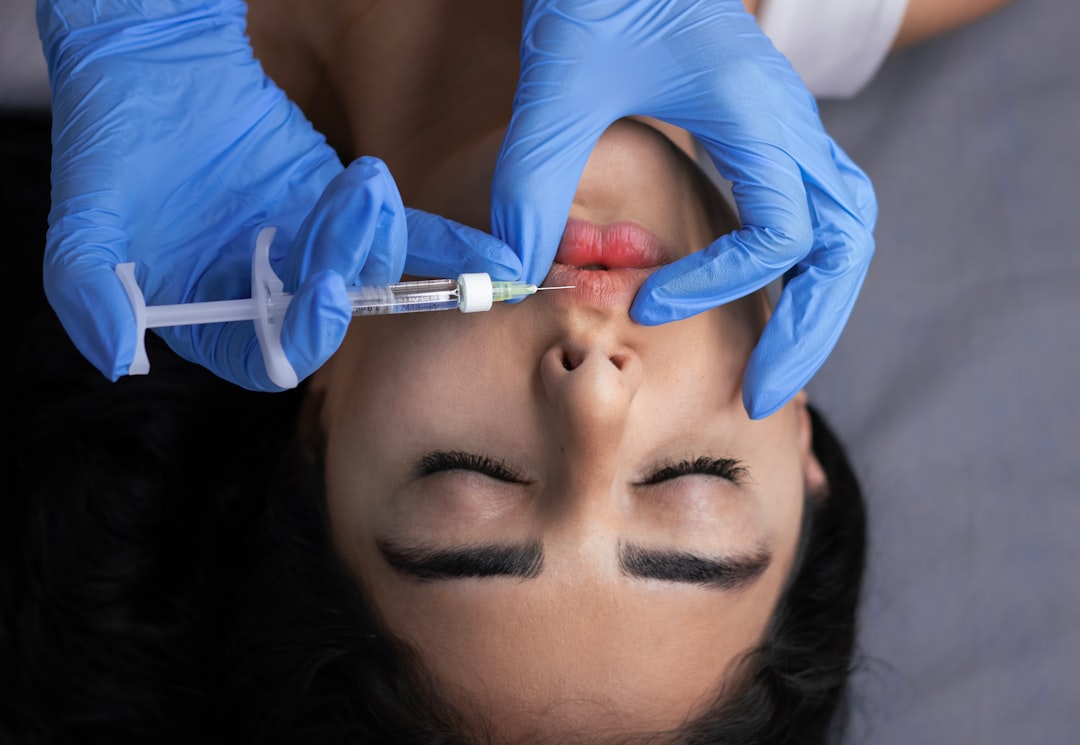
Dermal fillers are injected by a licensed health care provider. Photo by Mina Rad on Unsplash.
What Facial Treatments Can and Can't Do
A facial does not add volume. No treatment on JH Beauty's menu injects anything or replaces fat or bone. What facials aim at is the skin itself: how it looks, feels and, for some devices, how firm it looks.
Independent guidance on energy devices comes from dermatology. The AAD describes non-invasive radiofrequency as a treatment where "your dermatologist places a device against your skin, which heats the tissue beneath," and says that for that treatment "it takes time for your body to make collagen, so you'll see the best results in about 6 months." For ultrasound it describes "modest lifting and tightening" (AAD). Those figures describe dermatologist-performed procedures; they are not measurements of any spa device, and devices, settings and results differ.
For skincare products, the AAD says anti-aging products "deliver modest results" and that "you cannot get the results of a facelift from a cream" (AAD). The same caution applies to products applied in a treatment room.
How JH Beauty describes its own treatments, in its menu and site copy:
- RF Anti-aging V-Lifting Therapy ($278, 90 minutes): features "Japanese RF (Radiofrequency) Mini-Thermage technology." JH calls it the usual entry point for firmness and contour.
- Italy Quantus Thermal Remodeling ($398, 90 minutes): the menu says it "lifts the face, enhances collagen production, and restores a defined jawline."
- Plasmas & LDM Top Tech Therapy ($358, 90 minutes): uses "Japanese Plasma & Water Droplet Lifting Technology"; JH says its cold plasma "is not the plasma-pen procedure that leaves crusting."
- Japanese 6D Luxury Anti-aging Skin Management ($258, 90 minutes).
- Cellcosmet Ultracell Intensive Cellular Peptides ($358, 90 minutes), which the menu frames as a Cellcosmet anti-aging treatment.
Those are the business's descriptions, not independent measurements, and results vary from person to person. JH Beauty's guidance is that these treatments are non-invasive with no downtime and that "skin may look slightly flushed for a few hours." Before booking any device treatment, ask who will perform it and what their credentials are.
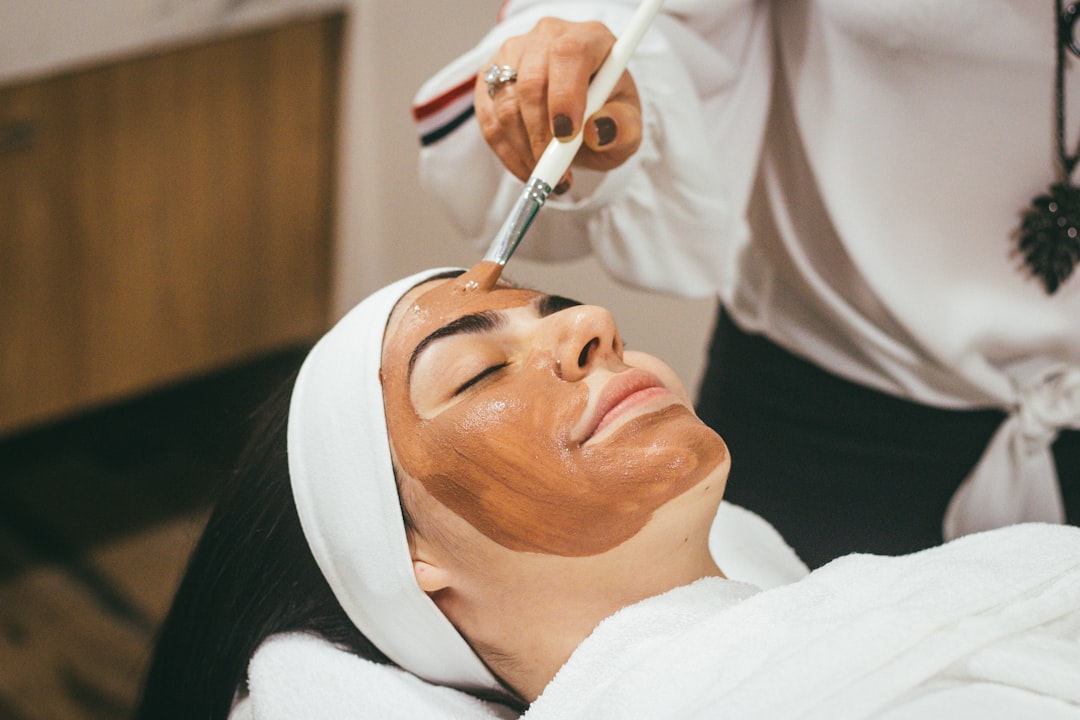
A facial treatment in progress. Photo by Rosa Rafael on Unsplash.
Comparing Cost, Recovery and Upkeep
| Factor | Dermal fillers | JH Beauty non-invasive facials |
|---|---|---|
| Cost | ASPS average: $715 for hyaluronic acid fillers, $901 for non-hyaluronic acid fillers, $743 for lip augmentation with fillers | $258 to $398 per session; no packages on the menu |
| Recovery | FDA: common side effects typically resolve within days to weeks. Allergan's JUVÉDERM guide: some swelling, redness and bruising that "usually fades over time" | JH's guidance: no downtime, possible slight flushing for a few hours |
| Upkeep | FDA: "since some dermal fillers are naturally absorbed over time, patients may need to repeat the procedure after some time to maintain the desired effect" | No published figure for how long an effect lasts; JH's general guidance for facials is every four to six weeks |
ASPS says actual filler costs vary with the provider's expertise, the procedure, the time it takes and location (ASPS). JH doesn't publish a set number of sessions, so ask what it suggests for your skin and what that would cost in total.
Which Approach Fits Your Concern?
Start from what bothers you, and who can assess it:
- Hollows or flattening you want filled. Only a medical treatment adds volume. See a licensed provider experienced in dermatology or plastic surgery, as the FDA advises, and ask which product is approved for the area.
- Under-eye hollows. These can have more than one cause. Filler approval for the area under the eyes depends on the product: the FDA has approved specific products for it, including JUVÉDERM VOLBELLA XC (adults over 21, approved for this area May 28, 2021) and Restylane Eyelight (21 and older, approved May 8, 2023). This is a question for a qualified medical provider, who can examine the area and explain which products, if any, are approved for your situation. For the skin around the eyes, JH Beauty's menu has the Clinic Treatment & Collagen Therapy ($288, 90 minutes), an eye-area skincare treatment that does not fill hollows.
- Skin that looks dull, dry or less firm, without a volume goal. A facial is a reasonable, lower-commitment place to start, with modest expectations. The anti-aging facials page compares JH Beauty's options.
- Both. Some people see a medical provider for volume and book facials for skin care. If you've had filler or Botox, JH Beauty asks you to say when at booking "so energy-based treatments can be spaced around them," and your injector can tell you how long to wait.
Daily habits still matter whichever you choose. The AAD calls sunscreen and moisturizer the two most effective anti-aging products.
Where JH Beauty Fits
JH Beauty is a skincare studio at 525 W Remington Dr, Suite 102, Sunnyvale, CA 94087, open Tuesday through Sunday, 10:45 AM to 8 PM (+1-650-784-6076). It does not offer fillers or other injectables, laser hair removal or microneedling. For firmness and skin quality, its menu has the RF, Quantus, Plasmas & LDM, Japanese 6D and Cellcosmet Ultracell treatments listed above. If volume loss is your main concern, a medical provider is the right first stop.
FAQ: Filler vs. Facials for Volume Loss
How long do dermal fillers last compared to facials?
It depends on the filler. The FDA gives approximately 6 to 12 months for hyaluronic acid, about 18 months for calcium hydroxylapatite and up to 2 years for poly-L-lactic acid; PMMA is not absorbed. Individual products carry their own label figures. Facials don't add volume, and the sources used here give no duration for the specific facial treatments at JH Beauty.
Can a facial replace filler?
No. A facial works on the skin and does not add volume. If you want lost volume replaced, that is a medical treatment for a licensed health care provider.
Can I get filler and a facial around the same time?
Tell JH Beauty what you had and when at booking; its guidance is that energy-based treatments are spaced around Botox and fillers. Ask your injector how long to wait for your product.
What should I do about under-eye hollows?
See a medical provider for an assessment. Under-eye hollows can have more than one cause. Filler approval for this area depends on the product, the indication and the patient's age: the FDA has approved JUVÉDERM VOLBELLA XC (2021) and Restylane Eyelight (2023) specifically for infraorbital hollows, each with its own adult age limit, so ask the provider which product they would use and what it is approved for. JH Beauty's eye-area treatment works on the skin and doesn't fill hollows.
Are collagen-stimulating injectables better than fillers for long-term facial structure?
They work differently. Biostimulators such as PLLA and CaHA are chosen for the collagen the body forms around them; a 2026 systematic review reported PLLA effects up to 25 months and CaHA 12 to 18 months. Hyaluronic acid fillers fill a space, lasting about 6 to 12 months per the FDA. Little research compares them head to head, so ask a medical provider; JH Beauty doesn't offer injectables.
How much does volume loss treatment cost?
JH Beauty doesn't offer fillers; for reference, ASPS reports averages of $715 for hyaluronic acid filler and $901 for non-hyaluronic acid filler. JH Beauty's anti-aging treatments are RF V-Lifting $278, Japanese 6D $258, Plasmas & LDM $358, Cellcosmet Ultracell $358 and Italy Quantus $398, each 90 minutes. There are no packages on the menu.
About the author
Ruby
Owner and Lead Esthetician, J.H Beauty
Owner of JH BEAUTY, a skincare studio in Sunnyvale, CA offering advanced facial treatments, scalp care, and body management using technologies from Japan, Korea, Switzerland, and Italy.