
DPL Light Therapy for Acne: How It Works
What delicate pulsed light research shows for post-acne redness and active acne, its side effects, and JH Beauty's $288 DPL PhotoTherapy in Sunnyvale.
DPL (delicate pulsed light) is a pulsed-light treatment that filters light to a narrow band; the published DPL studies describe a 500–600 nm spectrum. For acne, the DPL studies discussed below look at fading the red marks breakouts leave behind and at redness in sensitive skin, and one trial tested it as an add-on to acne medication. It is not a replacement for acne treatment prescribed by a doctor. At JH Beauty in Sunnyvale it is offered as Italian DPL PhotoTherapy for the face or back, $288 for a 75-minute booking.
Below is what the research on DPL actually measured, where it fits next to the acne treatments dermatologists recommend, what side effects and precautions medical sources list for pulsed light, and what the JH Beauty menu offers.
What DPL Is
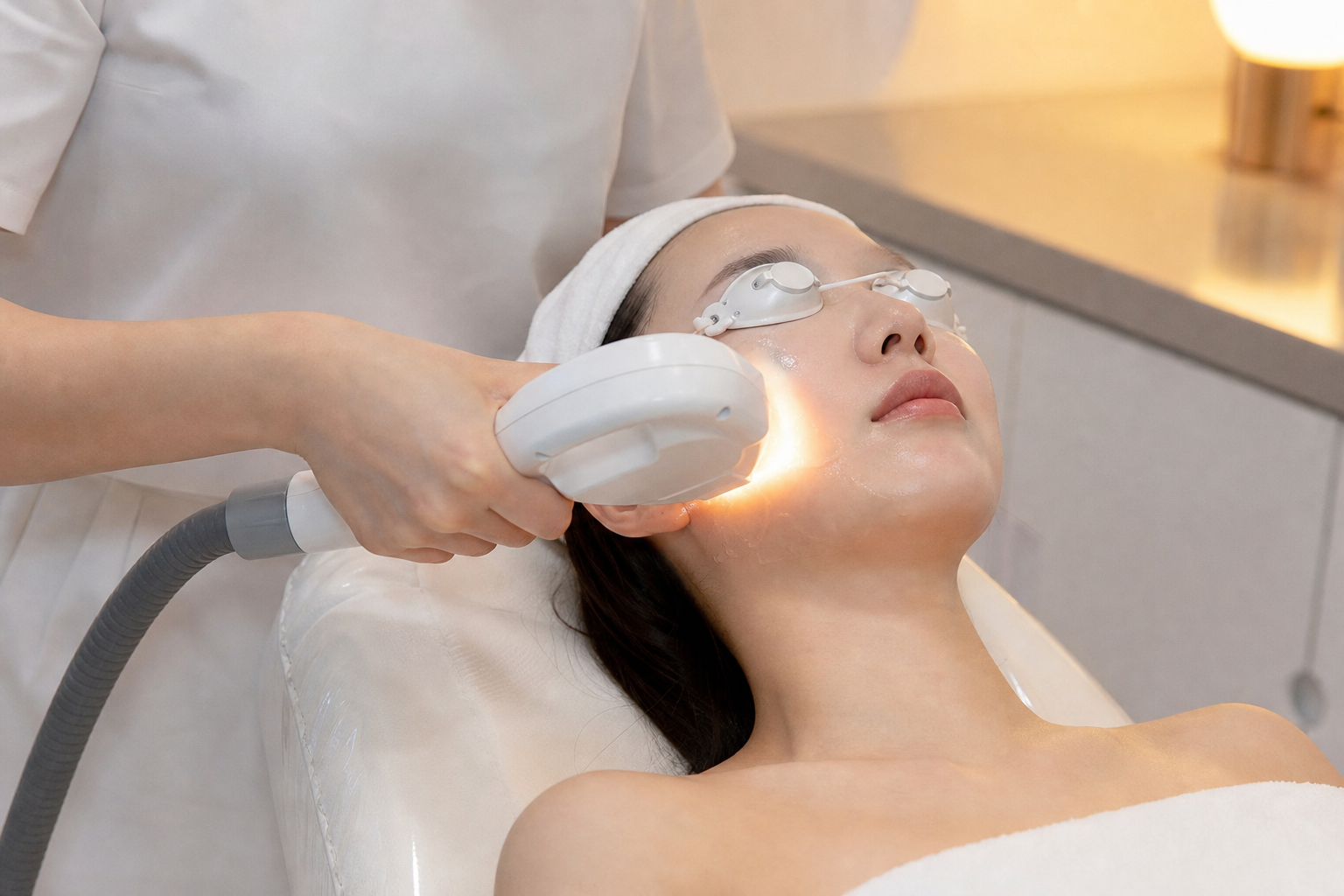
DPL belongs to the same family as intense pulsed light (IPL): a handpiece delivers flashes of filtered light to the skin. The difference researchers point to is the width of the light band. A 2022 study in Lasers in Medical Science describes DPL as having "a narrow therapeutic spectrum (500-600 nm)" (Li et al., 2022). Pulsed light works by being absorbed by coloured targets in the skin, including the haemoglobin in blood, according to DermNet, and the DPL studies below mostly measure redness.
JH Beauty's menu lists the service as "Italian DPL PhotoTherapy," described as an "Italian Nir/DPL Milk-Light PhotoFacial, available for both facial and back treatments," using "Gentle Pulse Light." The menu does not publish the device's wavelength or settings, so the study figures in this article describe the devices those researchers used, not necessarily the one in our studio. If device details matter to you, ask when you book.
What the Research Shows
Three recent studies are the most relevant to acne-prone skin. Each is small, and each was run by dermatology researchers with their own protocols.
Post-acne redness
The red or purple marks that linger after a pimple heals are called post-acne erythema. In a 2025 randomized split-face trial in Lasers in Surgery and Medicine, 26 patients had low-energy DPL on one side of the face and a Q-switched 1064 nm Nd:YAG laser on the other, in biweekly sessions. Both treatments significantly reduced the redness compared with baseline, and after six treatments there was no significant difference between them in redness measurements; the DPL side showed a larger improvement at week 8, but not at week 12. The authors recorded no pigment darkening or lightening (Liu et al., 2025).
Active acne, alongside isotretinoin
The 2022 study above enrolled 36 people with moderate-to-severe acne, all taking low-dose oral isotretinoin prescribed as part of the study. One side of each face also received DPL every two weeks for four sessions. At the end, acne severity scores had improved 70.88% on the DPL-plus-isotretinoin side versus 62.12% on the isotretinoin-only side, with papules and comedones also falling further on the DPL side. The authors reported side effects as "temporary and tolerable" (Li et al., 2022). This tested DPL added to a prescription medicine under medical supervision; it did not test DPL on its own.
Sensitive, reactive skin
A 2025 retrospective study in the Journal of Cosmetic Dermatology reviewed 181 patients with sensitive skin, 32 of whom also had acne, treated with low-energy DPL at four-week intervals. Sensitivity scores and measured facial redness fell significantly, and no obvious adverse effects were recorded (Fu et al., 2025). This retrospective study had no untreated comparison group, so it cannot establish that DPL caused the improvement.
Taken together, these small studies say more about redness after acne than about DPL as a standalone acne treatment.
Where DPL Fits Next to Acne Medicine
The American Academy of Dermatology's acne guidelines give strong recommendations to topical benzoyl peroxide to reduce acne-causing bacteria, topical retinoids (such as adapalene, tretinoin, tazarotene and trifarotene) to help unclog pores and reduce inflammation, and oral or topical antibiotics, with isotretinoin for severe acne or acne that hasn't responded to standard treatment. The same guidelines say the evidence was insufficient to make recommendations for procedures including chemical peels and laser and light-based devices.
The AAD's page on lasers and lights for acne is plain about the limits: "Rarely can these treatments alone clear acne." Most people need a series of treatments, and results take time to appear.
So the sensible way to think about DPL is as an optional add-on, especially for leftover redness, not as a reason to stop anything a doctor prescribed. If you are under a dermatologist's care for acne, tell them before you book any light treatment.
A note on isotretinoin (Accutane): UT Southwestern Medical Center lists isotretinoin among the medications that are a reason to avoid IPL, and JH Beauty's own guidance for facials is not to book while on isotretinoin and to wait at least six months after finishing. The 2022 combination study above was a supervised medical trial; it is not a reason to combine the two on your own.
Side Effects and Who Should Wait
The AAD lists the common side effects of laser and light acne treatments as redness, swelling, stinging and burning, usually mild and gone within hours or by the next day. Rarer effects include lingering pain, burns, blisters, changes in skin color and scarring. UT Southwestern describes IPL's possible side effects as redness and swelling, temporary darkening of pigmented spots, mild pain or stinging during the procedure and, rarely, blistering or scarring, and compares the sensation to a rubber band snapping against the skin.
UT Southwestern advises avoiding IPL if you:
- have an active skin infection, significant scarring, or a recent tan from sun or tanning beds
- are pregnant
- use certain medications, such as isotretinoin
It also notes that IPL is not ideal for darker skin tones (Fitzpatrick IV–VI) because of the risk of hyperpigmentation. If that applies to you, raise it before booking and ask whether a test area is appropriate. During recovery, UT Southwestern advises avoiding the sun and using sunscreen of at least SPF 30. Follow the specific aftercare the studio gives you.
DPL PhotoTherapy at JH Beauty
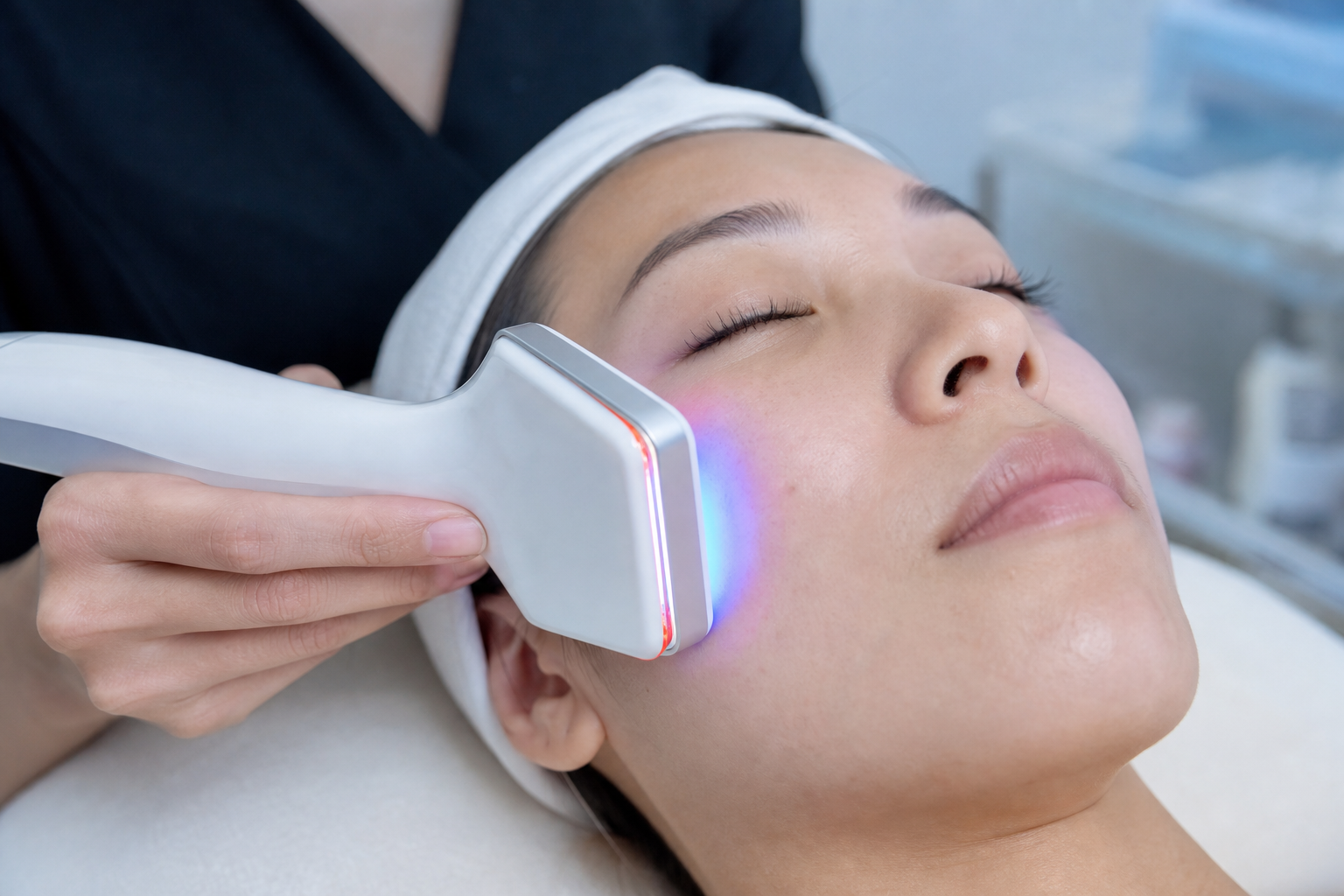
On the current menu, Italian DPL PhotoTherapy is $288 and booked as 75 minutes, for the face or the back. There is no package price on the menu, so a series is priced per visit: for example, six visits would be 6 × $288 = $1,728. Ask at booking how many sessions, if any, make sense for your skin, and what the appointment includes.
If your main concern is congestion rather than redness, the menu has other options for acne-prone skin:
- European Deep Cleaning Facial — $168, 75 minutes
- Chemical Peeling Series Treatment (Acne, Anti-aging, Lightening) — $278, 90 minutes, for the face or back
Our acne facials in Sunnyvale page compares these options. Korean DPL Hair-Removal is a separate service that uses pulsed light on body hair rather than skin; it is covered on our DPL hair removal in Sunnyvale page, and the DPL anti-aging and hair removal guide compares DPL with IPL and laser. JH Beauty is at 525 W Remington Dr, Suite 102, Sunnyvale, open Tuesday through Sunday, 10:45 AM to 8 PM; call +1-650-784-6076.
Between Visits: Hands Off
Whatever you book, the AAD's advice on popping pimples applies: squeezing can push the contents deeper, increasing inflammation, and risks infection from the bacteria on your hands, more noticeable acne and permanent acne scars. Instead, keep your hands away from your face, use ice to ease painful nodules and cysts, and give a drugstore acne treatment 4 to 6 weeks before seeing a dermatologist. For severe acne, a dermatologist can perform extraction or other procedures with sterile technique.
FAQ: DPL for Acne
Does DPL clear acne on its own?
The evidence doesn't show that. The AAD says laser and light treatments rarely clear acne alone, and the DPL trial on active acne tested it together with oral isotretinoin. Two of the three DPL studies cited here measured redness, one of them the red marks left after acne.
What is the difference between DPL and IPL?
Both use filtered pulsed light. Researchers describe DPL as using a narrower band, 500–600 nm in the published studies, aimed mainly at redness. JH Beauty's menu does not publish its device's wavelength, so ask if you want the specifics.
Does DPL hurt, and is there downtime?
UT Southwestern compares IPL to a rubber band snapping against the skin. The AAD lists redness, swelling, stinging and burning as common after light treatments, usually gone within hours or by the next day, with rarer burns, blisters, color changes or scarring. Recovery varies from person to person.
Can I have DPL while taking isotretinoin (Accutane)?
UT Southwestern lists isotretinoin as a reason to avoid IPL, and JH Beauty's own guidance for facials is to wait at least six months after finishing isotretinoin. Talk to your prescribing dermatologist.
Is DPL safe during pregnancy?
UT Southwestern Medical Center lists pregnancy among the reasons to avoid IPL. If you are pregnant, postpone pulsed-light treatment and ask your OB-GYN; our pregnancy-safe facials guide covers other options.
How much does DPL cost at JH Beauty?
Italian DPL PhotoTherapy is $288 for a 75-minute booking, for the face or back. There is no package price on the menu.
About the author
Ruby
Owner and Lead Esthetician, J.H Beauty
Owner of JH BEAUTY, a skincare studio in Sunnyvale, CA offering advanced facial treatments, scalp care, and body management using technologies from Japan, Korea, Switzerland, and Italy.