
DPL Light Therapy for Anti-Aging and Hair Removal
DPL is a narrowband pulsed light, not an LED. What studies show it does for redness, spots and tone, how it relates to hair reduction, and what a session costs.
DPL (delicate pulsed light) is a filtered, narrowband form of intense pulsed light that published studies describe as working in roughly the 500–600 nm range. It targets the red pigment in blood vessels and the brown pigment in sun spots, so its best-supported uses are redness, sensitivity and uneven tone rather than deep wrinkles. Hair reduction with pulsed light is a separate application that uses the same family of technology, covered on our DPL hair removal page. At JH Beauty in Sunnyvale, the Italian DPL PhotoTherapy for face or back is $288 for 75 minutes, and Korean DPL Hair-Removal starts at $98 for the underarms. The full list is on the menu.
What "DPL" Actually Means (and What It Isn't)
You'll find at least four expansions of DPL online: "dual polarized light", "dynamic pulsed light", "diode pulsed light" and "dye pulsed light". An earlier version of this page described DPL as dual-polarized red and near-infrared LED light. That was wrong, and we've rewritten the page around what the dermatology literature says.
In published clinical studies, DPL stands for delicate pulsed light. A 2022 randomized split-face trial in Lasers in Medical Science describes it as pulsed light working within a 500–600 nm spectrum. It belongs to the intense pulsed light (IPL) family. UT Southwestern Medical Center explains that IPL, unlike a laser, "emits multiple wavelengths that penetrate the skin to target melanin and hemoglobin." DPL narrows that band. It's filtered so more of the energy lands on the wavelengths blood vessels and pigment absorb best.
That makes DPL a different tool from red LED therapy. Harvard Health describes red light therapy, medically called photobiomodulation, as devices that shine red or near-infrared light at the skin, usually through LEDs or low-level lasers. The goal there is to stimulate cells, not to heat a target. A 2024 review of light-based skin treatments in the International Journal of Molecular Sciences notes that LED light for this purpose can be delivered continuously or pulsed at different frequencies, so pulsing alone isn't what separates the two; the difference is the energy level and what the light is meant to do. Harvard's dermatologist source adds that LED devices need to be used "multiple times a week for four to six months." DPL is a clinic treatment that delivers brief pulses of light energy, so it feels, works and is scheduled differently.
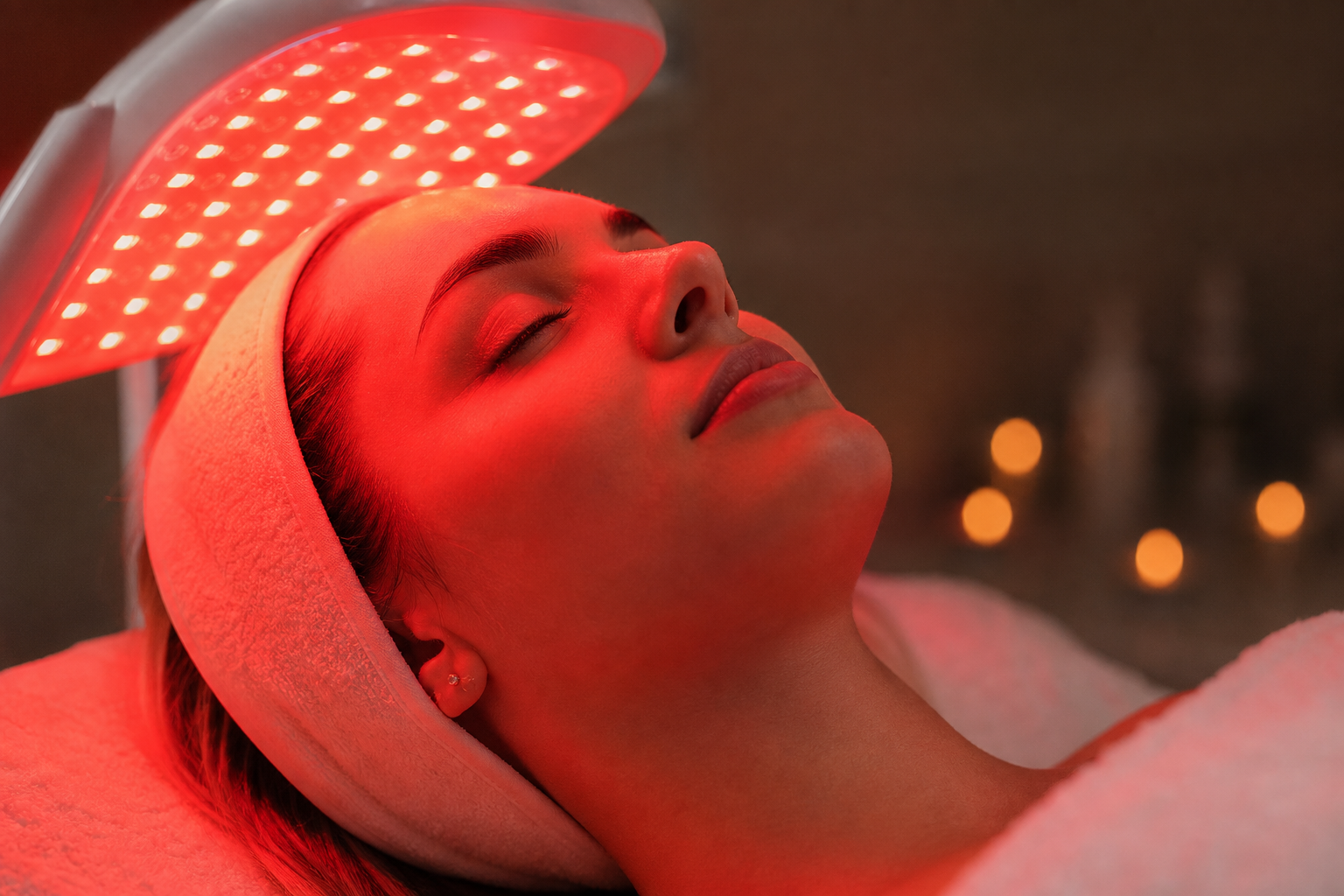
JH Beauty's menu calls its facial version the Italian DPL PhotoTherapy, and the menu description also names it a "Nir/DPL Milk-Light PhotoFacial" using "Gentle Pulse Light". Other pages online call it "milk light." It's the same service.
What the Research Says DPL Does for Skin
Most of the DPL research is recent, comes from single dermatology departments and is fairly small. It's encouraging, but it isn't the decades of evidence behind older lasers. Here's what has been published and what each study actually tested.
Redness and sensitive skin
A 2025 retrospective study in the Journal of Cosmetic Dermatology followed 181 patients with sensitive skin, some of whom also had rosacea, acne or dermatitis. They were treated with low-energy DPL at 4-week intervals. Sensitivity scores and clinician-rated redness both dropped significantly, and the authors reported no obvious adverse effects. The patients were Fitzpatrick skin types III and IV, and a retrospective, single-center design can't match a controlled trial.
Brown spots and uneven tone
A 2024 cohort study of 130 patients with facial pigmentation (melasma, sun spots and post-inflammatory marks) compared a DPL system with traditional IPL. Treatments were given monthly for six months. The DPL group had better efficacy on several measures and fewer adverse events. This is where the "brighter, more even" reputation comes from: DPL goes after the pigment that makes skin look blotchy.
Acne alongside medical treatment
In the 2022 split-face trial, 36 people with moderate-to-severe acne took low-dose oral isotretinoin, and one side of the face also got DPL every two weeks for four sessions. The DPL side improved more (70.9% vs 62.1% on an acne severity score). That was DPL added to a prescription drug, so it doesn't show DPL alone clears acne. Our DPL for acne guide covers this in more detail.
Fine lines and firmness
This is the weakest part of the "anti-aging" claim. In a 2024 split-face study of 21 patients in Lasers in Surgery and Medicine, everyone got microfocused ultrasound and one side also got DPL. Perioral wrinkles fell 11.5% on the combined side versus 8.3% with ultrasound alone, and tone, texture and elasticity improved more too. DPL helped, but as an add-on to a tightening device. A 2025 randomized split-face trial in the same journal, which compared DPL with a Q-switched Nd:YAG laser for post-acne redness in 26 patients, also reported that both treatments improved wrinkles, with the laser side recovering elasticity better. Wrinkles were not the main target of that study, so neither result is proof that DPL alone tightens skin. If sagging and a softer jawline are your main concern, a heat-based lifting treatment such as RF V-Shape Lifting is designed for that job; our anti-aging treatments page covers it alongside the other options.
DPL vs. IPL vs. Red LED: A Quick Comparison
- IPL uses a broad band of wavelengths to target melanin and hemoglobin. It treats sun spots, broken vessels, rosacea redness, fine wrinkles and unwanted hair. UT Southwestern says it feels like a slight sting, "similar to a rubber band snapping against the skin."
- DPL is a filtered, narrower-band pulsed light (about 500–600 nm in the studies above). It's aimed more precisely at redness and pigment.
- Red LED (photobiomodulation) is low-level red or near-infrared light, delivered continuously or in pulses, meant to stimulate cells rather than heat a target. It's gentle enough for home devices, and results build slowly over months of frequent use.
If you're comparing tone-evening options that work differently, chemical peels resurface the top layer of skin instead of targeting pigment with light. Our chemical peel page covers types, cost and recovery.
What a DPL PhotoTherapy Session Involves
At JH Beauty, the Italian DPL PhotoTherapy is a 75-minute appointment for the face or the back, priced at $288. The menu lists the back as a treatment area alongside the face.
UT Southwestern's description of a pulsed-light photofacial is a good guide to what the light itself feels like and what happens afterward:
- Sensation: a slight stinging with each pulse, like a rubber band snap.
- Right after: redness and some swelling are possible, and blistering is rare. Pigmented spots "may darken initially before they flake off over the next few days." That's expected, so don't pick at them.
- Downtime: most people return to work and normal activities the same day.
- Sun protection: use sunscreen of at least SPF 30 while skin recovers.
- How many sessions: for IPL photofacials, UT Southwestern says a series of five to six sessions, spaced about two to four weeks apart, is usually recommended. The DPL studies above used intervals of two to four weeks. Ask the studio about suitability and scheduling when you book.
DPL and Hair Removal: Same Light Family, Separate Service
The "hair removal" half of this page's title needs its own explanation. Pulsed light reduces hair by heating pigment in the hair, the same basic principle as laser hair removal. It's a distinct application from the redness-and-tone treatment above, and it's booked as a separate service.
JH Beauty offers Korean DPL Hair-Removal for three areas:
- Underarm: 30 minutes, $98
- Arm: 45 minutes, $158
- Leg: 45 minutes, $178
What the evidence says about pulsed light for hair, briefly:
- A systematic review in the Journal of the European Academy of Dermatology and Venereology found that laser and light treatments give partial hair reduction and beat shaving and waxing. The strongest long-term evidence was for alexandrite and diode lasers, and it said evidence was lacking for long-term hair removal after IPL. It also found "no evidence for a complete and persistent hair removal efficacy." That review dates from 2006, so it reflects the trials available then.
- A 2026 randomized trial compared IPL with a diode laser on opposite underarms in women with Fitzpatrick skin types I–IV over four monthly sessions. Forty-eight started treatment, 36 completed all sessions and 28 attended the main follow-up four weeks later. Both reduced hair count and thickness. The diode laser did better at about seven months, and IPL hurt less.
- Light-based hair reduction relies on pigment. Cleveland Clinic notes that laser hair removal "might not work as well for people with dark skin or hair that's blonde, gray, white or red."
DPL vs. IPL vs. laser for hair removal
The three technologies share a principle and differ in the light they use and in how much hair-removal research sits behind them:
| Laser (alexandrite, diode) | IPL | DPL | |
|---|---|---|---|
| Light | One wavelength | Many wavelengths in each pulse, usually filtered | Filtered, narrower-band pulsed light (about 500–600 nm in the skin studies above) |
| How it reduces hair | Heats pigment in the hair | Heats pigment in the hair | Heats pigment in the hair |
| Long-term hair evidence | Strongest (2006 systematic review) | Lacking for long-term removal (2006 review); in a 2026 underarm trial it reduced hair but trailed a diode laser at about seven months | We found no published hair-removal trial of DPL |
| Pain in head-to-head testing | Diode scored higher in the 2026 trial | Scored lower than diode in the 2026 trial | Not studied |
| Light, gray or red hair | Works poorly for all three: each needs pigment in the hair | ||
| Permanent removal | No: all three reduce hair; electrolysis is the only FDA-approved permanent method | ||
| At J.H Beauty | Not offered | Not offered | Korean DPL Hair-Removal, $98–$178 by area |
The pain results come from the specific IPL and diode devices in that trial, so they don't transfer automatically to other devices. Prices, preparation and who DPL suits are on our DPL hair removal page for Sunnyvale.
So pulsed light reduces hair. It doesn't remove it for good, and it doesn't slow regrowth by "prolonging the resting phase", as an earlier version of this page claimed. We've removed that claim, along with the suggestion that DPL is an add-on after waxing. JH Beauty doesn't offer waxing or laser hair removal. For costs, pain and session counts, plus how laser and DPL compare, read our laser hair removal in Sunnyvale guide.
Who Should Be Careful with DPL
Pulsed light works by being absorbed by pigment. That's why skin tone, tanning and pigment conditions matter:
- Darker skin tones. UT Southwestern says IPL's ideal candidates have light to medium skin tones, and people with darker skin may develop hyperpigmentation. The DPL redness study only included Fitzpatrick III–IV. If your skin is deeper, ask the studio about suitability before booking.
- Melasma. UT Southwestern also lists melasma as a condition that can lead to hyperpigmentation with IPL. The 2024 DPL pigment study included melasma patients with good results, but UT Southwestern's caution still applies, so raise melasma before you book. Our melasma treatment guide covers the condition in more detail.
- A fresh tan or sunburn. A tan darkens your skin, and darker skin carries more risk of hyperpigmentation with pulsed light, so book once it has faded.
- Medications, pregnancy and skin conditions. If you take prescription medication, are pregnant, have active cold sores or have had a recent procedure, mention it when you book and ask the clinician who prescribes or treats you whether pulsed light is appropriate for you.
FAQ: DPL Light Therapy
Is DPL the same as red light therapy?
No. DPL (delicate pulsed light) is a narrowband form of intense pulsed light, around 500–600 nm in published studies, delivered in short pulses to target blood vessels and pigment. Red light therapy (photobiomodulation) uses low-level red or near-infrared light, usually from LEDs and delivered continuously or in pulses, to stimulate cells rather than heat a target.
What does DPL treat best?
The published evidence is strongest for redness and sensitive skin, brown spots and uneven tone, and acne when combined with medical treatment. For fine lines, the evidence is thin. In the 2024 study discussed above, DPL was an add-on to an ultrasound tightening device, and a 2025 split-face trial of DPL for post-acne redness recorded wrinkle improvement as a secondary result. Neither shows substantial tightening from DPL alone.
Does DPL hurt?
Pulsed light usually feels like a slight sting with each pulse, often compared to a rubber band snap. In a 2026 trial comparing IPL with a diode laser for hair removal, IPL scored lower for pain.
How many DPL sessions will I need?
For pulsed-light photofacials, UT Southwestern says five to six sessions spaced about two to four weeks apart is typical. DPL studies used two- to four-week intervals. Ask the studio about scheduling when you book.
How much does DPL cost at JH Beauty?
The Italian DPL PhotoTherapy (face or back) is $288 for 75 minutes. Korean DPL Hair-Removal is $98 for the underarms (30 minutes), $158 for the arms and $178 for the legs (45 minutes each); see the DPL hair removal page for what each session involves.
Is there downtime after DPL?
Usually not much. Most people go back to normal activities the same day. Redness can last a few hours, and dark spots may darken and flake over the next few days. Wear SPF 30 or higher while your skin recovers.
Can DPL permanently remove hair?
No. Laser and pulsed-light treatments reduce hair, but a 2006 systematic review found no evidence that any of them remove hair completely and permanently. Cleveland Clinic lists electrolysis as the only FDA-approved method of permanent hair removal.
Is DPL safe for darker skin?
It needs care. UT Southwestern says IPL suits light to medium skin tones best and can cause hyperpigmentation on darker skin. Ask the studio about suitability for your skin type before booking.
Booking DPL at JH Beauty
Ready to see whether DPL fits your skin? JH Beauty is at 525 W Remington Dr, Suite 102, Sunnyvale, open Tuesday through Sunday, 10:45 AM to 8 PM. Call +1-650-784-6076 or book from the menu.
About the author
Ruby
Owner and Lead Esthetician, J.H Beauty
Owner of JH BEAUTY, a skincare studio in Sunnyvale, CA offering advanced facial treatments, scalp care, and body management using technologies from Japan, Korea, Switzerland, and Italy.