
Facial Waxing in Sunnyvale: What to Know Before You Book
Facial waxing explained with AAD guidance: hair length, retinol and isotretinoin cautions, aftercare, and how it compares with threading, creams and laser.
Short version: facial waxing removes hair from the root, and the American Academy of Dermatology (AAD) says results "can last a few weeks or longer." Hair should be about a quarter to three-quarters of an inch long, you should pause retinol beforehand, and you should not wax if you have taken isotretinoin in the last six months. JH Beauty does not offer waxing; this guide explains what to know before you book it elsewhere.
What Facial Waxing Is, and Who Can Do It
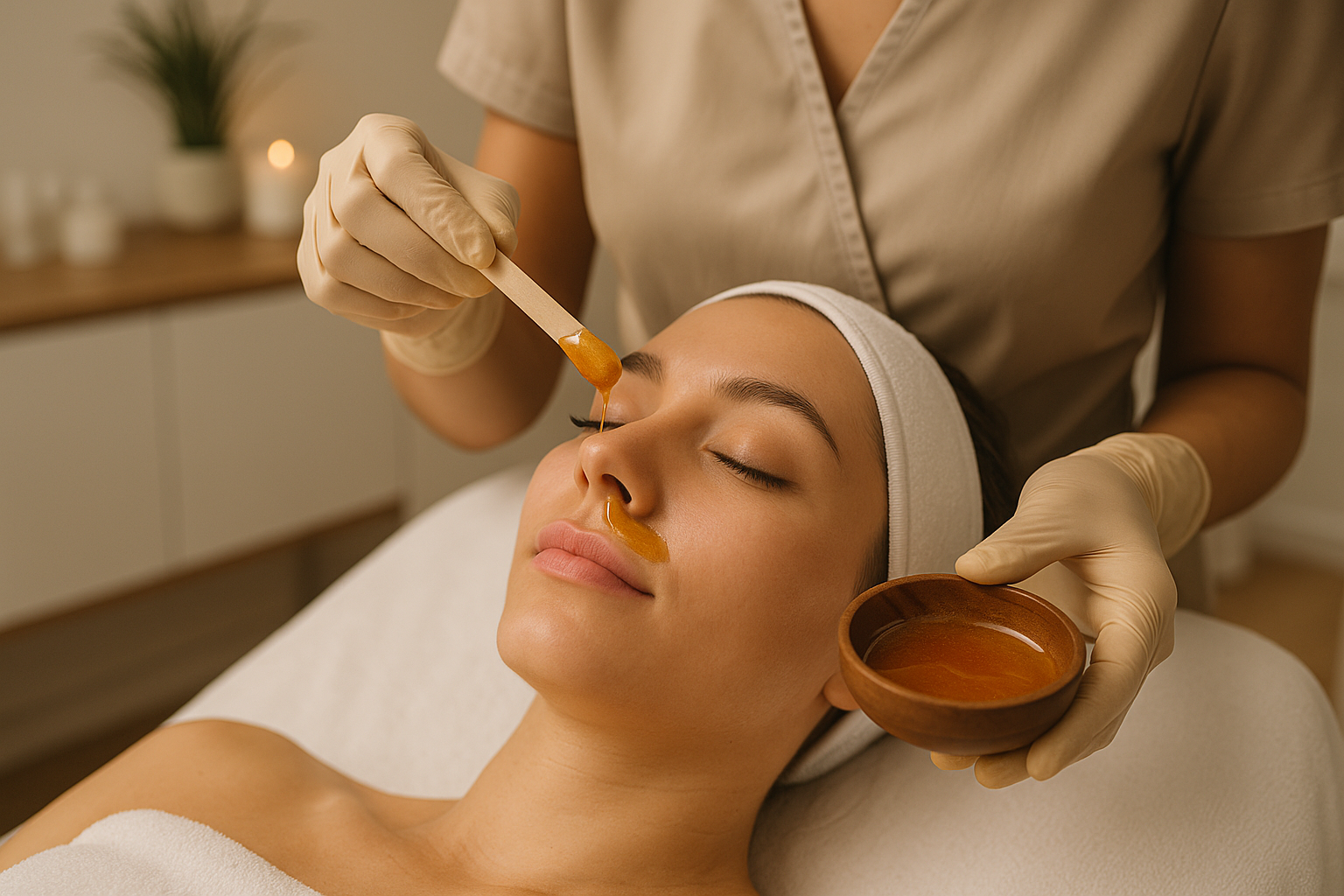
Waxing removes hair by spreading warm wax over it, letting it grip the hair, and pulling it away so the hair comes out at the root. On the face it is most often used on the brows, upper lip, chin and sideburns.
In California, waxing is within an esthetician's license. The Board of Barbering and Cosmetology says estheticians "can perform facials, remove hair by tweezing or waxing, and apply makeup and false eyelashes," and its esthetician flyer lists waxing of the face or body within the scope of practice. Before you book, you can check that a provider is licensed through the Department of Consumer Affairs license search at search.dca.ca.gov, which the Board links from its consumer page.
JH Beauty in Sunnyvale does not offer facial waxing. Its hair-removal service is Korean DPL Hair-Removal for the body, covered below. If you are here because you are planning a facial at the same time, see the note on timing later in this guide.
What the AAD Says About Waxing Results and Side Effects
The AAD's overview of hair-removal options is a useful starting point because it lists benefits and drawbacks side by side. For waxing, it says "the results can last a few weeks or longer," that "your newly waxed skin can be red and irritated for a short while," and that "removing the wax can be painful." How long your own results last depends on how fast your hair grows, so treat any schedule as a starting point, not a promise.
The same page flags a serious caution. Waxing is not recommended if you take isotretinoin, certain antibiotics or tretinoin, because "these medications thin your skin. When the wax is removed, your skin could tear." That is the single most important thing to mention to whoever waxes you.
How to Prepare for a Facial Wax
The AAD's waxing guidance is written for people waxing at home, but its preparation points are the same questions a good esthetician will ask you.
- Hair length: "Before waxing, make sure your hair is about one-fourth to three-fourths of an inch long." Shorter hair may not grip; if you have been shaving or trimming, you may need to let it grow out first.
- Retinol and retinoids: "Avoid using over-the-counter skin care products containing retinol and prescription retinoids two to five days prior to waxing your face."
- Isotretinoin: "Don't wax if you have taken isotretinoin in the last six months."
- Sunburn and sensitive skin: "Never wax sunburned or very sensitive skin."
Tell your esthetician about any prescription skin medication, including topical tretinoin or antibiotics, and about any recent peel, laser or other resurfacing treatment. If you have active acne, cold sores, a rash or broken skin where you want to be waxed, ask whether that area should be skipped; when in doubt, it is better to reschedule than to wax over it.
What Happens During the Appointment
The AAD's technique points describe the basics of a wax: "always test the temperature of the wax," "always spread the wax in the direction of hair growth," then hold the skin taut and remove the wax "quickly … in the opposite direction of hair growth."
Salons use different waxes. Some remove the wax with a cloth strip, as the AAD describes; others use a wax that hardens and is lifted off without a strip. Which is better for your face depends on your skin and the product, so it is reasonable to ask what the salon uses and why.
Expect some redness. The AAD notes that newly waxed skin "can be red and irritated for a short while." How long a session takes depends on how many areas you have done.
Aftercare: The First Couple of Days
The AAD's aftercare list is short: "apply cold packs if you have pain, avoiding hot baths and showers, wearing loose clothing and applying moisturizer that won't clog your pores." On the face, that means keeping things simple, choosing a non-comedogenic moisturizer and not touching the area more than you need to.
Ask your esthetician when to restart retinol, acids or scrubs, since the right timing depends on how your skin looks after the wax. If redness or swelling lasts more than two days, the AAD advises seeing a dermatologist.
Waxing can sometimes lead to bumps around hair follicles. The AAD lists "shaving, plucking, or waxing" among things that can damage follicles and lead to folliculitis, which "usually looks like a sudden acne breakout," and says "it can be helpful to see a dermatologist to make sure you have folliculitis," since it can resemble other conditions. If bumps are painful, spreading or not settling, see a dermatologist rather than treating them yourself.
Waxing Compared With Other Hair-Removal Methods
The AAD's hair-removal guide gives each method's trade-offs in plain terms:
- Shaving: "The results are short-lived, so you may need to shave daily or every few days." Frequent shaving "can irritate your skin," and some people develop ingrown hairs.
- Depilatory creams: "The results tend to last longer than when you shave," but "these products can irritate your skin," so test a small area first.
- Threading: "The results can last 4 to 5 weeks," and "it causes little irritation, so it's an option for sensitive or acne-prone skin."
- Waxing: "The results can last a few weeks or longer," with short-lived redness and some pain on removal.
- Laser hair removal: performed as a series; the AAD says it "won't work on blonde, white, gray, or red hair" and that possible injuries include "burns, blisters, infection, or dark spots." In California, a Board licensee may not operate a laser without a medical license. JH Beauty does not offer laser hair removal.
For longer-lasting smoothness on the body, JH Beauty offers Korean DPL Hair-Removal, a light-based treatment, for the arm ($158, 45 minutes), leg ($178, 45 minutes) and underarm ($98, 30 minutes). It has no face zone. Our hair-removal guide explains how it differs from laser.
Waxing and Facials: Timing Them Together
Waxing can leave skin red and irritated for a short while, and many facials include exfoliation, so it makes sense to plan the two together. If you are planning a facial such as a hydrafacial or a chemical peel, tell both providers about the other appointment and ask how far apart to schedule them. The same goes for retinoids: JH Beauty asks clients to stop prescription retinoids about five days before a facial, which lines up with the AAD's two-to-five-day pause before waxing.
FAQ: Facial Waxing in Sunnyvale
Does JH Beauty offer facial waxing?
No. JH Beauty's hair removal is Korean DPL Hair-Removal for the arm ($158), leg ($178) and underarm ($98); there is no face zone and no waxing on its menu. For facial waxing, book with a licensed esthetician; you can check a license at search.dca.ca.gov.
Can I wax my face if I use retinol?
Pause it first. The AAD advises avoiding retinol and prescription retinoids "two to five days prior to waxing your face," and warns that tretinoin and isotretinoin thin the skin so "your skin could tear" when wax is removed. Ask your esthetician when to restart.
How long should my hair be before waxing?
The AAD says "about one-fourth to three-fourths of an inch long." If it is shorter, the wax may not grip well.
How long do waxing results last?
The AAD says waxing results "can last a few weeks or longer." It varies with how quickly your hair grows.
Is facial waxing safe during pregnancy?
Ask your doctor or midwife if you have concerns, and tell your esthetician you are pregnant, since skin can be more sensitive. The AAD's cautions about sunburned skin, very sensitive skin and skin-thinning medications still apply.
What if I get bumps or redness afterwards?
Some redness is expected for a short while. If redness or swelling lasts more than two days, or bumps are painful or spreading, the AAD advises seeing a dermatologist, who can tell whether it is folliculitis or something else.
Is threading gentler than waxing?
For some people. The AAD says threading "causes little irritation, so it's an option for sensitive or acne-prone skin," with results that "can last 4 to 5 weeks."
About the author
Ruby
Owner and Lead Esthetician, J.H Beauty
Owner of JH BEAUTY, a skincare studio in Sunnyvale, CA offering advanced facial treatments, scalp care, and body management using technologies from Japan, Korea, Switzerland, and Italy.