
Collagen for Under Eyes: Do Creams or Treatments Work?
Collagen is too large to absorb through skin, so eye creams mostly moisturize. How to build collagen under the eyes and what helps bags and puffiness.
Short answer: collagen is too large to absorb through skin, so an eye cream with collagen moisturizes but won't remove eye bags or dark circles by itself. Skin blocks molecules larger than about 500 daltons, and collagen is a large structural protein. What helps is stimulating your own collagen and treating the cause: fat shifting with age, pigment, visible blood vessels or shadowing each need a different fix.
Below: what collagen creams and supplements can and can't do for the under-eye area, what actually causes bags and dark circles, the daily habits dermatologists recommend, and what a professional collagen eye treatment is (and isn't).
Do Eye Creams With Collagen Work?
They work as moisturizers. They don't work as collagen replacements. A widely cited paper in Experimental Dermatology sets out the "500 Dalton rule": a compound generally has to be under 500 daltons in molecular weight to pass the skin's outer layer, and larger molecules can't. Collagen is a large fibrous protein; a single collagen molecule is roughly 300 nanometers long, and the collagen in a cream stays on the surface, where it holds water and makes skin feel smoother.
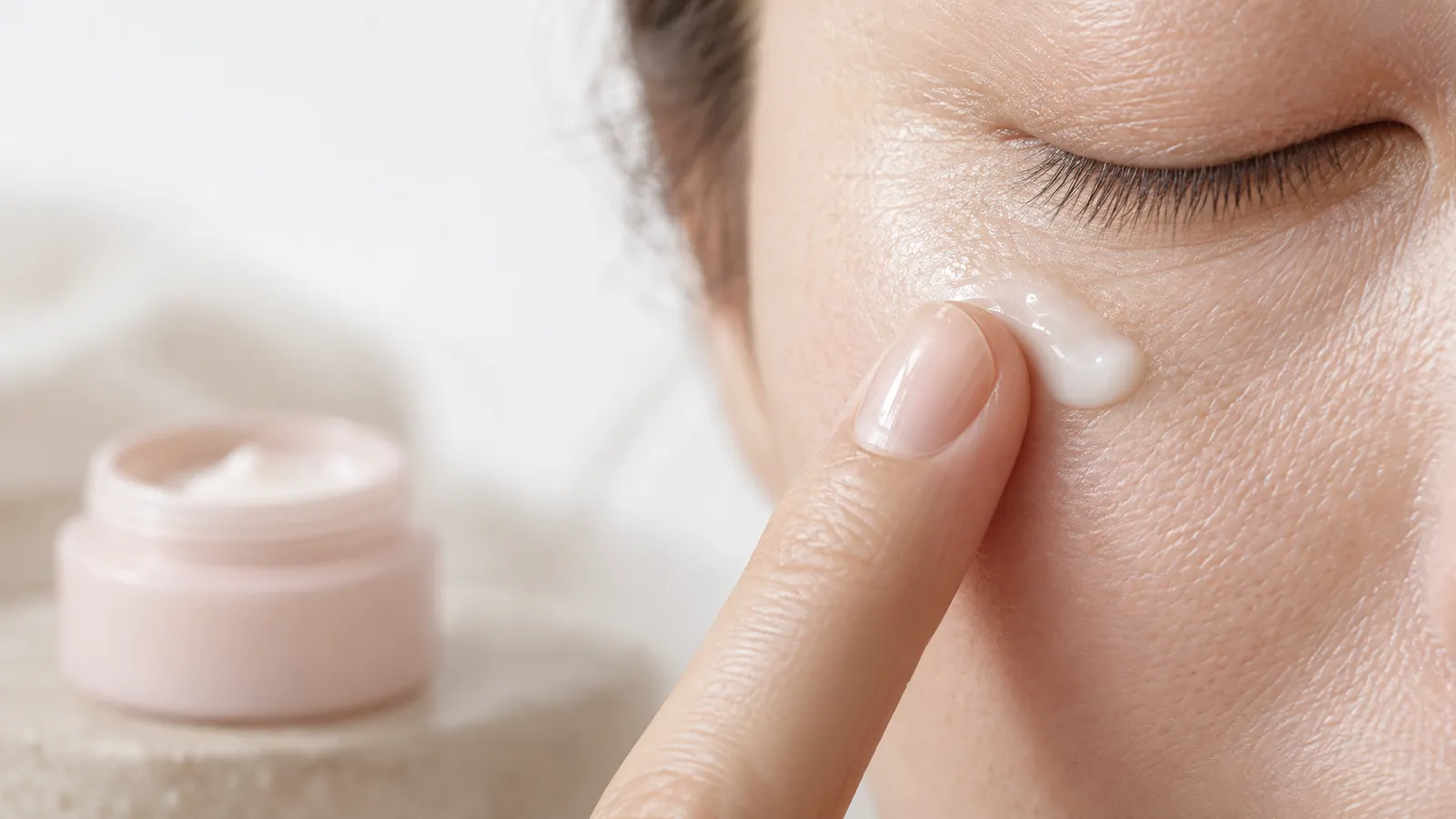
That still has value. Hydrated skin looks smoother, and fine lines look softer while the moisture lasts. Just judge a collagen eye cream as a moisturizer, and don't pay a premium expecting it to replace the collagen you lose with age. When you apply any eye cream, the American Academy of Dermatology (AAD) suggests using your ring finger, the weakest finger, so you don't pull on the thin skin around the eyes.
What about collagen supplements for under-eyes?
The evidence is mixed. A 2021 meta-analysis in the International Journal of Dermatology pooled 19 randomized trials with 1,125 participants and reported that hydrolyzed collagen taken by mouth for about 90 days improved skin hydration, elasticity and wrinkles compared with placebo. On the other side, Cleveland Clinic dermatologist Dr. Shilpi Khetarpal notes that the studies showing limited improvement in skin texture are all manufacturer-sponsored, that collagen supplements are mostly absorbed in the gut, and that the supplement industry has a history of inaccurate labeling and contamination.
At least one trial did measure the eye area. In a 2014 double-blind study in Skin Pharmacology and Physiology, 114 women aged 45 to 65 took 2.5 g a day of one specific branded collagen peptide (Verisol) or a placebo for eight weeks, and the peptide group showed a statistically significant reduction in eye wrinkle volume compared with placebo. That result applies to that formulation and to wrinkles around the eyes. It measured wrinkles, not under-eye bags or dark circles, and it doesn't tell you whether a different supplement would do the same.
What Actually Causes Under-Eye Bags and Dark Circles
Bags
According to MedlinePlus (the US National Library of Medicine), with age fat from the eyelids settles into the eye sockets, the lower eyelids can slacken, and bags can develop under the eyes. The skin around the eyes also wrinkles, creating crow's feet. Because bags are largely structural, no collagen cream or supplement moves that fat back. If bags bother you, a dermatologist can explain the medical options.
Dark circles
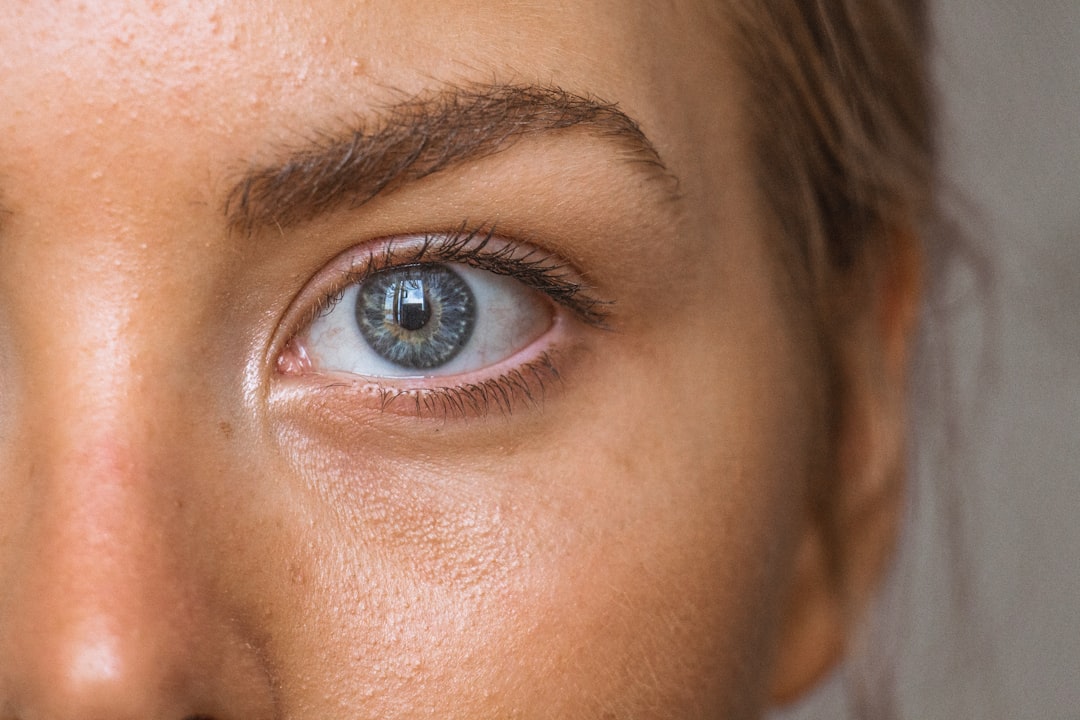
Dark circles aren't one condition. A 2026 narrative review of the treatment literature (published as a preprint) groups them into pigment-related, vascular, post-inflammatory and structural (shadowing or volume loss) types, and notes they often coexist in the same person. The same review found that although many treatments have reported improvement, certainty is limited by small studies, short follow-up and inconsistent classification. In practice: brown-toned circles are a pigment problem, bluish or purple ones are about blood vessels showing through thin skin, and hollows cast shadows. Collagen alone doesn't target any of them directly.
Puffiness
Puffiness is different from structural bags. Cleveland Clinic ophthalmologist Dr. Annapurna Singh explains that puffy eyes come from fluid building up in the thin layers of tissue around the eyes and eyelids. Salt makes the body hold water, so a salty dinner can show up as morning puffiness. Allergies, poor sleep and irritating eye products can add to it. For some people, bags are genetic, from fat pad prominence, bone structure or skin laxity, and Dr. Singh says those are difficult to fully correct without medical treatment.
Fine lines
Crow's feet and fine lines around the eyes are part of skin aging, and MedlinePlus names sunlight as a major cause of skin aging. For wrinkles from sun damage, the AAD lists these treatment options: moisturizer, a prescription retinoid, fillers and Botox, chemical peels, microdermabrasion and laser resurfacing.
Daily Habits That Help the Under-Eye Area
- Sunscreen every day. The AAD recommends a broad-spectrum, water-resistant sunscreen of SPF 30 or higher, reapplied every two hours outdoors, and names sunscreen and moisturizer as the two most effective anti-aging products you can buy.
- A plain moisturizer. The AAD suggests looking for hyaluronic acid, glycerin or ceramides, and applying on slightly damp skin to trap water.
- A gentle touch. Use your ring finger for eye products, as the AAD advises, and wash with lukewarm water and fingertips rather than scrubbing.
- Retinoids with care. If you use retinol, the AAD says to start with the gentlest formula every other night, use it only at night and always wear sunscreen by day.
- A realistic budget. The AAD notes that anti-aging products deliver modest results and that "you cannot get the results of a facelift from a cream."
How to Build Collagen Under Your Eyes
You can't rub collagen into the under-eye area, but you can protect the collagen you have and give your skin what it needs to make more. These are the steps with support behind them:
- Block the sun. Cleveland Clinic states that too much sunlight reduces collagen production and makes collagen break down faster. Daily sunscreen is the single biggest way to keep what you have.
- Use a retinoid. The AAD says retinoids speed up the turnover of surface skin cells and boost collagen, which improves skin tone and reduces fine lines. Start gently, at night, and follow the product's directions for the eye area.
- Don't smoke. According to Cleveland Clinic, smoking decreases collagen production and damages collagen and elastin, and its ophthalmologists note it causes collagen loss that thins the skin around the eyes.
- Watch the sugar. Cleveland Clinic explains that sugar attaches to proteins to form advanced glycation end products, which make collagen weak, dry and brittle.
- Eat the building blocks. Your body makes collagen from protein, and the process requires vitamin C, zinc and copper, per Cleveland Clinic's functional medicine director Dr. Elizabeth Bradley.
- Ask about in-office options for deeper change. For eye bags and under-eye aging, Cleveland Clinic lists dermal fillers, laser resurfacing, chemical peels and lower eyelid surgery. These are medical procedures, so the conversation belongs with a dermatologist or plastic surgeon.
For puffiness specifically, the same Cleveland Clinic advice applies: a cold compress (a chilled spoon or cool cloth) to shrink blood vessels, less salt, seven to nine hours of sleep, and an extra pillow so fluid doesn't collect around the eyes overnight. Antihistamine eye drops help only if allergies are the cause. These fixes are temporary, and puffiness often returns.

What a Professional Collagen Eye Treatment Is
A professional eye treatment doesn't break the 500 Dalton rule either. What it adds is time and hands-on care from an esthetician focused on the eye area. What exactly a session includes varies from studio to studio, so ask. Expect it to care for the skin around the eyes. Don't expect it to remove structural bags or change deep hollows.
At JH Beauty in Sunnyvale, the treatment is listed as Clinic Treatment & Collagen Therapy in the Classic European Royal Collagen series: 90 minutes for $288. The menu describes it as a Collagen Eyecare treatment designed for the delicate, sensitive skin around the eyes, which is exposed to stress every day. Ask when you book what the session includes for your concerns. If your main issue is pigmentation, our guide to melasma and pigmentation treatment covers brightening options, and the Vital-C Brightening Antioxidants Facial ($218, 75 minutes) is on the same menu. For fine lines and firmness across the rest of the face, the anti-aging facial page compares the studio's RF lifting, Japanese 6D, plasma, Cellcosmet and Quantus treatments.
If you want a full-face option rather than an eye-focused one, the menu also lists the Cellcosmet Whitening & Collagen Facial Treatment: 90 minutes for $288. It's a facial for the whole face, not an eye-specific treatment, so treat it as a way to care for overall skin tone and hydration rather than a fix for bags or hollows. Our Cellcosmet facial guide explains what the Swiss brand says its products do and what to ask before booking.
The studio's general guidance for facials is every four to six weeks. It doesn't give facials during isotretinoin (Accutane) and asks clients to wait at least six months after finishing; if you use a prescription retinoid, stop applying it about five days before and tell the esthetician. JH Beauty is at 525 W Remington Dr, Suite 102, Sunnyvale, open Tuesday through Sunday, 10:45 AM to 8 PM; call +1-650-784-6076 or book the collagen eye treatment online.
FAQ: Collagen for Under Eyes
Do eye creams with collagen actually work?
They moisturize, which softens the look of fine lines while the skin stays hydrated. They don't add collagen to your skin: molecules above roughly 500 daltons can't pass the skin's outer layer, and collagen is a large protein.
What does collagen do for under eyes?
Your own collagen gives skin its structure, and it declines gradually from your 20s, according to a Cleveland Clinic dermatologist. Collagen applied in a cream sits on the surface and acts as a moisturizer; it doesn't replace what's lost.
Does collagen help with eye bags?
Not directly. MedlinePlus explains that bags develop as eyelid fat settles and the lower lids slacken with age. That's structural, so a collagen cream or supplement won't move it. A dermatologist can explain medical options.
Does collagen help with dark circles?
Not on its own. Dark circles can be pigment-related, vascular, post-inflammatory or caused by shadowing, often in combination. Each needs a different approach, and a dermatologist can tell you which type you have.
Do collagen supplements help under-eye skin?
A 2021 meta-analysis of 19 trials reported improvements in skin hydration, elasticity and wrinkles after about 90 days, but a Cleveland Clinic dermatologist notes these studies are manufacturer-sponsored and supplements are loosely regulated. One 2014 trial of a specific collagen peptide reported less eye wrinkle volume after eight weeks; it did not measure bags or dark circles.
What is a collagen eye treatment at JH Beauty?
The Clinic Treatment & Collagen Therapy, part of the Classic European Royal Collagen series, is a 90-minute, $288 treatment the menu describes as designed for the delicate, sensitive skin around the eyes. It won't remove structural bags or change deep hollows.
Is the Cellcosmet Whitening & Collagen Facial good for dark circles?
It's a 90-minute, $288 full-face facial on JH Beauty's menu, not an eye-specific treatment, and the menu doesn't promise a change to dark circles. If your dark circles are pigment-related, it may help overall tone and hydration, but vascular circles and shadowing from hollows have different causes. Ask the esthetician what to expect for your type.
How do I build or stimulate collagen under my eyes?
Protect and support your own collagen: daily sunscreen (sunlight breaks collagen down), a retinoid at night (the AAD says retinoids boost collagen), no smoking, less sugar, and enough protein and vitamin C. For deeper change, dermatologists offer procedures such as laser resurfacing and chemical peels.
How do I reduce under-eye puffiness?
Puffiness is usually fluid. Cleveland Clinic suggests a cold compress, cutting back on salt, seven to nine hours of sleep and sleeping with your head slightly raised; antihistamine drops help only for allergies. The relief is temporary, and bags caused by fat pads or bone structure need medical treatment to change.
Is one session of a collagen eye treatment enough?
Expect one session to leave the eye area hydrated and cared for, not to change its structure. The effect of any hydrating treatment fades, which is why the studio's general guidance for facials is a visit every four to six weeks. JH Beauty's menu doesn't set a fixed course for the eye treatment, so ask at booking how often makes sense for you.
What is the best collagen eye treatment?
There isn't one best option for everyone, because it depends on the cause. For fine lines, the best-supported daily steps are sunscreen and a retinoid; for puffiness, lifestyle changes; for structural bags or hollows, medical procedures. A professional collagen eye treatment adds focused, hands-on hydration and care for the skin around the eyes.
What's the most effective thing I can do for under-eye aging?
Daily broad-spectrum sunscreen of SPF 30 or higher plus a moisturizer, which the AAD calls the two most effective anti-aging products. For deeper lines, ask a dermatologist about retinoids and in-office procedures.
What causes collagen loss under my eyes, and what can I do about it?
Some of it is simply age: according to a Cleveland Clinic dermatologist, your own collagen declines gradually from your 20s. The rest is largely preventable. Cleveland Clinic says too much sunlight reduces collagen production and makes collagen break down faster, smoking decreases production and damages the collagen and elastin that keep the thin skin around the eyes firm, and sugar forms advanced glycation end products that leave collagen weak, dry and brittle. What helps: daily broad-spectrum sunscreen of SPF 30 or higher, a gentle retinoid at night, no smoking, less sugar, and enough protein, vitamin C, zinc and copper. For deeper loss, a dermatologist can discuss procedures such as laser resurfacing and chemical peels.
Do collagen peptides help with dark circles?
There's no evidence in this guide that they do. The one trial that looked at the eye area, a 2014 double-blind study of 114 women aged 45 to 65, found that 2.5 g a day of a specific branded collagen peptide for eight weeks reduced eye wrinkle volume compared with placebo. It measured wrinkles, not dark circles. Dark circles can be pigment-related, vascular, post-inflammatory or caused by shadowing from hollows, often in combination, and collagen doesn't directly target any of those. If your circles are brown, ask a dermatologist about a pigment-focused approach; if they're bluish, the cause is blood vessels showing through thin skin.
Do collagen eye patches firm up under-eye skin, or do they just hydrate it?
They mainly hydrate. Collagen is too large a molecule (the 500 Dalton rule) to pass the skin's outer layer, so a patch leaves it on the surface, where it holds water and makes skin look smoother for a while. That can soften the look of fine lines temporarily, but it doesn't rebuild the structure that gives skin firmness, and it won't change bags or hollows. If firming is your goal, the best-supported daily steps are sunscreen and a retinoid, with in-office options discussed with a dermatologist. Treat patches as a hydration boost, not a firming treatment.
About the author
Ruby
Owner and Lead Esthetician, J.H Beauty
Owner of JH BEAUTY, a skincare studio in Sunnyvale, CA offering advanced facial treatments, scalp care, and body management using technologies from Japan, Korea, Switzerland, and Italy.