
Facial Waxing in Sunnyvale: What to Know Before You Book
A detailed local guide to facial waxing at JH BEAUTY—what to expect, prep and aftercare tips, and expert solutions for sensitive skin in the Bay Area.
Why Facial Waxing Still Wins for Quick, Smooth Results
Threading, dermaplaning, laser, at-home creams—there's no shortage of facial hair removal options in 2026. So why does good old waxing keep showing up on appointment books at Bay Area spas? Two reasons: speed and precision.
A full-face wax session at a skilled esthetician's chair takes roughly 15 to 25 minutes. In that time, you'll have your upper lip, chin, cheeks, sideburns, and brow line cleared of fine and coarse hairs alike. Threading can match that precision on eyebrows, but it's slower on broader zones like the cheeks. Laser works beautifully for long-term reduction, yet it requires 6 to 8 sessions spaced 4 to 6 weeks apart before you see lasting results. Waxing delivers a clean canvas right now—today, before tomorrow's brunch or Monday's presentation.
Here in Sunnyvale, clients at JH Beauty often book facial waxing as a standalone appointment or tack it on before a hydrafacial or chemical peel. Removing that vellus hair (the peach fuzz) before a treatment lets serums and exfoliants reach the skin directly instead of sitting on top of a layer of fine fuzz. That's not marketing spin; it's basic surface chemistry. Products absorb faster when there's no barrier.
The other big draw? Exfoliation. Wax grips the outermost dead-skin layer along with the hair, so your face looks brighter and feels smoother than any razor could deliver. A 2023 survey by the American Med Spa Association found that 68% of clients who added facial waxing to their treatment plan reported improved product absorption at home within two weeks. View our complete menu of facial treatments to see how waxing complements other skincare services.
Hard Wax vs. Soft Wax: Which One Should Touch Your Face?
Not all wax is created equal, and on delicate facial skin the distinction matters more than anywhere else on the body. The two main categories are hard wax (also called stripless wax) and soft wax (strip wax). Here's how they compare for facial use.
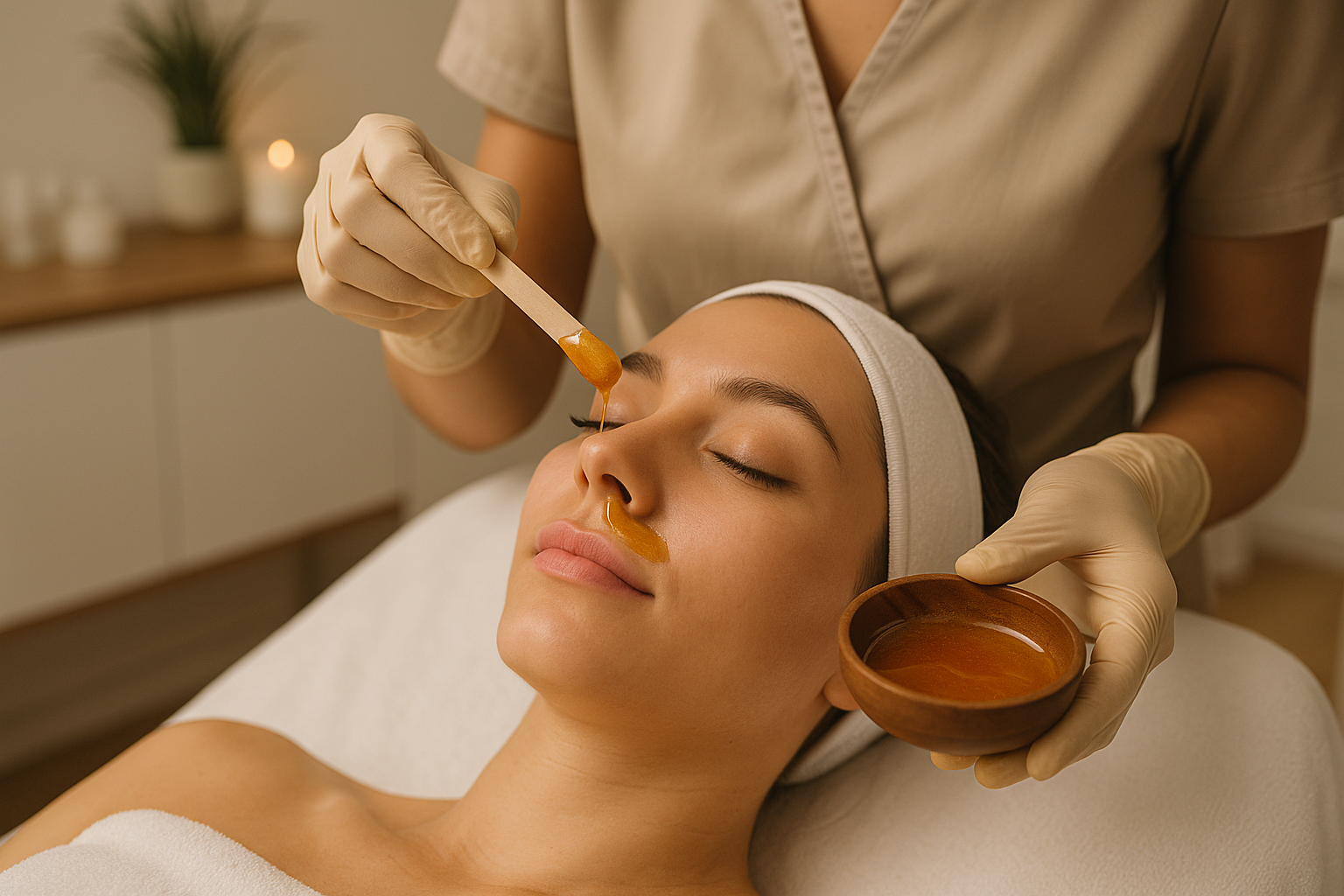
Hard wax is applied warm, allowed to cool for about 30 seconds until it firms up, then peeled off by the esthetician's fingers without a muslin strip. Because the wax shrink-wraps around individual hairs as it cools, it grips the hair shaft without bonding as tightly to flat skin. That makes it gentler, less likely to leave redness, and better suited for sensitive zones like the upper lip and chin. Most professional facial wax appointments at JH Beauty use a premium hard wax formulated with azulene or chamomile to calm the skin on contact.
Soft wax stays tacky after application and requires a cloth strip pressed on top, then ripped away. It's efficient for large body areas (legs, back) because it covers ground fast. On the face, though, soft wax bonds to skin cells more aggressively. If your esthetician re-waxes the same spot, you risk lifting the top layer of skin, which can cause bruising or even scarring on thin facial tissue.
The bottom line: for your face, hard wax is the safer bet in almost every scenario. If a salon uses soft wax on your upper lip or brows, ask them to switch. At JH Beauty, hard wax is the default for every facial waxing service precisely because client safety beats speed.
- Best for upper lip & chin: Hard wax (low irritation, strong grip on coarse hair)
- Best for full cheeks & sideburns: Hard wax (minimal redness on broad surfaces)
- Avoid on face: Soft strip wax, especially if you use retinol or AHAs
How to Prep Your Skin Before a Facial Wax
What you do in the 48 hours before your appointment can make the difference between a smooth, comfortable session and one that leaves you red and irritated. Here's a practical checklist our estheticians at JH Beauty share with first-time clients.
Stop retinol and AHAs 3 to 5 days ahead. Retinoids (tretinoin, adapalene, retinol serums) thin the top layer of skin by accelerating cell turnover. That's great for anti-aging—but terrible if you're about to pull wax off your face. The same goes for glycolic acid, lactic acid, and salicylic acid exfoliants. Pause them at least 72 hours before your wax to let your skin barrier rebuild. If you're on prescription Accutane, most estheticians won't wax you at all; the risk of skin lifting is too high.
Skip the workout that morning. Sweaty, flushed skin is more sensitive and more prone to post-wax bumps. Your pores are already open from heat and exertion, so the wax stings more and bacteria have an easier entry point. Book your session for a rest day or at least before your gym time.
Don't shave or trim. Wax needs hair to be about 1/4 inch long (roughly the length of a grain of rice) to grip properly. If you shaved last week, you might not have enough regrowth yet. Most people reach ideal length after about 2 to 3 weeks of growth from a fresh shave.
Come with a clean, dry face. Remove makeup and moisturizer before you arrive, or let your esthetician cleanse the area. Oil-free skin lets the wax adhere evenly. If you apply a heavy SPF or primer that morning, the wax will slide instead of grip, and your esthetician will need to re-apply—which increases irritation.
- Pause retinol/AHAs: 3-5 days before
- Ideal hair length: 1/4 inch (2-3 weeks of growth)
- No caffeine or alcohol 2 hours before (both dilate blood vessels and increase sensitivity)
- Arrive makeup-free or cleanse on-site
What Happens During a Facial Wax Session at JH Beauty
If you've never had a professional facial wax before, here's a step-by-step walkthrough so you know exactly what to expect when you sit down at our Sunnyvale studio.
Step 1: Skin assessment (2 minutes). Your esthetician examines the areas you want waxed—upper lip, chin, brows, sideburns, or full face. They'll check for active breakouts, sunburn, or open wounds. If there's an active cold sore on or near your lip, they'll skip that zone to avoid spreading the virus.
Step 2: Cleansing and pre-wax oil (2 minutes). A gentle cleanser removes surface dirt and oil. Then a thin layer of pre-wax oil goes on. This creates a protective film between your skin and the wax so the wax grips hair, not skin cells. It's a small step that makes a big difference in comfort.
Step 3: Wax application (5-10 minutes). Using a small spatula, the esthetician spreads warm hard wax in the direction of hair growth. The wax cools for about 20 to 30 seconds. Then it's peeled off quickly in the opposite direction of growth, pulling hairs out from the root. Upper lip and chin take about 2 to 3 minutes each. A full face (brows, forehead, cheeks, sideburns, upper lip, chin) takes closer to 10 minutes.
Step 4: Tweezing strays (2-3 minutes). Wax catches about 90% of hairs in one pass. The stubborn ones, usually thick or deeply rooted, get plucked individually with tweezers. This is the most precise part of the appointment.
Step 5: Post-wax soothing (2 minutes). Aloe vera gel or an azulene-infused calming lotion goes on immediately to cool the skin, close pores, and reduce redness. Most clients see redness fade within 30 to 60 minutes. If you have a skin sensitivity history, your esthetician might apply a cold compress for 30 seconds per zone.
Total session time: 15 to 25 minutes for most clients. You can go straight back to work or errands. Just skip makeup for a few hours to let pores settle.
Post-Wax Skin Care: The First 48 Hours Matter Most
What you do in the two days after your facial wax determines whether your skin stays smooth and calm or breaks out in ingrown hairs and irritation. Here's the essential aftercare routine JH Beauty's estheticians recommend to every client.
Day 1: Keep it simple and cool.
- No makeup for at least 4 hours. Let your pores close naturally.
- Avoid touching your face. Your hands carry bacteria, and freshly waxed skin is temporarily more vulnerable.
- Skip hot showers, saunas, and steam rooms for 24 hours. Heat dilates blood vessels and can trigger post-wax bumps.
- No gym or cardio workouts for 24 hours. Sweat + open pores = irritation and potential breakouts.
- Apply a soothing gel (aloe or witch hazel) if you feel any tightness or itching.
Days 2-7: Gentle exfoliation starts.
- On day 3, begin gentle exfoliation with a soft washcloth or a mild AHA toner. This prevents ingrown hairs by keeping dead skin from trapping new growth.
- Moisturize daily with a non-comedogenic lotion. Waxing removes dead skin cells, so your face may feel drier than usual.
- Avoid retinol and strong acids for 3-5 days post-wax. Your skin barrier is rebuilding; don't stress it.
If you notice small white or red bumps (folliculitis) within 48 hours, apply a spot treatment with salicylic acid or tea tree oil. These bumps usually resolve in 2-3 days. If they persist or worsen, contact your esthetician.
How Often Should You Get Facial Waxing?
Hair grows in cycles, and waxing works best when you stay on a consistent schedule. Most clients at JH Beauty book facial waxing every 3 to 4 weeks. Here's why that timing works:
After a wax, hair follicles enter the anagen (growth) phase at different rates. Some hairs come back within 2 weeks, others take 4 to 5 weeks. If you wait 6 weeks or longer between sessions, you'll have a mix of short, medium, and long hairs. The short ones might not be long enough for the wax to grip, so your esthetician will need to tweeze them individually—which adds time and discomfort.
Booking every 3 to 4 weeks keeps regrowth synchronized. Over time, many clients notice their hair grows back finer and sparser because repeated waxing weakens the follicle. This isn't permanent reduction like laser, but it does make each session easier and less painful.
If you're waxing for a special event (wedding, photoshoot, vacation), schedule your last session 2 to 3 days before the event. This gives any redness time to fade and lets your skin settle, so you look your absolute best.
Facial Waxing vs. Other Hair Removal Methods
How does waxing stack up against threading, dermaplaning, laser, and at-home options? Here's a practical comparison based on cost, results, and downtime.
Waxing vs. Threading: Threading is more precise for shaping brows and upper lip lines but slower on larger areas like cheeks and sideburns. Waxing covers more ground faster, making it ideal for full-face hair removal. At JH Beauty, we often recommend threading for brows and waxing for everything else.
Waxing vs. Dermaplaning: Dermaplaning uses a surgical blade to scrape away vellus hair and dead skin. It delivers intense exfoliation and instant glow but requires a steady hand. Dermaplaning costs $100-150 per session and can't be done if you have active acne. Waxing is gentler, cheaper ($30-60), and works on most skin types.
Waxing vs. Laser Hair Removal: Laser offers near-permanent reduction after 6-8 sessions but costs $200-400 per session and works best on dark hair with light skin. Waxing is immediate, works on all hair colors, and costs a fraction per visit. Many clients do laser for long-term reduction and wax for maintenance between laser sessions.
Waxing vs. At-Home Depilatory Creams: Creams dissolve hair at the surface, so regrowth happens within 3-7 days. Waxing pulls hair from the root, so you stay smooth for 3-4 weeks. Creams are cheap ($8-15) but messy, smell bad, and can irritate sensitive facial skin. Waxing delivers cleaner, longer-lasting results.
Common Myths About Facial Waxing (Debunked)
Myth: Waxing makes hair grow back thicker. False. Waxing can't change your hair's genetic thickness. The blunt tip of shaved hair feels coarser when it grows back, which is why people think shaving (or waxing) thickens hair. Waxing actually pulls hair from the root, so regrowth tapers naturally and feels softer.
Myth: Waxing causes permanent sagging or wrinkles. Also false. Properly executed waxing doesn't stretch skin enough to damage collagen or elastin. If you're worried about tugging, choose a skilled esthetician who uses hard wax and holds the skin taut during removal.
Myth: You can wax over active acne. Partially true, but not recommended. Light surface acne (small whiteheads) can be waxed over carefully, but cystic acne or open pustules should be avoided. Wax can spread bacteria and make inflammation worse. If you have persistent acne, talk to your esthetician about which zones are safe to wax.
Myth: Facial waxing is unbearably painful. Pain tolerance varies, but most clients describe facial waxing as a quick sting—like a rubber band snap—that fades within seconds. Hard wax is significantly less painful than strip wax because it doesn't grip skin as aggressively. If you're nervous, take an ibuprofen 30 minutes before your appointment to reduce sensitivity.
FAQ: Facial Waxing in Sunnyvale
How much does facial waxing cost at JH Beauty?
Pricing varies by zone. Upper lip or chin waxing starts around $15-20. A full-face wax (brows, cheeks, upper lip, chin, sideburns) runs $50-70. Package deals and membership discounts are often available.
Can I wax my face if I'm using retinol?
You'll need to pause retinol for 3-5 days before your appointment. Retinoids thin your skin's outer layer, which increases the risk of skin lifting during wax removal. After your wax, wait another 2-3 days before resuming retinol use.
Is facial waxing safe during pregnancy?
Yes. Waxing is generally safe during pregnancy, though your skin may be more sensitive due to hormonal changes. Let your esthetician know you're pregnant so they can adjust pressure and product choices accordingly.
How long does facial waxing take?
A single zone (upper lip or chin) takes about 5-10 minutes. A full face takes 20-25 minutes including prep and soothing aftercare.
Will waxing get rid of peach fuzz?
Yes. Waxing removes both coarse terminal hairs and fine vellus hairs (peach fuzz). This is one of waxing's biggest advantages over shaving, which only cuts surface-level hairs.
Can men get facial waxing?
Absolutely. JH Beauty works with male clients who want clean brow lines, reduced cheek hair, or a smooth neck between beard trims. Men's facial hair tends to be coarser, so sessions may take a few minutes longer.
What if I have a reaction or break out after waxing?
Minor redness and small bumps are normal for the first 24 hours. If you develop persistent folliculitis, a rash, or swelling, contact your esthetician immediately. They can recommend a soothing treatment or adjust your aftercare routine.
Can I wax at home or should I always see a professional?
At-home wax kits exist, but they're risky on facial skin. Over-heating wax can cause burns. Pulling at the wrong angle can break hairs instead of removing them. Professional estheticians have the training and products to wax safely and get clean results the first time.
About the author
Ruby
Owner and Lead Esthetician, J.H Beauty
Owner of JH BEAUTY, a skincare studio in Palo Alto, CA offering advanced facial treatments, scalp care, and body management using technologies from Japan, Korea, Switzerland, and Italy.