What a Glass Skin Facial Is, and How to Approach It
"Glass skin" is the Korean-beauty shorthand for skin that looks clear, even and dewy, as if light reflects off it. A glass skin facial is a hydration-focused facial aimed at that look. At JH Beauty in Sunnyvale, the closest match is the Korean Style Rejuvenation Skin Management (韩式水光肌焕肤柔润皮肤管理), $238 for 90 minutes. Pair it with gentle daily care and realistic expectations: it is a facial, not a permanent change to your skin.
The studio suggests the Korean facial as the first one to book if your concern is hydration, dullness or sensitive skin. If blackheads and congestion are your main issue, it points to the European deep cleaning facial ($168, 75 minutes) instead, and for firmness and contour, RF V-shape lifting ($278, 90 minutes).
This guide covers what the Korean-style routine behind the look involves, what dermatologists say about exfoliation, product order and sunscreen, what to ask about a professional glass skin facial, and how often to book.
The Korean Layering Routine, Explained
Cleveland Clinic's overview of the Korean skincare routine, with dermatologist Dr. Alok Vij, lists ten steps: an oil-based cleanser, a water-based cleanser, an exfoliant used once or twice a week, toner, essence, a serum, face oil or ampoule, a sheet mask (not daily), eye cream, moisturizer and sunscreen. It names ingredients such as snail mucin and Centella asiatica as common in Korean skincare.
The same article is realistic about the routine. Dr. Vij notes that if you give someone a 10-step routine, they're probably going to do two or three of those steps reliably, and he advises adding products slowly so you can tell what works and avoid allergic reactions. So you don't need all ten steps to aim for glass skin. What matters more is what the American Academy of Dermatology (AAD) keeps coming back to:
- Cleanse gently. The AAD recommends a gentle, non-abrasive cleanser, lukewarm water, fingertips rather than a washcloth, no scrubbing, and patting dry with a soft towel, limiting washing to twice a day and after sweating.
- Apply products in order. The AAD's order is: wash your face, apply any medication or treatment, apply moisturizer and/or sunscreen, then makeup. It also cautions that using too many products at once can irritate skin.
- Don't over-exfoliate. The AAD says how often you exfoliate depends on your skin type and method, that more aggressive exfoliation needs doing less often, and that over-exfoliating can leave skin red and irritated. Cleveland Clinic's routine puts exfoliation at once or twice a week.
- Finish with sunscreen. The AAD recommends a broad-spectrum sunscreen with SPF 30 or higher; Cleveland Clinic's routine ends every morning with it.
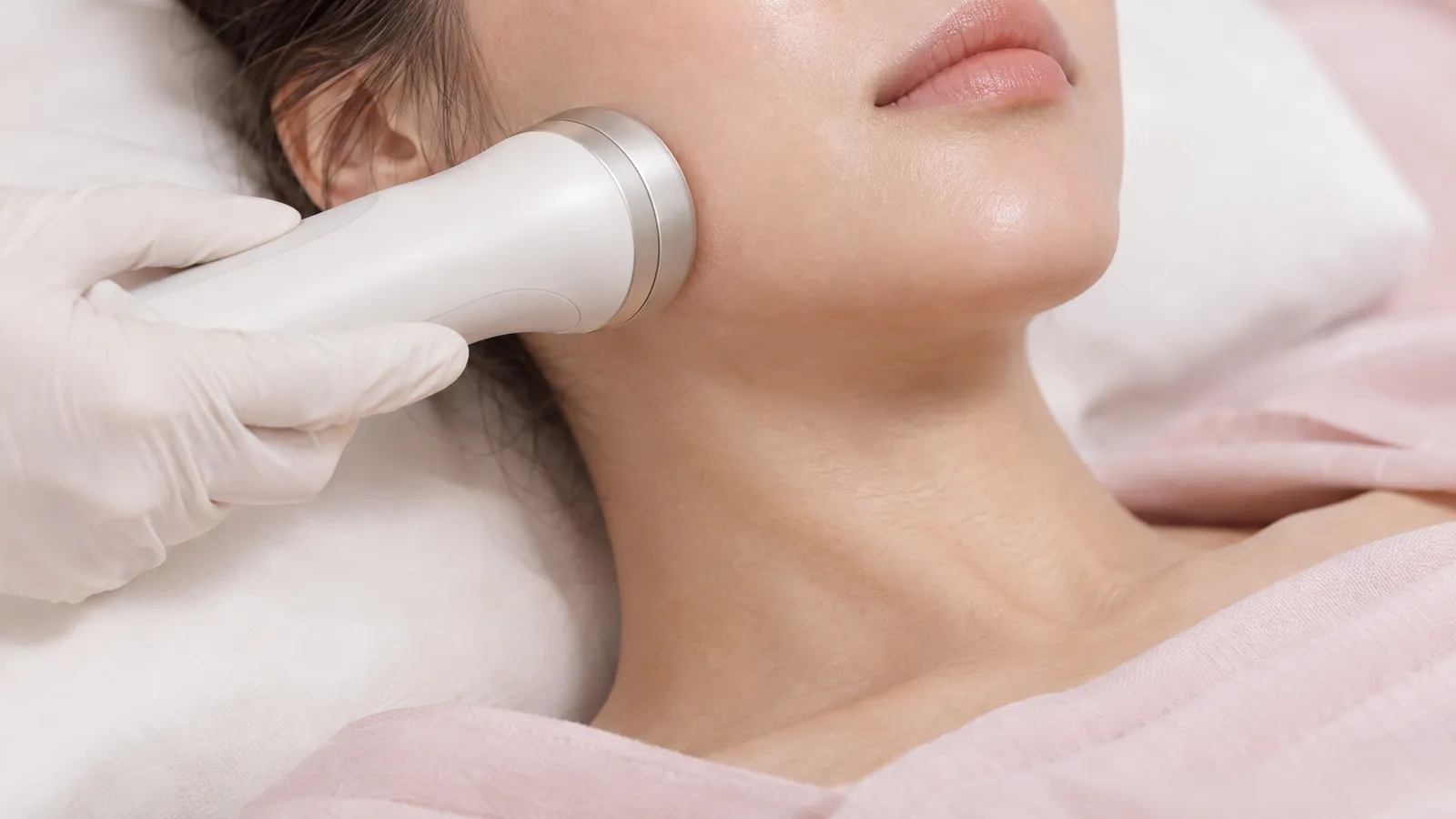
A Korean Style Rejuvenation Skin Management session at JH Beauty is $238 for 90 minutes. The studio says it takes a personalized approach to every treatment, so the exact steps in your session depend on your skin that day; if you want to know which products and devices will be used, ask when you book.
What to Ask About a Professional Glass Skin Facial
Salons use "glass skin facial" for many different treatments, so the name alone doesn't tell you what will happen. Before you book, anywhere, it's worth asking:
- What steps and products will be used? Especially whether there's an exfoliation or peel step, and how strong it is.
- Is there any downtime? JH Beauty's anti-aging treatments are listed as non-invasive with no downtime, with skin possibly looking slightly flushed for a few hours; ask about the specific facial you're booking.
- What should I stop using beforehand? JH Beauty doesn't give facials during isotretinoin (Accutane) and asks you to wait at least six months after finishing it. Prescription retinoids are usually fine, but the studio asks you to stop applying them about five days beforehand and tell them what you use.
- Have I had Botox or fillers recently? Say when at booking, so energy-based treatments can be spaced around them.
If your skin reacts easily, tell the esthetician before the session starts, and mention any product that has irritated you before. The AAD's advice for dry or sensitive skin is to be gentle with exfoliation, since mechanical exfoliation may be too irritating.
For uneven tone or dark spots, JH Beauty's menu also has the Vital-C Brightening Antioxidants Facial Treatment ($218, 75 minutes). For deep, persistent or changing spots, see a board-certified dermatologist first; the AAD notes that dermatologists check for skin cancer before treating spots that may look like age spots.
How Often to Book, and What to Expect
JH Beauty's general guidance is a facial every four to six weeks, matching the skin's turnover cycle. There's no fixed number of sessions that guarantees the glass skin look, and how your skin responds is individual.
Keep expectations modest. The AAD says anti-aging skin care products deliver modest results and warns against products that make exaggerated promises. A facial can leave your skin feeling cared for and looking fresher for a while, but the look you're after depends at least as much on what you do between visits: gentle cleansing, moisturizer, not over-exfoliating, and daily sunscreen.
If you'd like to try the Korean facial, book one session first and see how your skin feels over the following days before planning more. If anything irritates you, mention it at your next visit so the session can be adjusted.
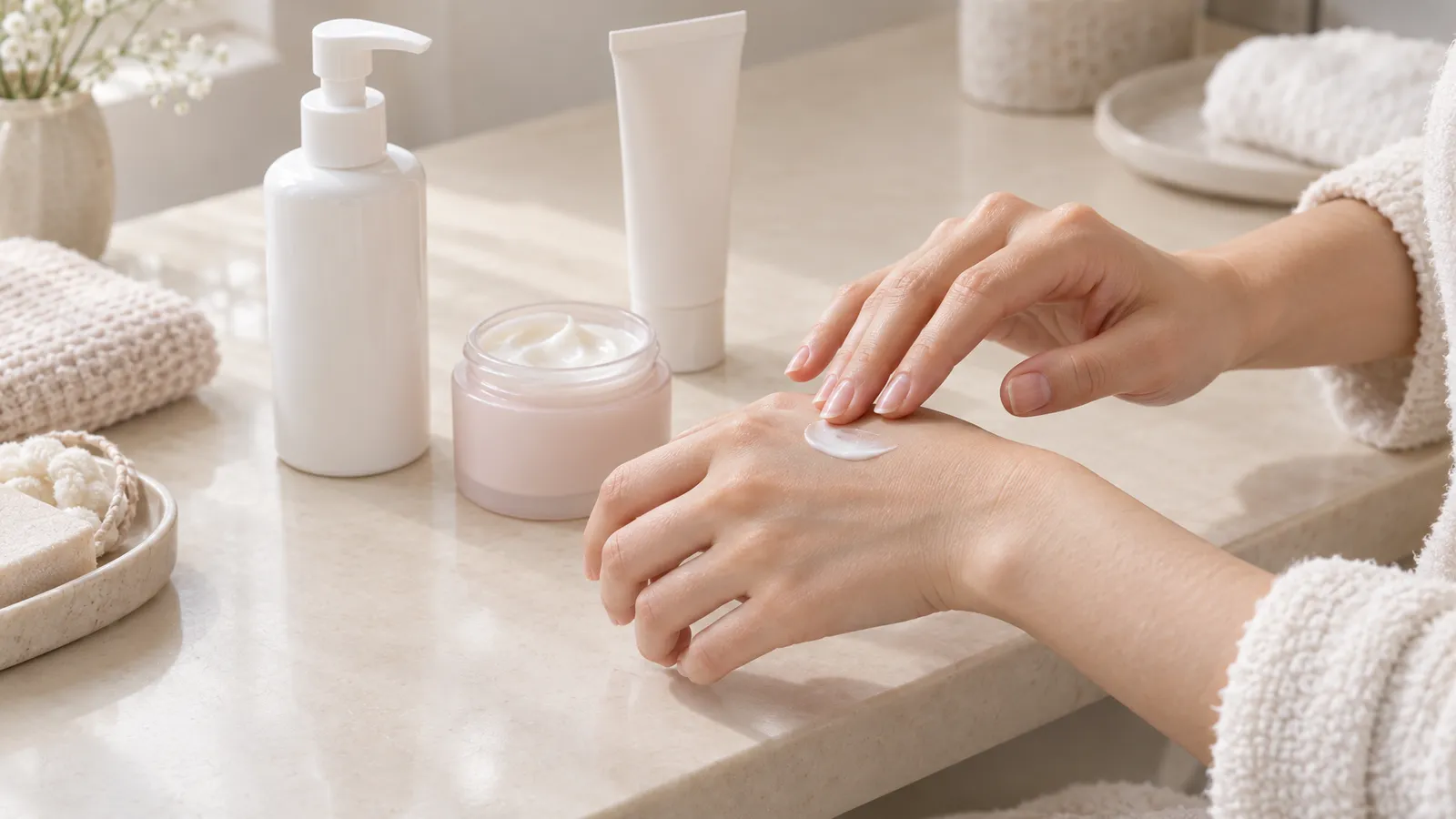
Building a Glass Skin Routine at Home
Most of the work toward even, dewy-looking skin happens at home. A simple version of the Korean routine that follows the AAD's guidance looks like this:
- Morning: gentle cleanser, any treatment product you use, moisturizer, then a broad-spectrum SPF 30+ sunscreen.
- Evening: an oil-based cleanser followed by a water-based one, as in the Korean routine (or just your gentle cleanser), then any treatment product and moisturizer.
- Once or twice a week at most: an exfoliant, chosen for your skin type; the AAD suggests a mild chemical exfoliator for dry or sensitive skin, and moisturizer straight afterward.
- Occasionally: a sheet mask, which Cleveland Clinic's routine lists as a non-daily step.
Add new products one at a time, as Dr. Vij suggests, so that if something irritates your skin you know which product it was. For more on products, see our guide to a Korean skincare routine at home, and for how the Korean facial compares with other styles, Korean vs. Japanese skincare at JH Beauty.
FAQ: Glass Skin Facials
What is a glass skin facial?
A hydration-focused facial aimed at the clear, even, dewy look Korean beauty calls glass skin. At JH Beauty, the closest match is the Korean Style Rejuvenation Skin Management, $238 for 90 minutes.
How often should I get a glass skin facial?
JH Beauty's general guidance is a facial every four to six weeks. Start with one session and see how your skin responds before planning more.
Do I need a 10-step routine at home?
No. Cleveland Clinic's dermatologist notes most people reliably do only two or three steps of a 10-step routine. Gentle cleansing, moisturizer and daily broad-spectrum SPF 30+ sunscreen are the core, with exfoliation once or twice a week at most.
What's the difference between the Korean Style Rejuvenation facial and other facials on the menu?
The studio suggests the Korean facial ($238, 90 minutes) for hydration, dullness or sensitive skin, the European deep cleaning facial ($168, 75 minutes) for blackheads and congestion, and RF V-shape lifting ($278, 90 minutes) for firmness and contour. Ask what your session will include when you book.
Will a glass skin facial help with acne scarring or deep pigmentation?
Don't expect it to. A hydration-focused facial is not a treatment for scarring or deep pigmentation. For those, have a board-certified dermatologist assess the cause; the AAD notes dermatologists check for skin cancer before treating spots that may look like age spots.
Should I choose a Korean ampoule or essence for gentle but effective results?
Neither is proven gentler than the other. Cleveland Clinic's Korean routine lists them as separate steps: essence comes after toner, and an ampoule sits alongside face oil after the serum. Which suits you depends on your skin and on the specific product's ingredients, which this guide can't judge for you. Dr. Vij's advice is to add one product at a time so you can tell what works and catch any reaction, and the AAD cautions that too many products at once can irritate skin. If your skin is sensitive, start with just one of the two, patch test it, and mention it to your esthetician. The ten-step routine is optional; gentle cleansing, moisturizer and sunscreen do most of the work.
Which brand makes a moisturizer that gives skin a glossy, glass-like glow?
This guide doesn't recommend a brand, and JH Beauty's menu doesn't list a moisturizer by name, so we won't invent one. What the AAD advises is more useful than a brand: choose a moisturizer suited to your skin type, apply it after any treatment product, and finish with a broad-spectrum SPF 30+ sunscreen in the morning. A dewy finish comes from well-hydrated skin, not from a single product. If you want a recommendation for your skin, ask your esthetician at your Korean facial, and add anything new on its own so you can spot irritation.