
Cold Plasma & LDM Facial: What the Research Shows
What cold plasma and LDM ultrasound are, what the research does and doesn't show, and what to ask before booking.
Introduction to Plasma and LDM Skincare
JH Beauty's Plasmas & LDM Top Tech Therapy is a 90-minute, $358 treatment that combines two technologies in one appointment: cold plasma and LDM, a form of ultrasound. The menu describes it as using "Japanese Plasma & Water Droplet Lifting Technology" and describes plasma as the fourth state of matter. The studio's own FAQ says the cold plasma it uses is not the plasma-pen procedure that leaves crusting, that skin may look slightly flushed for a few hours, and that hydration and glow show first while firmness builds over several weeks across a series.
The menu does not name the device models, settings or session steps. This guide explains what cold plasma and LDM are according to the published research, how strong that evidence is, and what to ask the studio before booking. JH Beauty's full menu lists this treatment alongside its other anti-aging options.
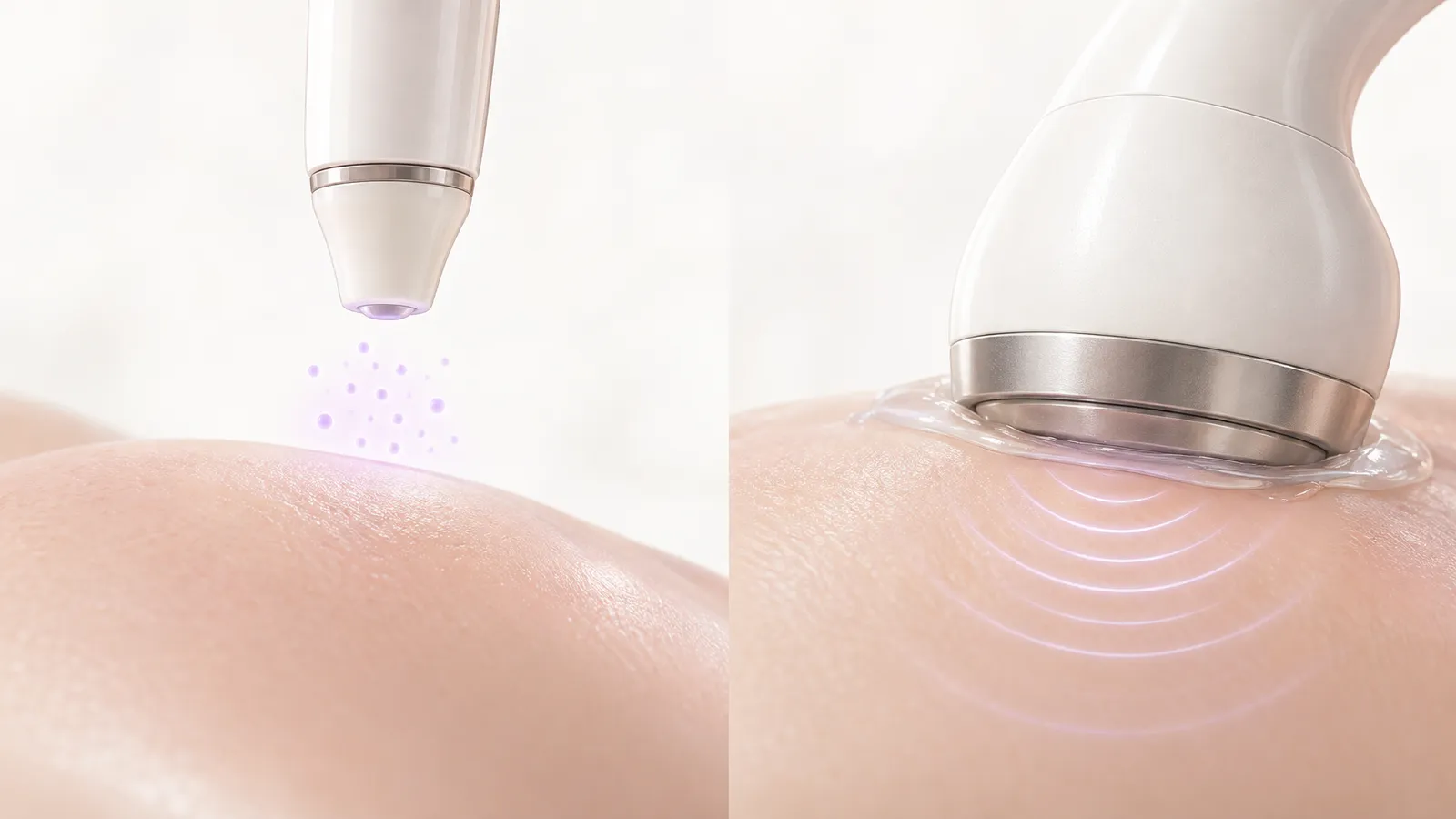
What Cold Plasma Is
Plasma is an ionized gas — a mix of charged particles, reactive substances and light. A 2024 review of cold atmospheric plasma (CAP) in dermatology, published in the European Journal of Medical Research, explains that because plasma has an equal distribution of positive and negative charges, it is considered the fourth state of matter alongside solids, liquids and gases. Plasmas are grouped into thermal, warm and cold types by gas temperature. Cold atmospheric plasma is a partially ionized gas that operates at room temperature, and the review notes that during CAP treatment the skin's temperature stays between 37 and 38 °C.
That is why "plasma" on a spa menu does not always mean the same thing. JH Beauty's FAQ says the cold plasma it uses is not the plasma-pen procedure that leaves crusting, so if you have read about crusting after a "plasma" treatment elsewhere, ask which kind a studio offers before you book.
What the Research Says About Cold Plasma on Skin
The same review describes how CAP generates reactive oxygen and nitrogen species (RONS) and ultraviolet radiation, and says these properties are behind its studied uses: fighting microbial infections, promoting wound healing and inhibiting tumor cell growth. It also notes that the effect depends on dose — plasma stimulates cell proliferation and tissue regeneration at low doses and triggers cell death at high doses — and that the plasma device and the working gas strongly influence which reactive species are produced and in what amounts. In other words, results from one device and setting do not automatically transfer to another.
The review is candid about the gaps. It says many CAP studies are only in vitro or in animals, that more studies are needed to explore long-term effects, standardize application protocols and assess safety and efficacy across diverse patients, and that while CAP's antimicrobial properties are well documented, its potential in inflammatory skin disease and cosmetic applications warrants further investigation. A 2026 review in Frontiers in Bioengineering and Biotechnology on how deeply cold plasma penetrates tissue adds that there is currently a lack of standardization in CAP's indications and application parameters, and that the device type and parameters, the working gas, and the distance and duration of treatment all influence what reaches the tissue.
So the fair summary is: cold plasma is an active research area with real findings in wound healing and infection, and early interest in cosmetic use, but there is no standard protocol and no body of evidence that promises a particular cosmetic result from a facial device.
What LDM Is
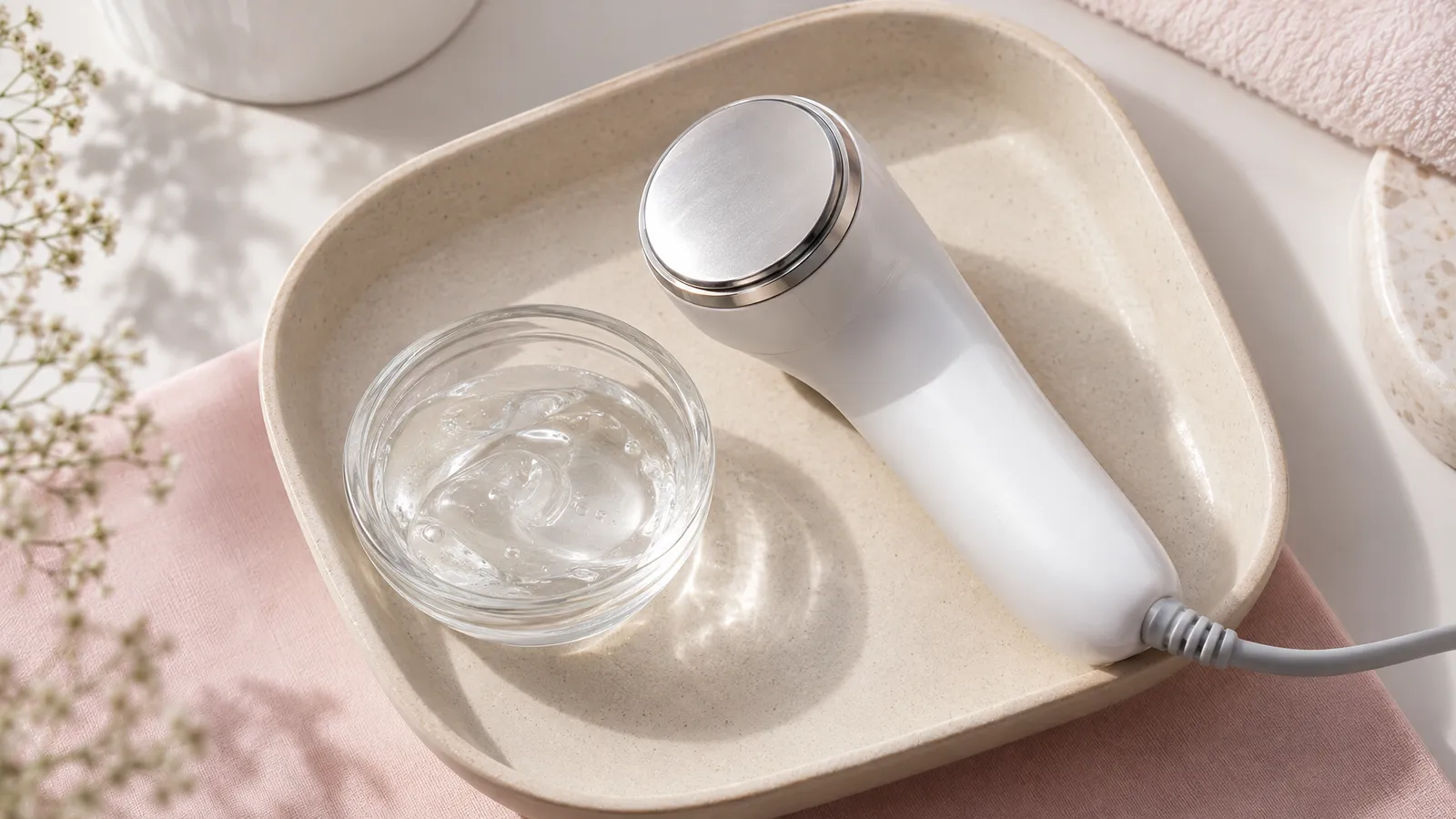
LDM stands for local dynamic micro-massage, a form of ultrasound that switches rapidly between frequencies. LDM® is the name Wellcomet, a German company, uses for the technology. JH Beauty's menu calls its version "Water Droplet Lifting Technology" and does not name the device model, so ask which device is used if you want to look it up.
Wellcomet's own product page for its LDM® Triple device says the device adds 10 MHz and 19 MHz ultrasound frequencies to the lower ones most systems use, and that these work mainly in the upper layers of the skin. The manufacturer lists applications including wrinkles, skin tightening, acne and scars, and recommends a course of two sessions a week for four to six weeks for its device. Those are the manufacturer's claims and schedule for one model; they are not independent evidence, and they do not describe how any particular studio runs its treatment.
What the Research Says About LDM
The published research on LDM is still small. One of the clearer studies is a 2024 paper in the Journal of Cosmetic Dermatology (Ahn et al.). Its authors describe LDM as dual-frequency ultrasound of very high frequency that can modify cellular signaling with anti-inflammatory and anti-fibrotic effects, and note it has been applied to inflammatory skin conditions, hypertrophic scars and chronic wounds.
The study itself looked at recovery after nose surgery. Twenty-four patients received daily LDM for five days after the operation, and 24 used conventional ice packs. Swelling lasted 1.9 days on average in the LDM group against 4.5 days with ice packs, and bruising 2.8 days against 7.4 days.
Two caveats matter. It was a retrospective study with 48 patients, and it measured post-surgical swelling and bruising, not wrinkles, firmness or texture. It suggests LDM may reduce post-surgical swelling; it does not show any particular anti-aging or acne result from a facial, which is why we don't promise one here.
What to Expect and What to Ask
JH Beauty's FAQ says its plasma and LDM treatment is non-invasive, that skin may look slightly flushed for a few hours, and that hydration and glow show first while firmness builds over several weeks across a series. It does not publish a session count, spacing or step-by-step protocol, so these are the questions worth asking when you book:
- Which plasma device and which LDM device are used, and in what order during the 90 minutes?
- How many sessions, and at what spacing, does the studio suggest for your skin and your goal?
- Is the treatment suitable for your skin type, and for any condition you have, such as rosacea, eczema or active acne?
- What aftercare should you follow, including sun protection?
JH Beauty's general guidance also applies: don't book facials while on isotretinoin (Accutane) or within six months of finishing it; stop prescription retinoids about five days beforehand and tell the studio what you use; and if you have had Botox or fillers, say when at booking so energy-based treatments can be spaced around them. If you are pregnant, check with your doctor first; our guide to pregnancy-safe facials found no pregnancy safety research on radiofrequency or cold-plasma devices and suggests discussing them, and any heated treatment, with your OB-GYN before booking.
How It Fits With Other Treatments at JH Beauty
The Plasmas & LDM session is $358 for 90 minutes. Other anti-aging treatments on the menu include RF Anti-aging V-Lifting Therapy ($278, 90 minutes), which the studio's FAQ calls the usual entry point for firmness and contour, Italy Quantus Thermal Remodeling ($398, 90 minutes) and the Japanese 6D Luxury Anti-aging Skin Management ($258, 90 minutes). The anti-aging facials page lists them side by side. For the under-eye area specifically, the menu also has a separate Clinic Treatment & Collagen Therapy eye treatment ($288); ask the studio whether and how it should be scheduled around other treatments.
To book, use the online menu or call (650) 784-6076. The studio at 525 W Remington Dr, Suite 102, Sunnyvale, is open Tuesday through Sunday, 10:45 am to 8 pm. The booking page states that cancelling or rescheduling at least 24 hours ahead gets a full refund, and a $50 fee applies within 24 hours.
FAQ: Plasma and LDM
What is the downtime for plasma and LDM treatments?
JH Beauty's FAQ describes the treatment as non-invasive and says skin may look slightly flushed for a few hours. The cold plasma used there is not the plasma-pen procedure that leaves crusting. Ask for aftercare instructions, including sun protection, and follow them.
How many sessions of plasma and LDM will I need?
There is no published session plan. The studio's FAQ says firmness builds over several weeks across a series; ask how many sessions and what spacing it suggests for your skin.
How much does the Plasmas & LDM treatment cost at JH Beauty?
$358 for a 90-minute session that combines both technologies in one appointment.
Can plasma and LDM be used on all skin types?
That depends on the devices, the settings and your skin. Tell the studio about your skin type, sensitivity and any skin condition when you book, and ask whether the treatment suits you.
Is plasma or LDM better for acne scars?
We found no study comparing the two for acne scars, and no evidence that either, as used in a facial, reliably improves them. For acne scarring, a board-certified dermatologist can advise on treatments with stronger evidence.
Is cold plasma the same as a plasma pen?
No. JH Beauty's FAQ says its cold plasma is not the plasma-pen procedure that leaves crusting. Cold atmospheric plasma operates at room temperature, and a 2024 dermatology review reports treated skin staying between 37 and 38 °C.
About the author
Ruby
Owner and Lead Esthetician, J.H Beauty
Owner of JH BEAUTY, a skincare studio in Sunnyvale, CA offering advanced facial treatments, scalp care, and body management using technologies from Japan, Korea, Switzerland, and Italy.