
Best Korean Skincare in Sunnyvale: Products & Facials
Which Korean skincare ingredients have real evidence, what the 2026 FDA sunscreen change means, and where to get a Korean-style facial in Sunnyvale.
The best Korean skincare in Sunnyvale is two things: a short home routine built on well-studied ingredients (gentle cleansers, niacinamide, centella, a sunscreen you'll wear daily) and, when you want more, a Korean-style facial. JH Beauty on W Remington Dr offers a Korean Style Rejuvenation facial ($238, 90 minutes) and a Korean AbbasPlas or Japanese hydrogen Hydrofacial ($358).
Below: which Korean skincare ingredients have real evidence behind them, what to know about Korean sunscreens in the US right now, how to put a simple routine together, and what a Korean-style facial in Sunnyvale costs.
What Makes Korean Skincare Different
Korean skincare is best known for the multi-step routine. Cleveland Clinic lists the classic ten steps: oil cleanser, water-based cleanser, exfoliant (once or twice a week), toner, essence, a serum or ampoule for your main concern, a sheet mask (not every day), eye cream, moisturizer and sunscreen. The appeal is the approach: gentle cleansing, layers of hydration and daily sun protection.
You don't need all ten. Cleveland Clinic dermatologist Dr. Alok Vij notes that people given a 10-step routine usually keep two or three steps reliably, and recommends adopting the philosophy rather than every product. The American Academy of Dermatology (AAD) warns that using too many products can irritate skin, especially when more than one is an anti-aging product. So the "best" Korean skincare is a routine short enough to follow and built on ingredients that do what they claim.
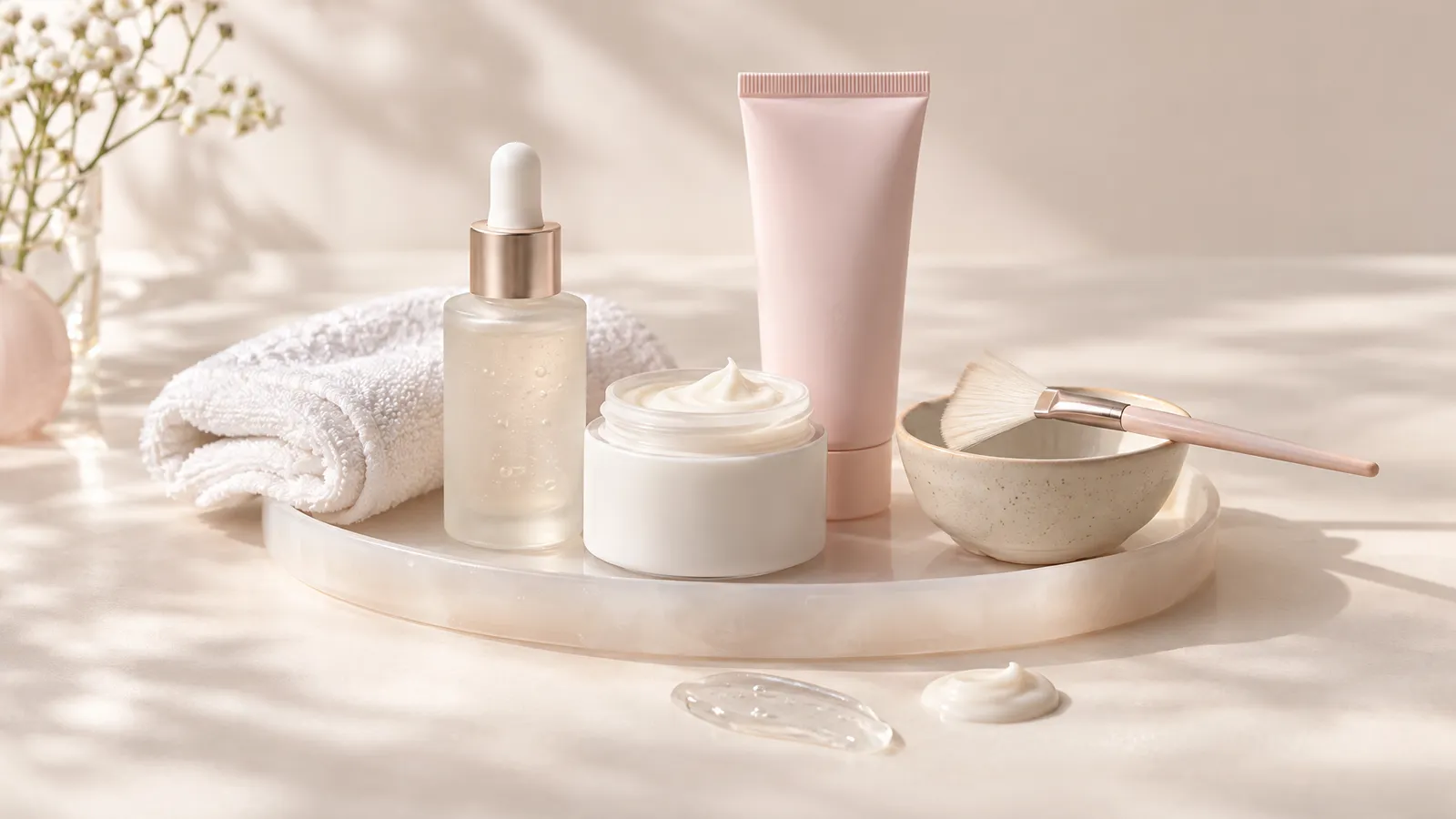
Korean Skincare Ingredients With Real Evidence
Korean brands are famous for ingredient-led products. Some of those ingredients have solid research behind them; some mostly have marketing. Here's where three popular ones stand.
Niacinamide
Niacinamide (a form of vitamin B3) is one of the better-studied cosmetic ingredients. A 2021 review in the International Journal of Molecular Sciences reports that a 5% niacinamide moisturizer reduced hyperpigmented spots more than the same moisturizer without it after 4 and 8 weeks, while 2% did not show a significant effect. In one comparison against 4% hydroquinone, good-to-excellent improvement was seen in 44% of niacinamide users and 55% of hydroquinone users. The review also notes that niacinamide increased production of ceramides and other skin-barrier lipids in lab studies, and that it's well tolerated at the usual concentrations (under 5%). Practical takeaway: look for a serum or moisturizer that lists the concentration, and expect weeks, not days.
Centella asiatica ("cica")
Centella shows up in countless Korean soothing products. Its research base is mostly about wound healing. A 2022 systematic review concluded that centella "might result in better wound healing due to greater angiogenesis and its anti-inflammatory effect," but only four clinical studies qualified for the review, and the authors say more research is needed. Whether that carries over to everyday irritation from a cosmetic cica cream hasn't been shown, so treat soothing claims on the label as marketing until better studies exist.
Hydrators: hyaluronic acid, glycerin, ceramides
Essences, toners and gel creams in Korean routines often lean on the same hydrating ingredients the AAD recommends for dry skin: hyaluronic acid, glycerin and ceramides. The AAD adds that moisturizer works better on damp skin because it traps water, and that "all natural in no way means hypoallergenic," which is worth remembering with botanical-heavy K-beauty products.
Korean Sunscreens in the US: What Changed in 2026
Korean sunscreens have a cult following partly because they use UV filters US products couldn't. That's starting to change. The FDA announced on June 9, 2026, that it was adding bemotrizinol to the US sunscreen monograph, and its final order, issued June 10, 2026, allows it at concentrations up to 6 percent. The order takes effect August 9, 2026, unless it is disputed under the procedure the statute provides. It's the first new sunscreen active ingredient added in the US since the late 1990s.
What this means for shopping: a sunscreen sold in US stores still has to use US-permitted filters, and Korean-market formulas often combine several filters. Whatever you buy, check the label for the three things the AAD looks for: broad spectrum, SPF 30 or higher and water resistant. Apply about 15 minutes before going outside and reapply every two hours outdoors, including on overcast days. The AAD calls sunscreen and moisturizer the two most effective anti-aging products you can buy, so this is the one step to never skip.
A Simple Korean Routine That Works
Keep the daily core short and add extras when you have time:
- Cleanse gently. The AAD recommends a gentle, non-abrasive, alcohol-free cleanser with lukewarm water and fingertips, no scrubbing, twice a day and after heavy sweating. Double cleansing (oil cleanser, then water-based) helps mainly when you wear waterproof makeup or sunscreen; a Cleveland Clinic dermatologist says it's usually not necessary otherwise.
- Treat one concern. A niacinamide serum for uneven tone, for example. Add one targeted product at a time.
- Moisturize while skin is damp. Gel if you're oily, cream if you're dry.
- Sunscreen every morning. Broad spectrum, SPF 30+, water resistant.
Exfoliants and sheet masks are weekly extras. Our Korean skincare routine guide goes through each step and what to change around a facial.
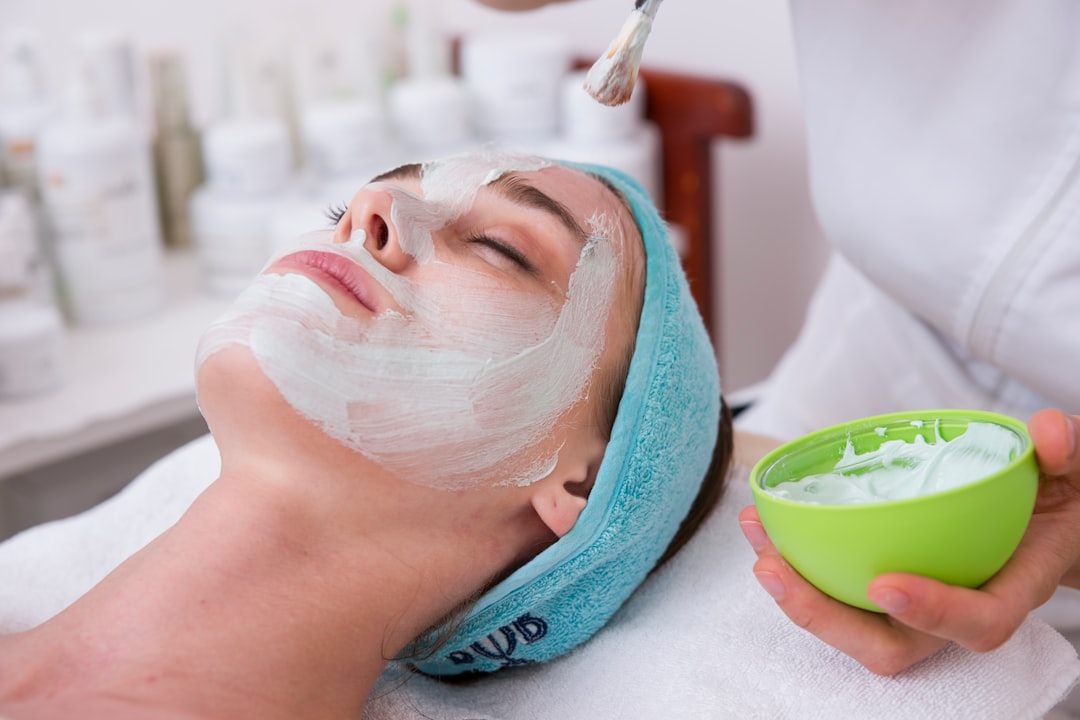
What Is a Korean Face Treatment?
A Korean face treatment, or Korean-style facial, is a professional treatment built on the same principles as the home routine rather than one signature step. Cleveland Clinic dermatologist Dr. Alok Vij sums up what makes Korean skin care special as keeping skin "hydrated, happy and protected from the sun," and notes that Korean products tend to have little or no added fragrance and encourage gentler alternatives to active ingredients like acids and retinols. A salon version applies that approach with layered hydrating products and, depending on the studio, devices.
Studios use the name for quite different treatments, so ask what a given Korean skin care treatment includes, which products are used, and how long it takes. If you have sensitive skin, Dr. Vij's advice for home products applies in the chair too: new products can be patch-tested first.
Korean-Style Facials in Sunnyvale: What JH Beauty Offers
JH Beauty is a skincare studio at 525 W Remington Dr, Suite 102, in Sunnyvale, run by owner and lead esthetician Ruby. The menu mixes Korean, Japanese and European treatments. The Korean-named options and their current prices:
- Korean Style Rejuvenation Skin Management — 90 minutes, $238. The menu describes it as modeled on the high-performance skincare routines of celebrities. Our guide to what makes a Korean facial different explains the multi-step method, and the Korean facial in Sunnyvale page has booking details.
- Hydrofacial [Japanese Hydrogen / Korean AbbasPlas] — 90 minutes, $358. Note that this is a hydrogen-based treatment built around what the menu calls Hydroimpact technology, not the HydraFacial-brand machine.
- Hydrofacial [Hydrogen + Hydroveil] Express for Men — 90 minutes, $288.
- Korean DPL Hair-Removal — underarm $98 (30 minutes), arm $158 (45 minutes), leg $178 (45 minutes).
If you're weighing Korean against Japanese-style care, the Japanese 6D Luxury Anti-aging Skin Management is $258 for 90 minutes; see our Korean vs Japanese skincare comparison. For a glow-focused visit, read about the Korean glass skin facial. Every service and price is on the menu.
The studio is open Tuesday through Sunday, 10:45 AM to 8 PM. Call +1-650-784-6076 to book or ask which facial fits your skin.
FAQ: Korean Skincare in Sunnyvale
Where can I get a Korean facial in Sunnyvale?
JH Beauty at 525 W Remington Dr, Suite 102, offers the Korean Style Rejuvenation Skin Management facial ($238, 90 minutes) and a Korean AbbasPlas or Japanese hydrogen Hydrofacial ($358, 90 minutes). It's open Tuesday to Sunday, 10:45 AM to 8 PM.
What is a Korean face treatment?
A professional facial built on Korean skin care principles: hydration, gentle products and sun protection, usually through layered hydrating steps rather than harsh acids. What's included varies by studio. At JH Beauty, the Korean Style Rejuvenation Skin Management is $238 for 90 minutes.
Which Korean skincare ingredients actually work?
Niacinamide is one of the better-studied ones: in studies, 5% reduced dark spots over 4 to 8 weeks while 2% didn't. Hydrators like hyaluronic acid, glycerin and ceramides are dermatologist-recommended. Centella has been studied mainly for wound healing, and its clinical evidence is still limited.
Are Korean sunscreens better than American ones?
Many Korean formulas use UV filters that US products couldn't use. In 2026 the FDA added bemotrizinol, its first new sunscreen ingredient since the late 1990s. Any sunscreen that's broad spectrum, SPF 30 or higher and water resistant meets the AAD's criteria.
Do I need all 10 steps?
No. A Cleveland Clinic dermatologist says most people only keep two or three steps of a 10-step routine, and the AAD warns that too many products can irritate skin. Cleanse, one treatment, moisturizer and daily sunscreen cover the essentials.
Is JH Beauty's Hydrofacial a HydraFacial?
No. JH Beauty's Hydrofacial is a Japanese hydrogen or Korean AbbasPlas treatment, not the HydraFacial-brand device. It runs 90 minutes for $358, with a 90-minute men's express version at $288.
Can men book Korean-style facials?
Yes. The menu includes a Hydrofacial [Hydrogen + Hydroveil] Express Option for Male, 90 minutes for $288. For any other treatment, call the studio to ask whether it suits you.
About the author
Ruby
Owner and Lead Esthetician, J.H Beauty
Owner of JH BEAUTY, a skincare studio in Sunnyvale, CA offering advanced facial treatments, scalp care, and body management using technologies from Japan, Korea, Switzerland, and Italy.